
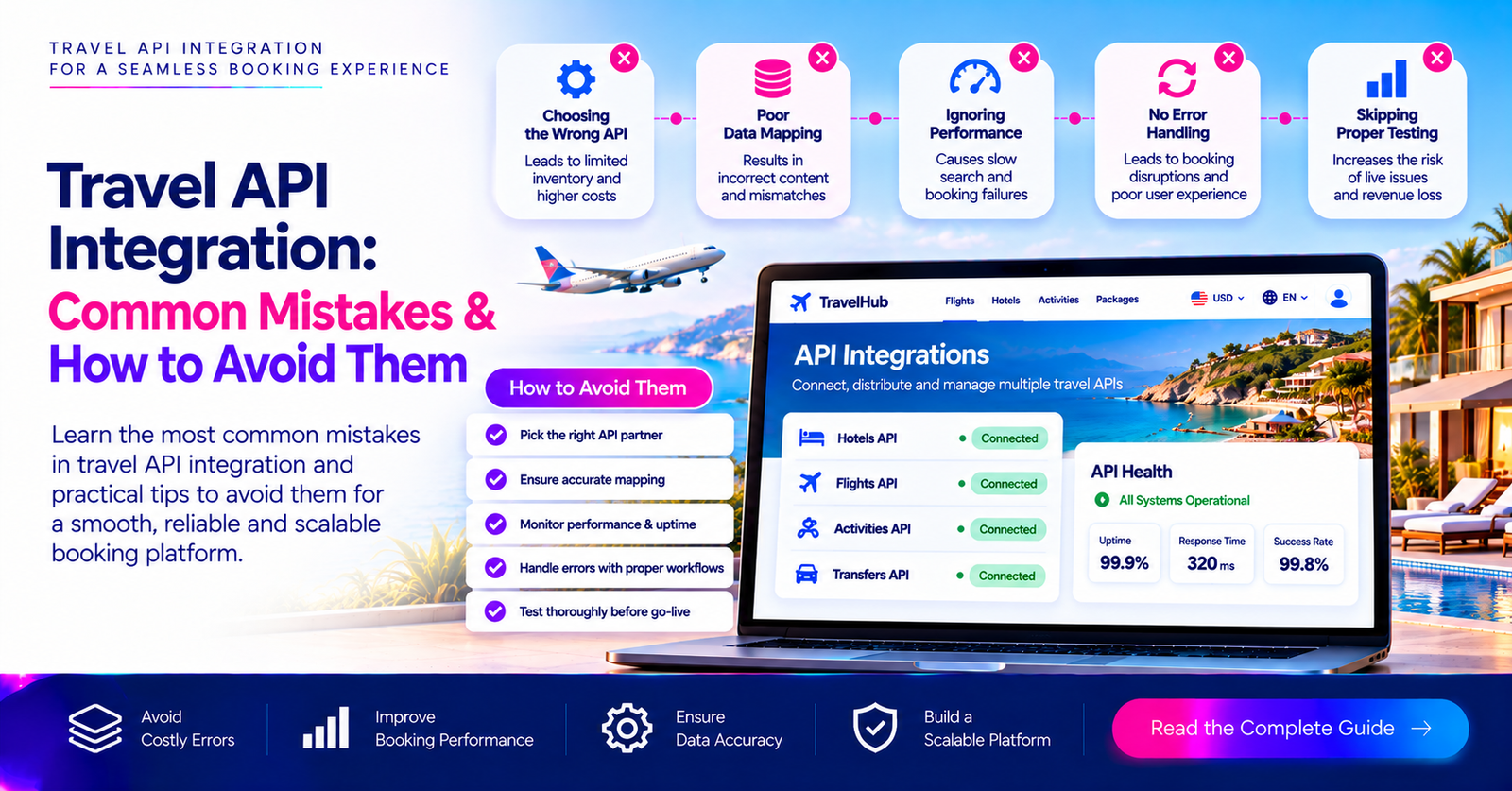
Travel API Integration: Common Mistakes & How to Avoid Them
A travel booking can go wrong even when everything appears to be working. Your customer finds a hotel room, selects a rate, enters the details and makes a payment. Then the booking platform displays an error because the supplier cannot confirm the room. The customer has paid but there is no confirmed reservation. For your travel business situations like these are more than technical inconveniences. They can lead to refund requests and additional support work. This is why connecting Travel API to a booking platform needs careful planning. The connection must do way more than just retrieve hotel or flight information. It needs to handle availability pricing supplier responses and payments. A small mistake in one part of the process can affect the entire customer journey. For example incorrect room mapping can create confusing search results while poor time out handling can leave a reservation stuck in an uncertain way.
Common Travel API Integration mistakes that can disrupt bookings
Most integration problems do not come from one major technical failure. They often develop from small gaps in how your platform handles the supplier information and booking requests.
1. Choosing a Travel API Provider based only on inventory sites
A provider might just advertise access to thousands of hotels on a large range of travel products. That sounds attractive especially for a new OTA trying to offer customers more choices. Think about an agency that mainly sells holidays in Europe. It connects with a provider offering extensive global hotel coverage but the property is returned for its most popular destinations with limited room choices. You need to test the provider against the destinations and products your business expects to sell. Search for popular destinations, refundable rates and other options your customers are likely to need. You also need to check how frequently availability and pricing are updated, what happens after a booking request and whether cancellations or modifications are supported. Before selecting a provider ask for a practical test access and evaluate the results yourself.
2. Not rechecking prices before booking
One of the most frustrating experiences for a traveler is finding a hotel at one price and seeing a different amount at checkout. This can happen because travel inventory changes frequently. A room might be booked by another customer or a supplier might update the rate or the original search response might no longer reflect the latest availability. You can avoid this by validating the selected product’s price and availability before submitting the final booking request. If the supplier returns a different amount so the revised price clearly and ask your customer to approve it before continuing.
3. Displaying supplier data without proper mapping
Not every supplier describes travel products in the same way. One hotel provider might use a particular room name while another might describe the same room using different wording. Meal plans, property facilities, and event date formats can vary. For example one supplier might return a room as a deluxe king room with breakfast while another uses king deluxe BB. The descriptions might refer to similar options, but the platform should not automatically treat them as identical without checking the underlying details. Displaying raw supplier responses directly can make the search results inconsistent. You need to create a standard data structure within the booking platform and map supplier specific fields into consistent categories. Pay specific attention to room occupancy and meal plans.
4. Overlooking hotel and room mapping
Hotel mapping deserves separate attention because the same property can appear multiple times across different suppliers. One supplier might list a property using its full name while another uses an abbreviated name or a slightly different address. Without proper mapping the hotel booking platform might display these as separate hotels. This creates a problem for customers comparing prices. Room mapping can be even more complicated. 2 suppliers might use different names for similar room categories but the actual inclusions might not match. One room might include breakfast while another does not. Matching rooms based only on names can therefore lead to incorrect comparison. You need to use a structured hotel and room mapping process that checks property identifiers and location details. Do not rely on hotel names alone.
5. Failing to handle booking names error and API timeouts
Your customer submits a booking request and waits for confirmation. The supplier takes too long to respond and the booking platform displays an error. But has the reservation actually failed? This is exactly where poor error handling can create serious problems. A timeout does not always mean the supply rejected the booking. The request might have reached the supplier but the response might not have reached the booking platform in time. You need to build clear booking status management into the platform. It should distinguish between confirmed failed and pending or uncertain reservations. Use appropriate retry and rules for temporary errors but do not automatically repeat a booking request when its outcome is unknown.
6. Assuming payment success means the booking is confirmed
Payment and reservation confirmation are 2 very different operations. Treating them as one can create problems for both the customer and the travel business. Consider a customer who pays for a hotel booking through the platform: the payment gateway confirms the transaction was successful, but the hotel supplier does not confirm the reservation. The payment has gone through but the customer does not have a confirmed room. This can happen when your supplier responses are delayed or availability changes during checkout. Without a clear process the business might struggle to determine whether it should retry booking, hold the transaction or initiate a refund. It’s very important for you to maintain a separate payment and booking status. A successful payment response should not automatically change the reservation status to be confirmed. The platform needs a defined process for pending bookings, unsuccessful reservations or payment reversals. Payment reconciliation is equally important.
7. Ignoring cancellations modifications and refunds
Getting a new reservation confirmed is only one part of the booking journey. Your customers might later need to cancel and even change the travel dates. A hotel reservation might allow free cancellation until a particular date while another rate might be non refundable. Flight changes might depend on fare conditions and airline rules. A cancellation request might also remain pending while the supplier processes it. You can include post booking workflow in the original integration scope and test how the platform retrieves reservations and tracks the resulting status. Display the applicable cancellation conditions before payment. After the cancellation request is submitted, communicate whether it has been submitted or rejected. The platform should also distinguish between supplier refund approval and the actual payment refund status.
How poor Travel API Integration can affect travel business growth
Travel API Integration Mistakes do not stay limited to the technical team. They can affect how your customers experience the platform and how effectively your business operates. When prices change unexpectedly or bookings are filled during checkout, your customers might just abandon the process and choose another website. Even if the issue is caused by a supplier they usually associate the experience with the booking platform. Unresolved reservations also increase the workload for customer support teams. Your staff needs to contact suppliers, check payment records and follow up on refunds. There can be financial consequences too. Payment and booking mismatches make reconciliation difficult, while duplicate reservations or incorrect pricing can create additional costs. A well organized integration makes it easier to manage supply relationships, maintain consistent booking processes and introduce additional inventory when the business is ready.
What to Evaluate Before Choosing a Travel API Provider?
| Key Factor | What Your Business Should Look For |
| Travel Inventory | Hotels, flights and other travel products that match your target markets. |
| Price and Availability | Accurate rates, updated availability and clear booking conditions. |
| API Documentation | Clear technical instructions and examples for developers. |
| Testing Facility | A sandbox to test searches, bookings and cancellations before launch. |
| Booking Support | Options to confirm, retrieve, modify and cancel reservations. |
| Error Management | Clear responses for failed bookings, timeouts and unavailable inventory. |
| Technical Assistance | Support during integration and help with issues after launch. |
| Pricing Structure | Clear setup fees, transaction charges and other ongoing costs. |
A reliable booking platform is not created simply by connecting as many suppliers as possible. The quality of integration depends on how well your platform manages the information and transaction it receives. Before development begins you need to define the travel products your business wants to sell and also identify the suppliers that can provide relevant inventory. Evaluate the travel ABI provider based on actual coverage and documentation. If you are looking for the best travel API integration, you can connect with experts at Traveltekpro.
Read More: How to Select a Travel API Provider 2026: Full Guide
FAQ'S
Related Blogs
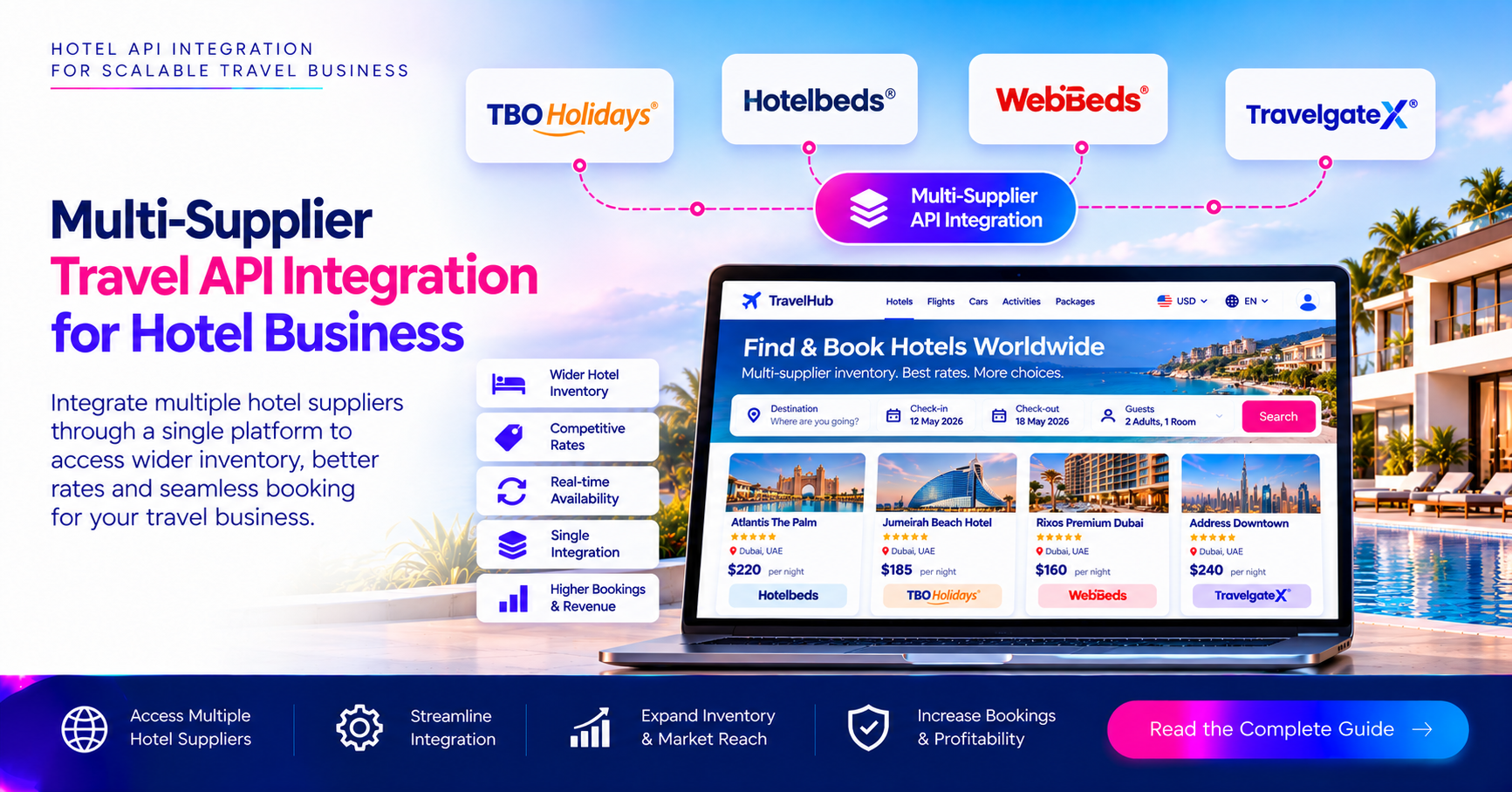
Multi-Supplier Travel API Integration for Hotel Business
Multi-Supplier Travel API Integration for Hotel Business Hotel businesses often work with multiple suppliers to offer customers a wider choice of properties and home categories so starting managing inventory from different sources can become complicated…
Nov 3, 2026Read More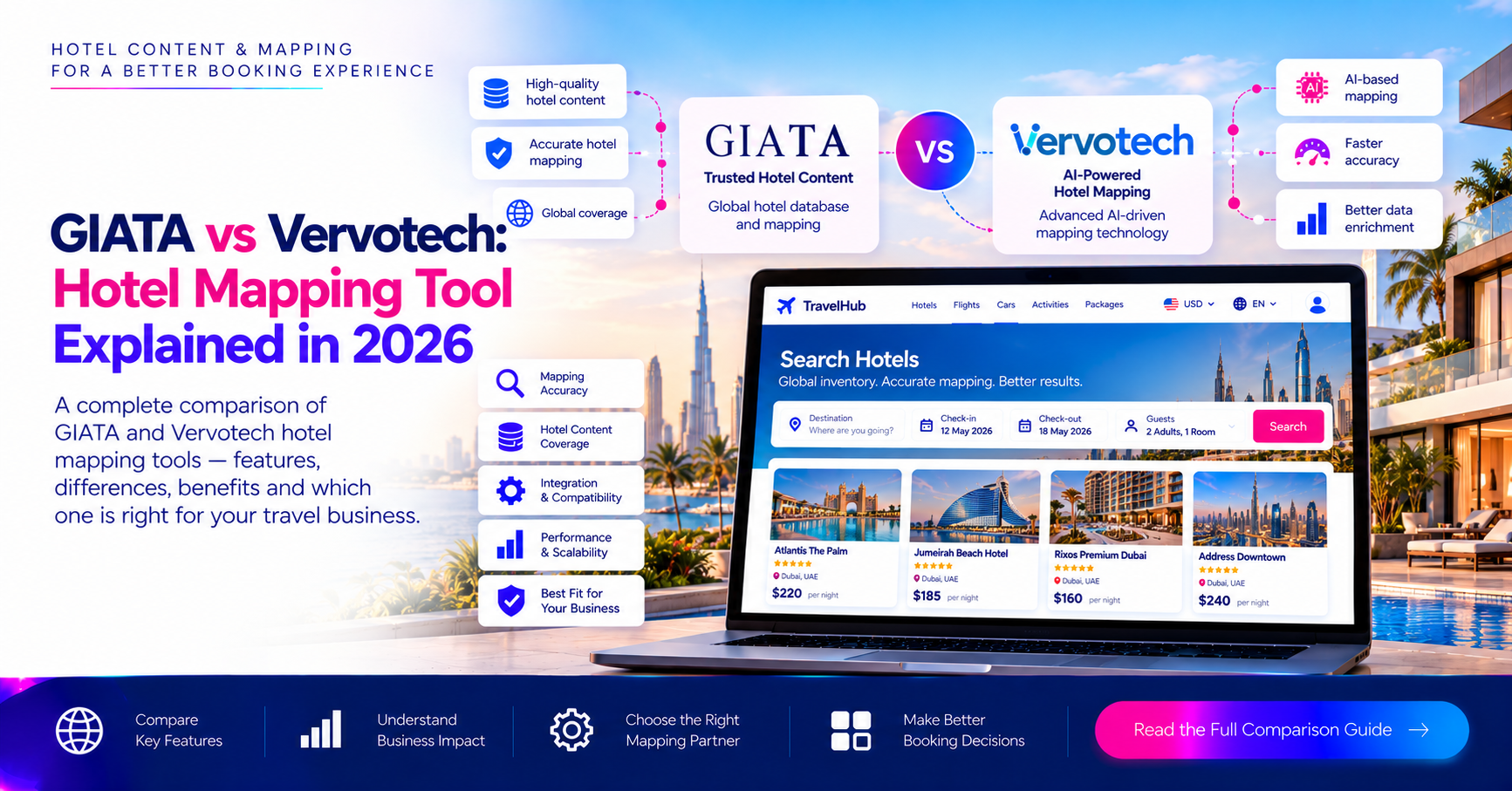
GIATA vs Vervotech: Hotel Mapping Tool Explained in 2026
GIATA vs Vervotech: Hotel Mapping Tool Explained in 2026 When you connect multiple hotel suppliers to a travel booking platform you might expect each supplier to return a different selection of properties. But sometimes several…
Oct 29, 2026Read More
Get in touch
Email Us
sales@traveltekprogroup.com“We opted for Traveltekpro to construct and implement our Flight booking system, and I am thoroughly pleased with the outcomes. Their team displays remarkable efficiency, expertise, and utmost professionalism throughout the project.”

Arun Neli
Chief Operating Officer
“I had a fantastic experience with Traveltekpro! Their custom booking system designed for our platform is not only sleek and easy to use,but it has also received excellent feedback rom our customers. Kudos to the Traveltekpro team for their outstanding work!”

Benjamin Smith
Product Manager
“Traveltekpro has been a delight to collaborate with on two distinct occasions, showcasing professionalism and expertise. Their team demonstrates a commitment to surpassing expectations and adheringto deadlines.”

Kevin Brown
CTO
“We partnered with Traveltekpro for our travel booking platform, and the experience was excellent. The team understood our requirements quickly, delivered on time, and provided great support throughout the project. Highly recommended.”

Manish Singh
Director of IT
“Great experience working with Traveltekpro. They were responsive, knowledgeable, and always ready to suggest better solutions. The final product exceeded our expectations, and the after-launch support has been excellent.”

Shubham Rawat
Founder & CEO