
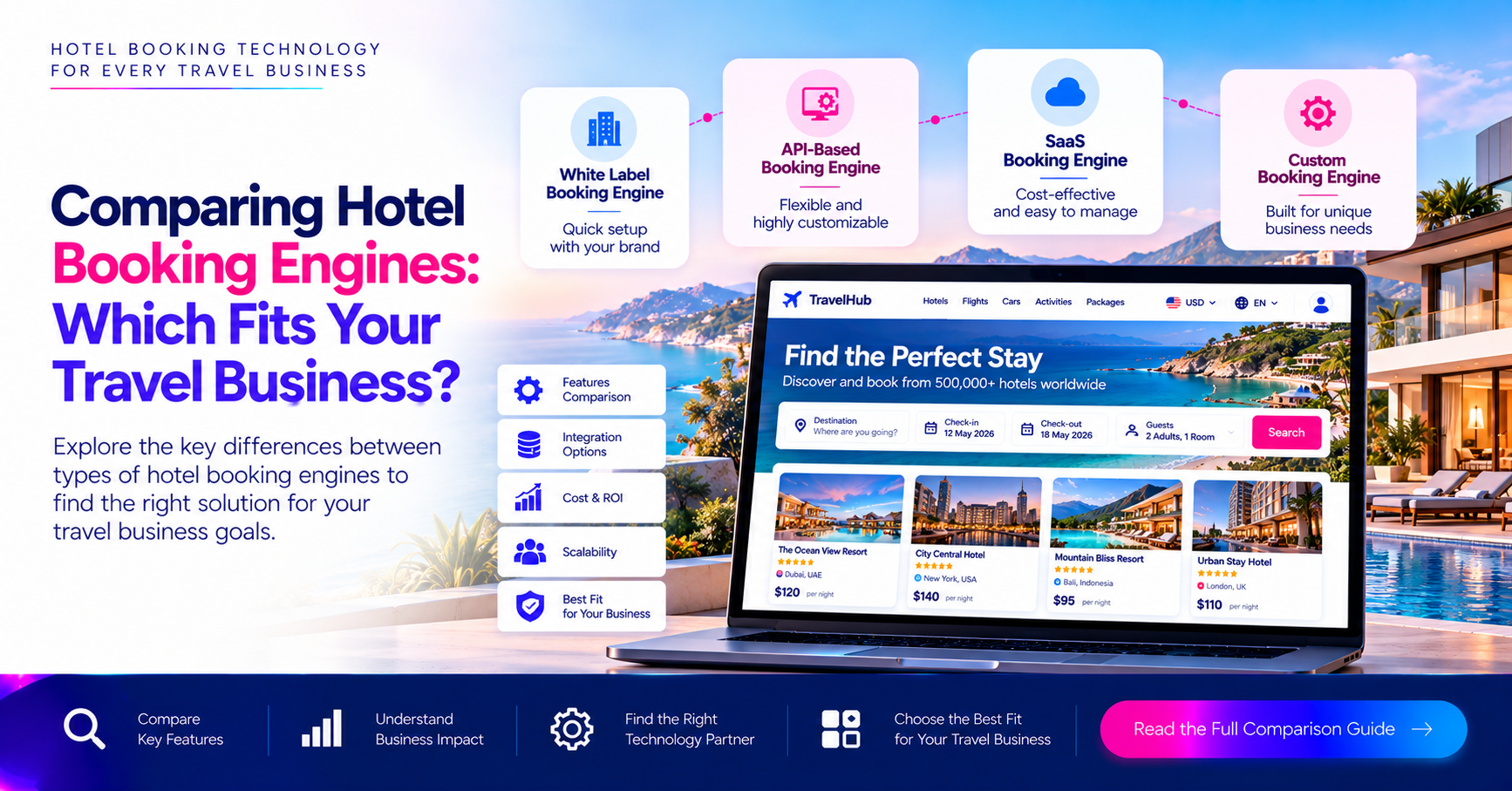
Comparing Hotel Booking Engines: Which Fits Your Travel Agency Best?
Choosing a Hotel Booking Engine is way more than just finding a system that displays room rates and lets your customers make a reservation. For travel business the real challenge is finding a hotel inventory that suits its customers, maintaining competitive selling prices and managing bookings without unnecessary manual work. A retail travel agency helping families plan holidays might need a simple booking interface with reliable hotel options and clear cancellation policies. If you are a B2B travel company supplying rooms to hundreds of agents you have different priorities. You need negotiated rates and agent specific markups. Both the businesses need hotel booking technology but they do not necessarily need the same solution. The right Hotel Booking System should match your sales channel supply network and day to day booking process. It should help your team move from searching for a property to confirming a reservation while making it easier to manage changes and track financial details.
Not every Hotel Booking Software solves the same problem
The term hotel booking engine can describe different types of technology. Understanding the intended use of a platform is the first step towards comparing providers properly.
1. Direct Hotel Booking Engine
A direct hotel booking engine is basically designed for a hotel or accommodation provider to sell its own rooms. Guests can visit your website, compare available room options and complete a reservation. The hotel controls the room inventory and selling conditions available through the system. This setup is useful for accommodation businesses that want to manage 3rd party reservations directly rather than relying on other channels. But if you are a travel agency selling rooms from hundreds of properties you generally need broader inventory access rather than just a single hotel’s direct booking engine.
2. Travel agency Hotel Booking System
a travel agency hotel booking engine connects the agency with hotel inventory available through one or more suppliers. Depending on the integration you can search properties, compare rates and review room conditions. The model is suitable for you if you want to offer accommodation across multiple destinations without building a separate booking process for every hotel supplier. The important question is whether the available inventory and booking functions match your needs. A system with many hotel listings might still be unsuitable if it lacks relevant properties or post booking function.
3. B2B Hotel Booking Software
It is designed for travel businesses that distribute hotel inventory to registered agents or business partners. Besides hotel search and reservations the platform can also support agent accounts negotiated rates Commission and credit controls depending on the capabilities.
Compare hotel inventory before comparing software features
A booking engine is just useful when it provides access to properties and rates that your customers actually want. A polished interface cannot compensate for missing hotels or prices that become competitive during checkout.
Direct contracts, bed banks, GDS, and hotel APIs
- Direct hotel contracts allow agencies to work directly with properties under agreed commercial terms. This agreement can be really valuable when you regularly sell a particular hotel and have negotiated a rate for a specific destination.
- Bed banks and wholesalers aggregate accommodation inventory and distribute it to travel businesses. Instead of establishing an individual relationship with every hotel you can access a wider collection of properties through a supplier relationship.
- A global distribution system provides travel content through established distribution networks. If you already use GDS-based workflows, you might find hotel connectivity through these systems relevant depending on the market.
- Hotel APIs and aggregators allow booking software to exchange information with connected suppliers. Depending on the API your system can retrieve property details, room availability and booking information.
Why more hotels do not always mean better inventory
Supplier count does not always tell you how useful a booking engine will be. One platform might liST thousands of properties that are irrelevant to your destinations while another might provide better options for the routes and locations your customers frequently request. You should always look at room availability property information occupancy rules and cancellation conditions at the final price shown during booking. Hotel mapping is another important consideration when multiple suppliers provide information about the same property. If your system does not match duplicate listings correctly the same hotel might appear more than once with inconsistent names or room descriptions. A practical way to evaluate inventory is to test the same destination and travel dates across your shortlisted providers.
Compare the cooking journey from search to confirmation
The search screen is only part of the booking process. Before selecting any platform follow up complete preservation.
-
Search filters and property information
A useful hotel search should help you find suitable accommodation without unnecessary effort. Common search requirements include destination check in and checkout dates, number of guests and room occupancy. Filters can help you narrow results by price, star rating location and property type. Clear room information is equally important. Users should understand whether the rate includes breakfast, how many guests it covers and whether additional charges might apply.
-
Rate revalidation and final pricing
Hotel rate displayed during initial search might change before the customer completes the booking. Availability can also change when another website reserves the last room. Reliable workflow should support rate revalidation before the reservation is finalized. If your supplier returns a different price or the selected room is no longer available the system should communicate the change clearly rather than just leaving the users uncertain. You should also check how the selling price is calculated. The final amount depends on supply rates, taxes and markups.
-
Reservation confirmation and booking records
After your customer selects a room and submits the required details the system must process the reservation through a connected supplier or booking service. Your team should be able to identify the booking reference, guest details and current reservation status. It is important to distinguish between a submitted booking request and a confirmed reservation.
-
Modifications cancellations and refunds
Hotel bookings often require attention after confirmation. Your customers might change their dates or even request another room. The booking engine should make it easy for authorized employees to drive a reservation and review its applicable conditions. Depending on the supplier and platform your staff might be able to submit modifications and track refund progress through connected workflows.
Hotel Booking Engine Comparison: What Should Your Agency Measure?
| Evaluation criteria | What to compare |
| Inventory coverage | Relevant destinations, properties, room types and suppliers |
| Rate quality | Final price, inclusions, taxes and cancellation conditions |
| Search performance | Response time, filtering and relevance of results |
| Booking reliability | Rate validation, supplier confirmation and error handling |
| Commercial controls | Markups, commissions, net rates and agent-specific pricing where supported |
| Post-booking support | Modifications, cancellations, refunds and booking retrieval |
| Integrations | Supplier APIs, payment gateways, CRM and other required systems |
| Reporting | Sales, booking status, supplier performance and margin visibility |
| Commercial terms | Subscription, implementation, transaction fees and support costs |
Understand how Hotel Booking System affects your margins
The lower subscription price does not always translate into lowest operating cost. A booking engine can affect profitability through supplier rates, manual work and time employees spend resolving networking issues. You can start by comparing the supply rates and commercial terms available through each provider. Look at the final selling price rather than comparing headline rates alone. Next you also need to review the pricing controls. The ability to apply suitable markup commissions or customer specific prices can be important for agencies selling through different channels. The software zone cost also matters. Depending on the provider these might include subscriptions and custom development. Finally you need to consider the cost of operational problems. If employees spend hours resolving failed reservations chasing confirmations or reconciling refunds those tasks create a cost even when they do not appear on the software invoice.
Questions to ask before selecting Hotel Booking Software
Before signing the agreement ask each provider a consistent set of questions about inventory integrations and operational workflows. Which hotel suppliers and inventory source are included in the proposed setup? Can the agency connect additional suppliers as its business grows. How does the system handle duplicate properties and inconsistent room information? Ask for clear answers and request a demonstration wherever possible. It is also worth checking implementation timelines and data access arrangements.
Where Traveltekpro fits into your hotel booking technology decision?
Traveltekpro Offer hotel booking system development and travel technology services for businesses looking to build or customize their online booking operations. If you are evaluating the company the important question is how the proposed solution fits in the booking model. Connect with experts today to learn more about hotel booking software.
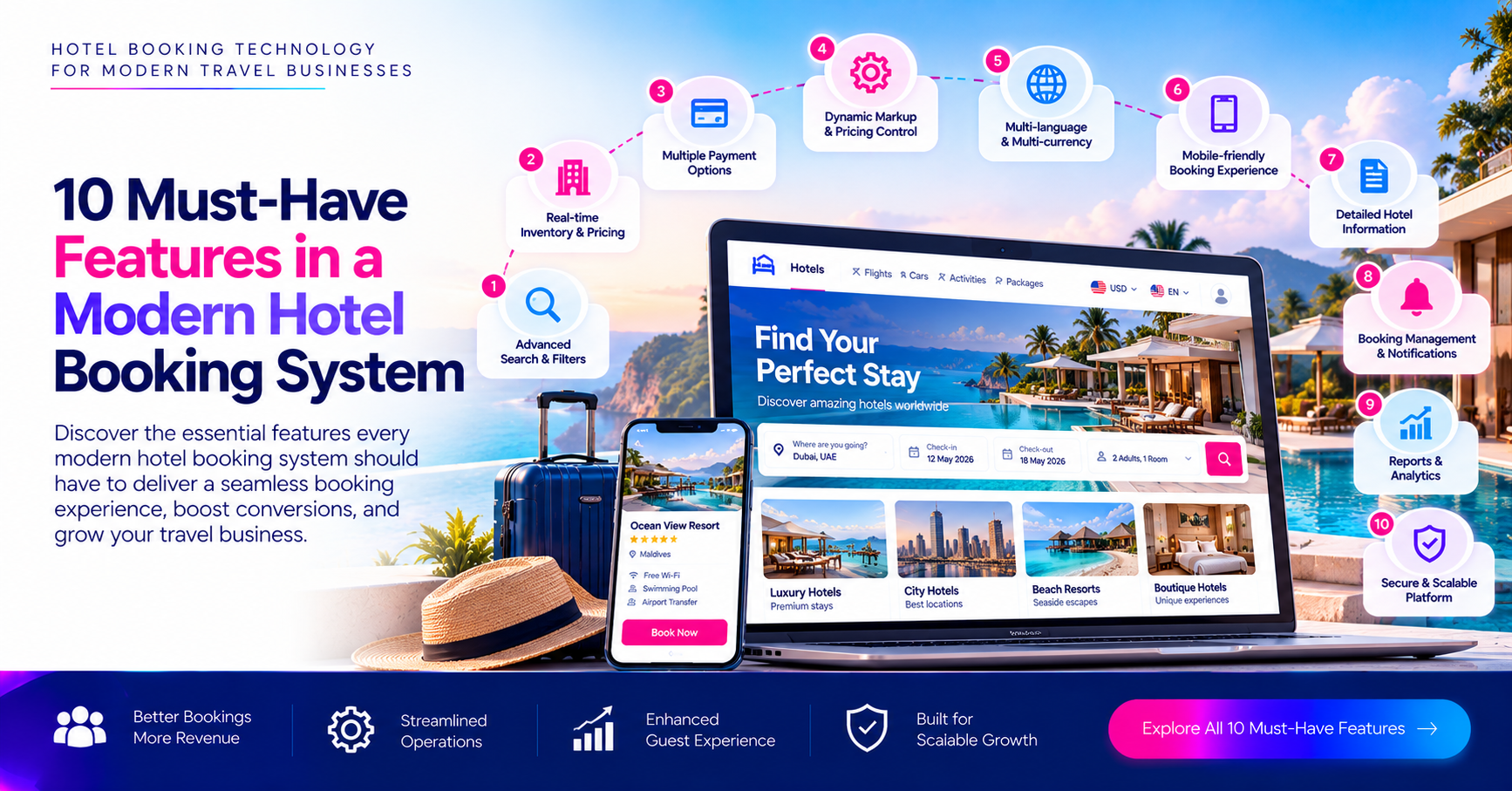
Read More: 10 Must-Have Features in a Modern Hotel Booking System
FAQ'S
Related Blogs
Get in touch
Email Us
sales@traveltekprogroup.com“We opted for Traveltekpro to construct and implement our Flight booking system, and I am thoroughly pleased with the outcomes. Their team displays remarkable efficiency, expertise, and utmost professionalism throughout the project.”

Arun Neli
Chief Operating Officer
“I had a fantastic experience with Traveltekpro! Their custom booking system designed for our platform is not only sleek and easy to use,but it has also received excellent feedback rom our customers. Kudos to the Traveltekpro team for their outstanding work!”

Benjamin Smith
Product Manager
“Traveltekpro has been a delight to collaborate with on two distinct occasions, showcasing professionalism and expertise. Their team demonstrates a commitment to surpassing expectations and adheringto deadlines.”

Kevin Brown
CTO
“We partnered with Traveltekpro for our travel booking platform, and the experience was excellent. The team understood our requirements quickly, delivered on time, and provided great support throughout the project. Highly recommended.”

Manish Singh
Director of IT
“Great experience working with Traveltekpro. They were responsive, knowledgeable, and always ready to suggest better solutions. The final product exceeded our expectations, and the after-launch support has been excellent.”

Shubham Rawat
Founder & CEO