
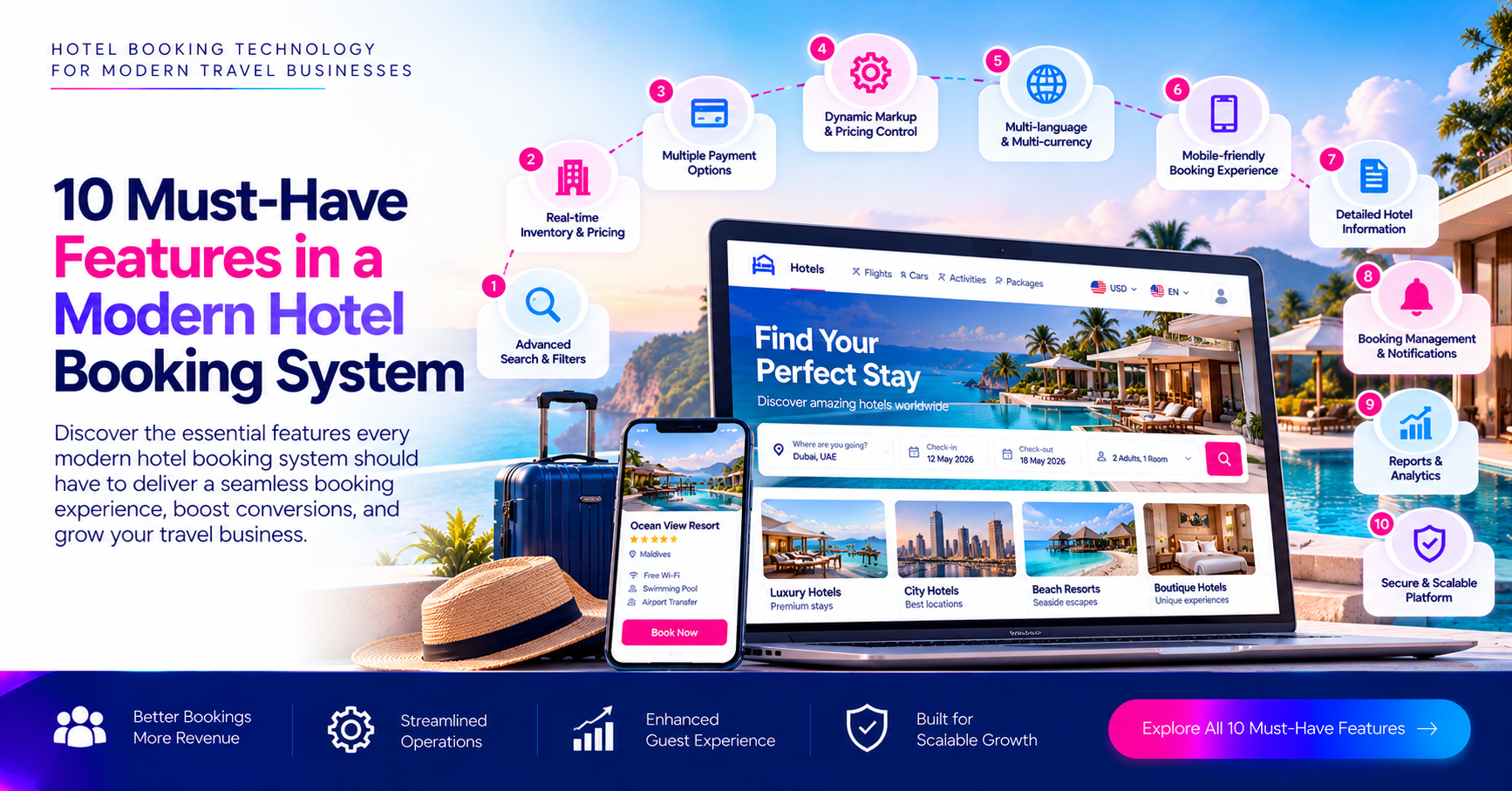
10 Must-Have Features in a Modern Hotel Booking System
A guest visitor hotel website checks availability for a weekend, compares room categories and selects a rate that fits their budget. They enter the details, make a payment and expect to receive confirmation within seconds. From the guest’s perspective, this should be a really simple process. Behind the scenes, however, your hotel needs to ensure that a selected room is actually available, the displayed price is correct, and the payment is processed properly. These activities are handled through disconnected tools . Even a simple booking can create extra work. Staff must manually update availability and respond to confirmation queries. This is why Hotel Booking Engine Needs to do way more than just accept reservations. It should connect room inventory pricing, booking payments and distributions in a way that supports both guest experience and the hotel’s daily operations. For hotel owners, hospitality managers, and travel agencies, understanding these features is very important when evaluating a hotel booking system.
What makes Hotel Booking Software different from a basic booking tool?
A basic booking tool might allow your customers to select a room and submit a reservation but that does not necessarily mean the entire booking process is connected. Consider a hotel that receives reservations through its website and 2 external booking channels. When your guest books the last available room the hotel needs the inventory to update correctly. If the change does not reach the other channels another customer might attempt to book the same room. Staff then have to resolve a problem that could have been prevented through better inventory synchronization. A modern hotel booking system brings all the activities closer together. It can connect availability room rates and reservations depending on the platform’s capabilities and integrations. The requirements also vary by business model. An independent hotel might prioritize direct bookings and simple rate management, while a hotel chain might need centralized controls across multiple properties.
10 must have features in modern Hotel Booking Engine
1. Real time availability and inventory management
Room availability is one of the most important parts of any hotel booking operation. Your guests expect the system to showrooms that can actually be booked for the selected dates while hotel staff need confidence that the same inventory is not being sold twice. A useful Hotel Booking System should display availability according to the requested dates and room categories. It should also update inventory when a booking is confirmed or modified wherever the relevant integration supports those updates. For example if you have just one deluxe room remaining for Saturday night. A guest books that room through the hotel’s website. The system must reflect the reservation and hotel inventory and update connected sales channels according to the synchronization arrangements. Inventory management also involves handling dates when a room cannot be sold. The hotel might close a room for maintenance or restrict arrivals. These restrictions should be reflected correctly in your booking process.
2. Flexible pricing and rate management
Hotel pricing changes according to demand season and room category. A system that can display rooms but cannot manage the hotels pricing rules properly might create problems for both revenue and customer trust. For example, a standard room might have one rate during the week and another during a festival weekend. Deluxe rooms might be offered with breakfast while another rate excludes means but also offers free cancellation. Your system needs to distinguish between these options clearly. Rate accuracy is as important as competitive pricing. If your guest sees one amount during the search process and different amount at checkout without a clear explanation they might just abandon the booking or question the hotel’s pricing. Before choosing any software, test different room categories and rate conditions. Confirm that the correct price and applicable terms appear throughout the booking journeys stop
3. A user friendly hotel booking engine
The hotel booking engine is the customer facing part of your booking process. Visitors can search accommodation, compare available options and complete reservations. A booking engine should make it easy for your guests to enter the destination properly, select dates and specify the number of guests. Room descriptions, amenities and occupancy limits should be presented clearly enough for your customers to make the right decision. The checkout process is as important as other details. Unnecessary form fields or confusing rate options can interrupt the customers decision to book. A well designed booking engine should therefore make the next step clear at every stage.
4. A mobile friendly booking experience
Many guests search for accommodation on their phones. sometimes while travelling or making last minute plans. If the booking process is difficult to use on a small screen you end up risking losing a customer who was otherwise ready to reserve. Mobile friendly booking experience should make dates, room categories and booking conditions easy to read without requiring a visitor to zoom in or move around a poorly arranged page. Booking form should also work comfortably on mobile devices. Consider someone booking a hotel room while travelling between Cities. They might have limited time and a slow Internet connection. If the page takes too long to load or the checkout process repeatedly loses entered information they might choose another property. So, complete a booking using a mobile device and check whether room information is readable and payment can be completed without layout problems.
5. Secure payment processing and booking confirmation
A booking is not complete from the guest perspective until they understand whether the reservation has been confirmed and what payment has been received. A modern Hotel Booking Software Solution should connect the payment process with the reservation status from depending on your requirements it might need to support payment gateway integrations multiple currencies and booking receipts. The system should make it clear whether a payment is successful pending or unsuccessful. This information is important when your customer encounters a network interruption or the payment provider takes time to return a response. This scenario should be part of software evaluation. You need to ask how the system handles payment success followed by delayed or failed reservation confirmation.
6. Integration with hotel management and distribution systems
A booking system becomes more useful when it can exchange information with other systems involved in running the hotel. For an independent property this might mean connecting with a booking engine to a property management system and a channel manager. They can support front office and property operations, while the channel manager helps distribute rates and availability across connected sales channels. The important point is that the systems must exchange the correct information. If room rates are mapped incorrectly then they might just appear under the wrong category. If rate plans are mapped incorrectly your customers might receive inaccurate information about breakfast or cancellation terms. Before selecting a Hotel Booking Engine, identify the systems your business already uses and determine which connections are required.
7. Automated booking changes cancellations and refund workflows
The booking process continues long after your guest receives confirmation. Your customers might change their travel dates, cancel the reservation or request assistance with an existing booking. A useful system should help your staff retrieve reservations, apply the relevant booking conditions and manage changes without rebuilding the entire booking manually. Cancellation rules need particular attention. A refundable rate might permit cancellation before a specific deadline, while a non-refundable rate might have different conditions. Refunds also require proper tracking. Canceling a reservation does not mean the money has been returned to the customer. Inventory also should be handled correctly. If your guest cancels a room, the system needs to determine whether that room can be offered again for the same dates, taking into account any restrictions or remaining availability.
8. Guest data management and personalization
Guest information can help your hotels provide more relevant service provided that the information is collected and used responsibly. A useful Hotel Booking System might maintain guest profiles relevant preferences, special guests and communication records. Authorized staff can then access the information they need or preparedly ask guests to provide the same details. Customization can also support relevant offers like room upgrades or additional services when they suit your guests booking preferences. But collecting more information is not automatically better. Access controls are very important. When evaluating software, ask how guest records are stored, who can access them, how communication history is maintained, and what controls are available to support responsible data handling.
9. Reports analytics and revenue insights
Hotels might receive bookings everyday without having a clear understanding of which sales channels perform well, which room categories generate revenue or where customers abandon the booking process. Reporting helps managers move beyond individual reservations and examine the performance of wider booking operations. A modern Hotel Booking Software might provide booking volume revenue occupancy booking source information and other relevant measures. Depending on the platform it might also report on average booking value and conversion rates. Reports are most useful when the underlying data is accurate and the matrix is clearly defined. Before choosing software confirm that the reports answer the questions your business actually needs to investigate.
10. Scalable architecture user permission and reliable support
A booking system should support your business as the requirements change. A solution that works well for one property might be traditional capabilities needed when the company adds locations or sales channels. Scalability is not just about handling more bookings. It also involves managing different user roles, maintaining system performance during busy timelines and supporting the integrations on which the business depends. Liability and recovery mechanisms are also noteworthy. You need to ask the provider about system monitoring backups, incident handling and procedures for recovering from technical failures. Support is another practical consideration. If a booking payment issue occurs during a busy timeline your hotel needs to know how to contact the provider, what support arrangements are available and how urgent issues are handled.
Which Hotel Booking System Features Matter Most for Different Businesses?
| Business type | Must-have features | Why they matter |
| Independent Hotels | Direct booking engine, flexible rate management, secure payments and booking confirmations | Helps hotels accept direct reservations, manage room prices and reduce manual booking work. |
| Hotel Chains | Centralised inventory, property-level controls, PMS integrations and consolidated reporting | Allows teams to manage multiple properties while maintaining visibility into bookings, rates and performance. |
| Resorts | Seasonal pricing, room availability, packages and add-on services | Supports changing demand, holiday offers and packages that combine accommodation with additional services. |
| OTAs and Travel Agencies | Hotel supplier API connectivity, rate mapping, inventory synchronisation and cancellation management | Helps manage hotel options from multiple suppliers while keeping room details, prices and reservation statuses consistent. |
| Growing Hospitality Businesses | Scalable architecture, workflow automation, user permissions and flexible integrations | Supports additional properties, users and booking channels without making everyday operations unnecessarily complicated. |
The right hotel booking system should support way more than just initial reservation. It should help connect to mobility pricing, payments, distribution, customer information, and post-booking workflows in a way that suits your business. A travel technology partner, Traveltekpro, can help. Ultimately a modern hotel booking engine and its supporting system should work together to make reservations easier to complete and easier to manage.
FAQ'S
Related Blogs
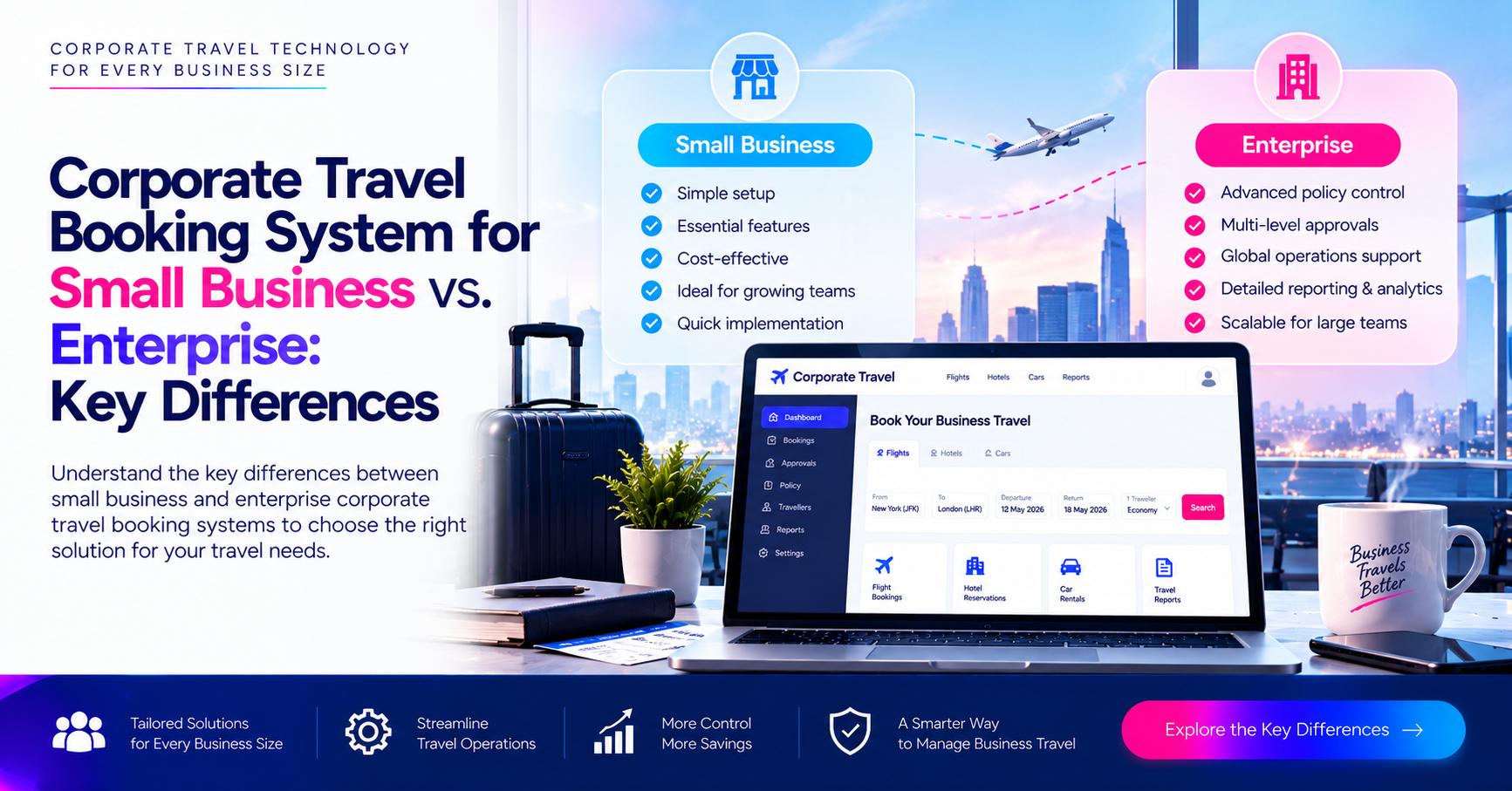
Corporate Travel Booking System for Small Business vs. Enterprise: Key Differences
Corporate Travel Booking System for Small Business vs. Enterprise: Key Differences Choosing a corporate travel booking system becomes more complicated as your company grows. A business with 15 employees travelling occasionally might need a simple…
Oct 15, 2026Read More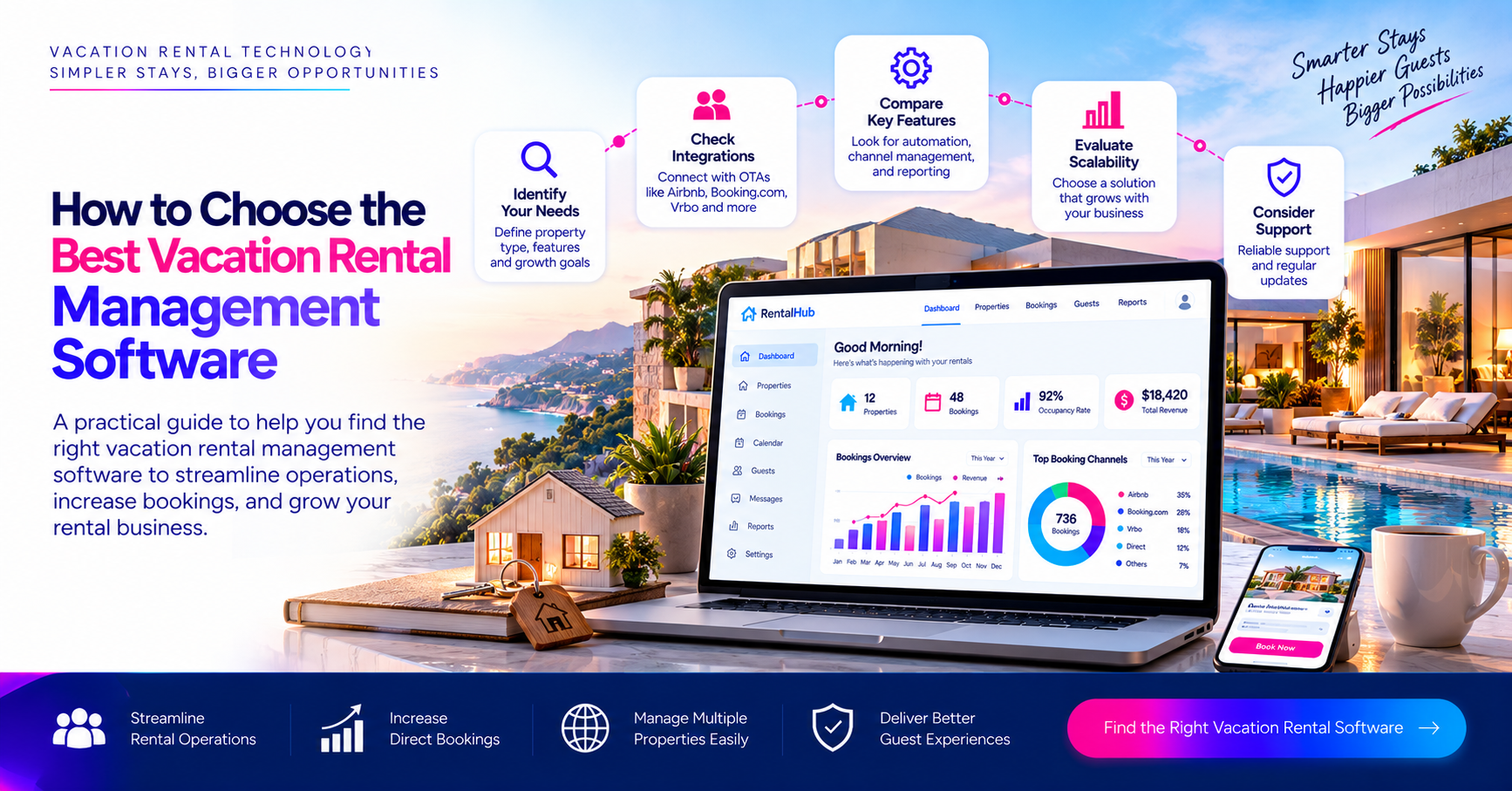
How to Choose the Best Vacation Rental Management Software
How to Choose the Best Vacation Rental Management Software Choosing the right Vacation Rental Software is not simply about comparing platforms or counting features. A system can have a long list of capabilities and still…
Oct 14, 2026Read More
Get in touch
Email Us
sales@traveltekprogroup.com“We opted for Traveltekpro to construct and implement our Flight booking system, and I am thoroughly pleased with the outcomes. Their team displays remarkable efficiency, expertise, and utmost professionalism throughout the project.”

Arun Neli
Chief Operating Officer
“I had a fantastic experience with Traveltekpro! Their custom booking system designed for our platform is not only sleek and easy to use,but it has also received excellent feedback rom our customers. Kudos to the Traveltekpro team for their outstanding work!”

Benjamin Smith
Product Manager
“Traveltekpro has been a delight to collaborate with on two distinct occasions, showcasing professionalism and expertise. Their team demonstrates a commitment to surpassing expectations and adheringto deadlines.”

Kevin Brown
CTO
“We partnered with Traveltekpro for our travel booking platform, and the experience was excellent. The team understood our requirements quickly, delivered on time, and provided great support throughout the project. Highly recommended.”

Manish Singh
Director of IT
“Great experience working with Traveltekpro. They were responsive, knowledgeable, and always ready to suggest better solutions. The final product exceeded our expectations, and the after-launch support has been excellent.”

Shubham Rawat
Founder & CEO