
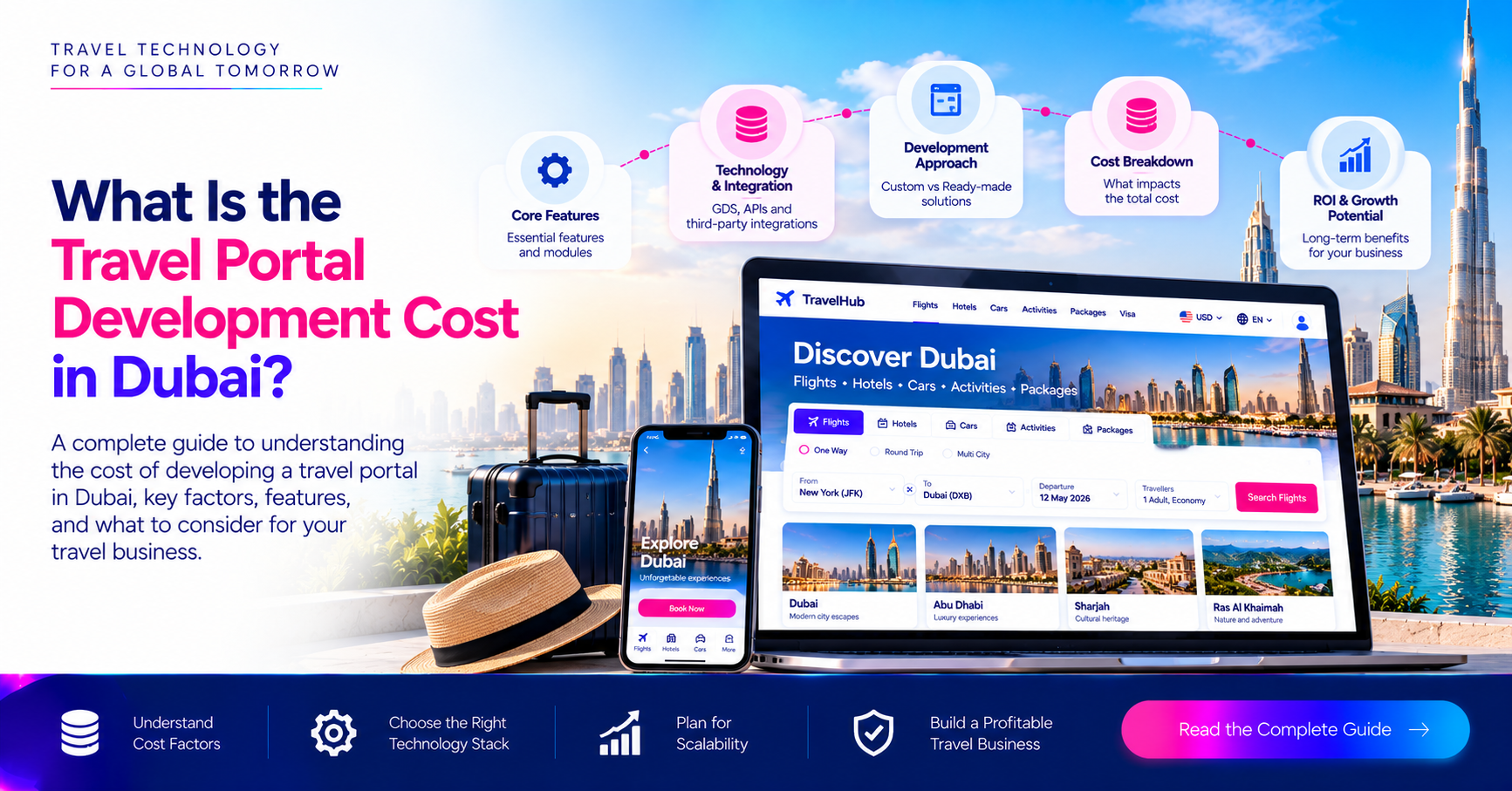
What Is the Travel Portal Development Cost in Dubai?
If you are planning to launch a travel business in Dubai one of the first questions you will probably ask is how much will it cost to build a travel portal? The answer depends on what you want the platform to do. A travel agency that needs a website for hotel booking has different requirements from a B2B travel company that wants to connect multiple suppliers or manage credit limits and handle bookings across flights and transfers. The budget also depends on whether you choose an existing white label solution or a customized and established booking platform. Each approach comes with its own unique setup costs, integration, and ongoing expenses. When estimating Travel Portal Development Cost in Dubai It’s important for you to look beyond the website design. Supplier connectivity booking workflows and payment processing can all affect the final investment.
How Much Does Travel Portal Development Cost in Dubai?
The cost of developing a travel portal in Dubai can range from a relatively modest setup fee for a wide label platform to substantial investment for a fully customized multi supplier travel system. The most reliable way to estimate your budget is to prepare a return scope covering the products you want to sell, the suppliers you need to connect the users who will access the system and the functions required after booking is made.
| Portal type | Illustrative planning budget | What it may include | Main cost consideration |
| White-label travel portal | AED 5,000–25,000 for initial setup | Existing booking technology, branding and basic configuration | Setup charges and recurring licensing |
| Basic booking portal | AED 25,000–70,000 | Search, reservations, payment integration and administration | Building the core booking workflow |
| B2B or B2C travel portal | AED 60,000–150,000 | Customer or agent accounts, pricing rules and booking management | User roles and commercial controls |
| Multi-product travel platform | AED 120,000–300,000+ | Flights, hotels, transfers, activities and multiple supplier connections | Integration and operational complexity |
| Enterprise travel platform | AED 300,000+ | Advanced workflows, reporting, multiple channels and extensive integrations | Scale, reliability and ongoing maintenance |
Which factors have the biggest impact on Travel Portal Development Cost in Dubai ?
2 companies can both ask for a travel portal and receive very different quotations. The difference usually comes down to what the system needs to do and how much control the business wants over its operation.
1. Booking features and business models
You need to start by deciding what you want customers or travel agents to book. A hotel only portal might need destination search or check in and checkout dates. The flight booking platform requires different facilities including fare searches and passenger information. If you plan to sell flights, hotel transfers and sightseeing activities through one platform the development scope becomes broader. Each product can have different supply rules and cancellation policies. The administration panel also affects the cost. Your team might need to manage reservation customer accounts invoices and promotional offers. Before requesting any quotation, separate the features you need for launch from those you can introduce data. This helps prevent the project from becoming unnecessarily expensive before the business has even started selling.
2. GDS and travel API integrations
Supplier integration is one of the most important cost factors in travel portal development. A portal needs access to travel inventory before it can display the Live prices and availability. Depending on the products you sell this might involve a global distribution system airline APIs hotel wholesalers and transfer providers or activity suppliers. Connecting an API involves way more than just displaying information from another system. You also need to map supplier data into consistent format and manage errors and ensure that cancellations or amendments follow the supplier rules. For example, one supplier might return booking information in a different format from another supplier. Your portal needs to present these options clearly while retaining the correct rates, occupancy conditions and booking restrictions. You also need to ask your provider to specify which integration is included in the quotation, which supplier separate agreement and whether ongoing integration is covered.
3. Design language and currencies
The design influences development cost and how easily people complete bookings. A simple responsive interface might be sufficient for your business if you are launching with limited product range. A customized interface with advanced filters or interactive maps requires more design and development work. Dubai businesses might also need English and Arabic language support. Arabic is written from right to left so supporting it properly involves way more than just translating labels. Layout navigations and other interface elements might need to adapt to selected language. Multi-currency support is another consideration. A travel business might display prices in AED while accepting customers from other markets. It also needs to decide how exchange rates are applied and how the final payment amount is displayed and how supplier costs are recorded.
4. Security performance and reporting
A travel portal handles customer details, Booking in records, and payment-related information. Security should therefore be part of the initial design, not something considered only after development. Depending on the architecture and payment setup the project might require role based access data protection measures and monitoring backups. Payment processing should also use a suitable provider and follow the applicable security requirements. Using a payment gateway can reduce the need to handle sensitive card data directly but it does not remove every security responsibility from the business. Performance also affects cost. A portal that receives a modest number of searches each day has different infrastructure from a platform serving thousands of users during a busy timeline. The goal is to build a system that meets your current requirements while allowing sensible expansion.
Hidden costs to include in your Dubai travel portal budget
A development quotation might cover software build but leave out several expenses required to operate the portal. These costs can make a big difference to your budget.
-
Supplier API and GTS charges
Some suppliers charge access or transaction fees. Others require separate commercial agreements or minimum commitments.
-
Payment gateway fees
Transaction charges, international card processing and currency conversion can affect your operating costs.
-
Posting and infrastructure
Server, cloud services, monitoring, backups, and security updates might involve recurring payments.
-
Maintenance and technical support
Bug fixes supply API charges software upgrade and troubleshooting can continue after launch.
-
Arabic translation and content updates
Translated booking flows and ongoing content management need to be maintained for.
How to reduce Travel App Development Cost in Dubai?
Keeping the budget under control does not mean choosing the cheapest developer or removing advanced features. It means investing in functions that your business needs now and making sensible decisions about what can wait.
1. Launch with your essential product
If hotel bookings are your main business start with hotel search availability reservations and booking management. At flights or activities when you have a clear business reason to expand. This keeps the first release focused and gives you an opportunity to learn from actual customer behavior.
2. Consider existing booking technology
Compare a white label or established booking platform with custom development. An existing solution might reduce the initial build effort especially if its booking workflows already match your requirements. But review the license terms, customization limits and recurring fees before you decide.
3. Prioritise essential integrations
Connect the suppliers and payment systems you need for launch. Adding several overlapping suppliers before understanding your booking demand can increase integration and maintenance costs without providing enough value.
4. Introduce advanced features in stages
Features like mobile applications, loyalty programs and advanced reporting can be added when your business is ready for them. Make sure the initial architecture can support your planned expansion without requiring a complete rebuild.
5. Define the projects for clearly
Write down the required pages booking functions and administrative controls. Ask the provider to identify exclusions assumptions and the cost of changes requested after development begins.
How does Traveltekpro fit into your travel portal plans?
Traveltekpro Provides travel technology development services for businesses building or upgrading booking platforms. For a Dubai based travel agency or OTA the first step is to establish whether the proposed solution matches your business model and budget. When discussing your project you need to ask experts for a proposal that specifies a portal type and booking features the suppliers and APIs required for your business. You can also clearly ask about the Travel Portal Development Cost in Dubai including initial and recurring charges and the costs for future changes.
Read More: How to Start an Online Travel Agency in Dubai With Your Own Booking Platform
FAQ’S
1. How much does a B2B travel portal cost in Dubai?
The illustrative planning budget for developing a B2B or B2C travel portal in Dubai is AED 60,000–150,000, according to the cost ranges in this guide. The final investment depends on agent accounts, pricing rules, commissions, credit controls, supplier API integrations, and booking management requirements. Request a detailed quotation that separates development costs, supplier fees, implementation, and ongoing support.
2. Are travel API and GDS integration fees included in development costs?
Travel API and Global Distribution System (GDS) integration fees are not necessarily included in a travel portal development quotation. Costs may depend on supplier agreements, access fees, transaction charges, certification requirements, and the complexity of connecting and maintaining each integration. Before signing a contract, confirm which integrations are included, whether suppliers charge separately, and who pays for ongoing updates and troubleshooting.
3. What are the ongoing costs of running a travel portal?
Running a travel portal can involve recurring expenses such as supplier access fees, payment gateway charges, hosting, cloud infrastructure, security updates, software maintenance, and technical support. Businesses supporting international customers may also need to budget for currency conversion, transaction fees, and language maintenance. Include these expenses in your financial plan alongside the initial development investment to estimate the platform’s total operating cost.
4. Does Arabic and multi-currency support increase travel portal development costs?
Arabic language and multi-currency support can increase travel portal development costs because they require additional design, configuration, testing, and maintenance. Arabic interfaces may need right-to-left layouts, while multi-currency functionality requires clear rules for displaying prices, applying exchange rates, and recording supplier costs. For a Dubai-based travel business serving international customers, defining language and currency requirements early can help avoid costly changes after development begins.
5. Is a white-label travel portal cheaper than custom development?
A white-label travel portal generally requires less initial development effort because it uses existing booking technology with branding and configuration, while custom development allows the business to define more specific workflows and integrations. However, the overall value depends on licensing fees, customization limits, supplier compatibility, and future operating costs. Compare the total cost over time rather than choosing solely on the initial setup price.
6. How long does it take to develop a travel portal in Dubai?
The development timeline for a travel portal depends on project scope, customization, supplier API integrations, and testing requirements. A focused booking portal may require less development work than a multi-product platform with several integrations, B2B pricing rules, payment workflows, and advanced administration features. Establish milestones for requirements, integration, development, testing, and launch before agreeing on a delivery schedule.
Related Blogs
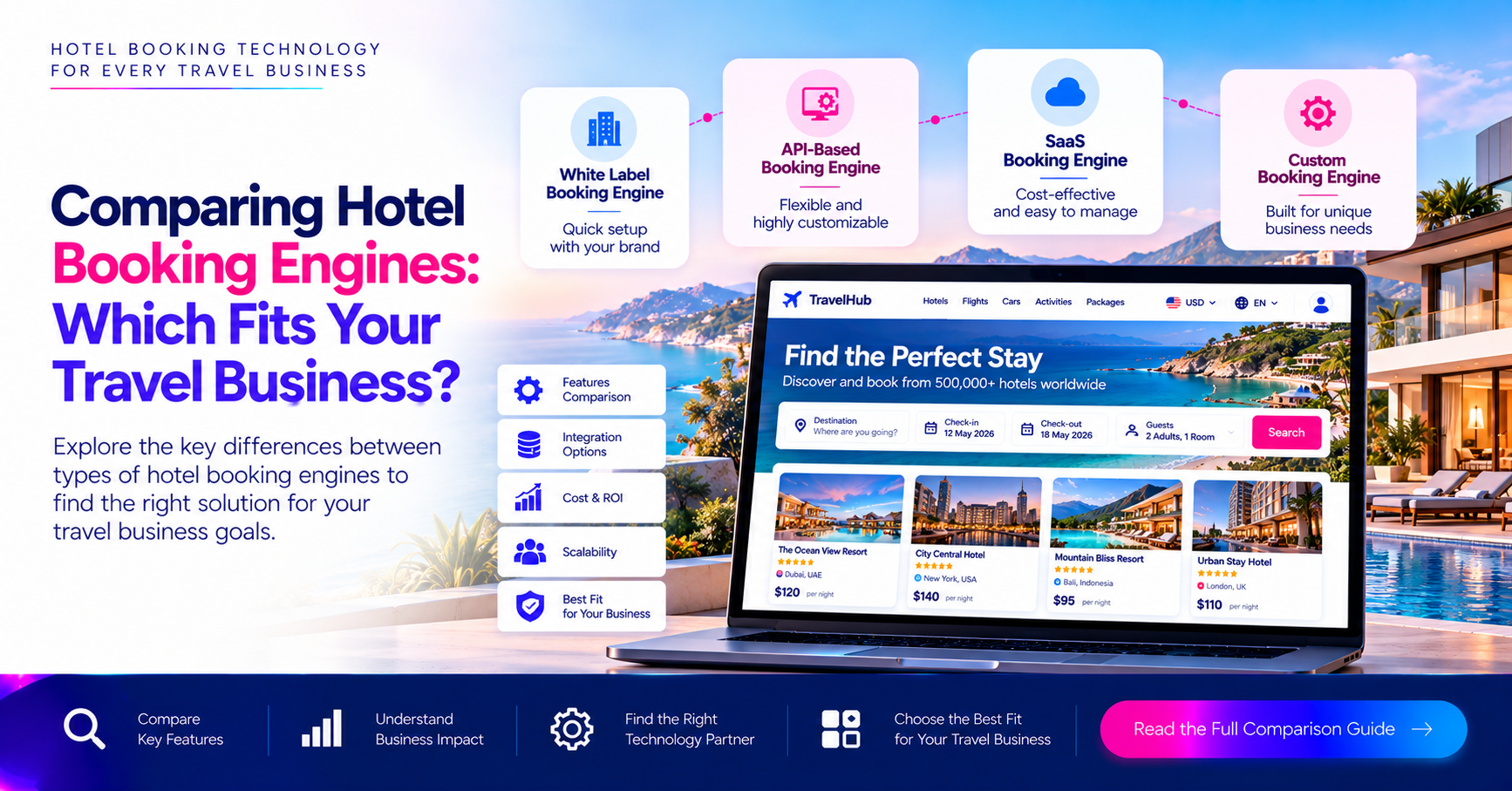
Comparing Hotel Booking Engines: Which Fits Your Travel Agency Best?
Comparing Hotel Booking Engines: Which Fits Your Travel Agency Best? Choosing a Hotel Booking Engine is way more than just finding a system that displays room rates and lets your customers make a reservation. For…
Oct 20, 2026Read More
Get in touch
Email Us
sales@traveltekprogroup.com“We opted for Traveltekpro to construct and implement our Flight booking system, and I am thoroughly pleased with the outcomes. Their team displays remarkable efficiency, expertise, and utmost professionalism throughout the project.”

Arun Neli
Chief Operating Officer
“I had a fantastic experience with Traveltekpro! Their custom booking system designed for our platform is not only sleek and easy to use,but it has also received excellent feedback rom our customers. Kudos to the Traveltekpro team for their outstanding work!”

Benjamin Smith
Product Manager
“Traveltekpro has been a delight to collaborate with on two distinct occasions, showcasing professionalism and expertise. Their team demonstrates a commitment to surpassing expectations and adheringto deadlines.”

Kevin Brown
CTO
“We partnered with Traveltekpro for our travel booking platform, and the experience was excellent. The team understood our requirements quickly, delivered on time, and provided great support throughout the project. Highly recommended.”

Manish Singh
Director of IT
“Great experience working with Traveltekpro. They were responsive, knowledgeable, and always ready to suggest better solutions. The final product exceeded our expectations, and the after-launch support has been excellent.”

Shubham Rawat
Founder & CEO