
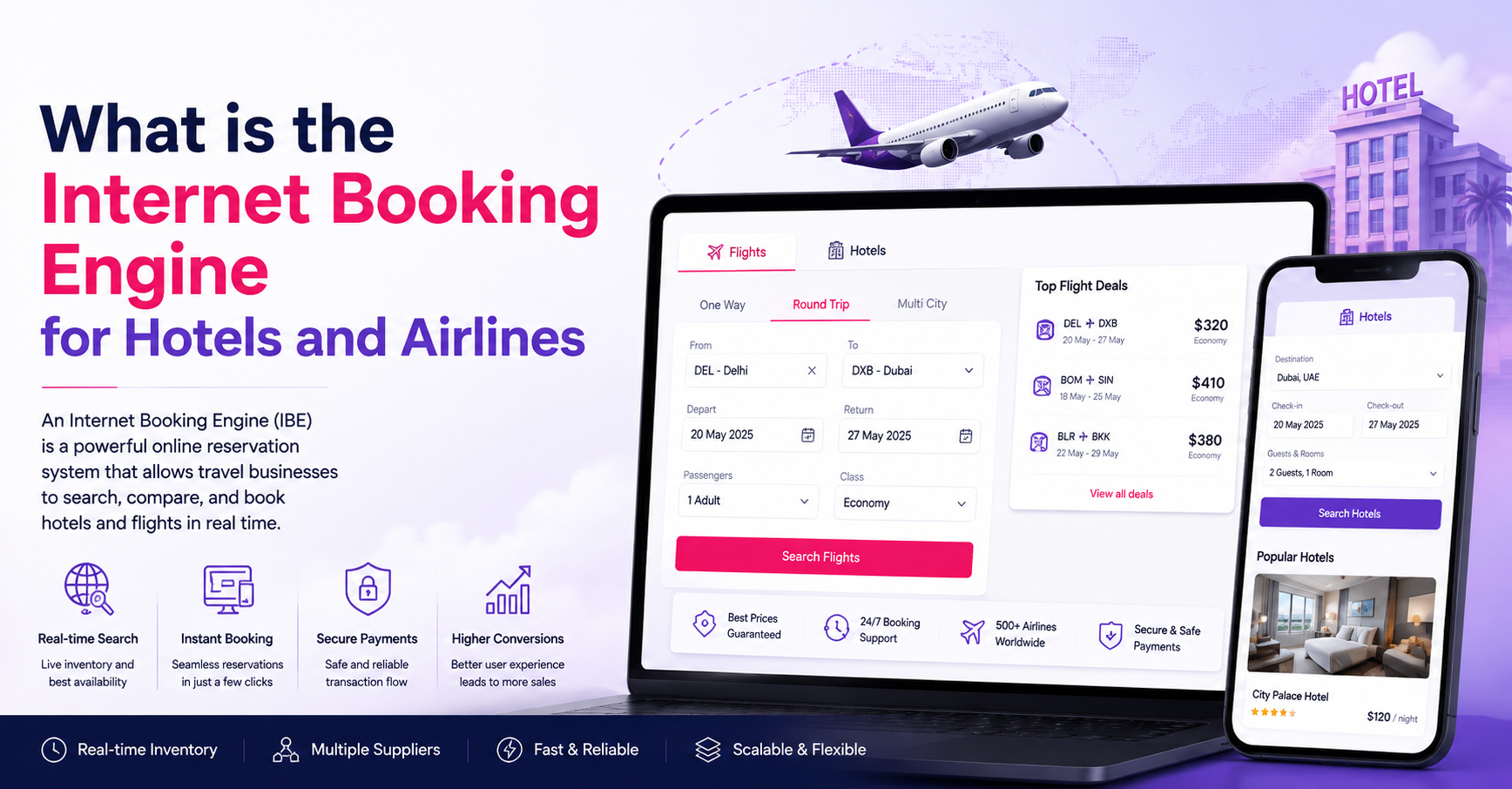
What is the Internet Booking Engine for Hotels and Airlines
Every booking has a story behind it. A traveller searching for a hotel in Dubai or a family booking flights for their summer holiday go through a similar journey. They compare prices, check availability, review options and complete a payment. From the customer’s perspective the experience feels really effortless. But behind the scenes, sophisticated technology is working in real time to make the booking possible. For hotels and airlines the booking itself is a part of the picture.
Every reservation made through an online travel agency or a travel agent comes at a cost. No doubt these channels help your business reach a wider audience but they also reduce your profit margins and limit direct customer relationships. This is one of the reasons hotels and airlines are investing heavily in technologies that encourage travellers to book directly through their own websites. At the center of the strategy is the Internet Booking Engine.
The real battle is not about bookings- it’s about booking ownership
When people talk about online travel the conversations often focus on bookings. How many reservations were made? What was the occupancy rate? For hotels and airlines the bigger question is who owns the customer relationship after the booking is complete. Just think about a customer booking your hotel through an OTA. The reservation reaches the hotel but much of the customer relationship remains with the marketplace. Your customer is likely to return to the same platform for their next trip because that’s where they begin the search. You successfully fill a room but you have fewer opportunities to build long term loyalty or encourage direct repeat bookings.
The same challenge exists for airlines. This is why direct bookings have become a major strategic priority across the travel industry. When your customers book directly you retain greater control over the customer experience and you can communicate before arrival and also personalize offers. Revenue is certainly one reason you encourage direct bookings but customer ownership is often even more valuable. Every direct booking creates an opportunity for you to strengthen brand recognition and build trust. This is exactly where the Internet Booking Engine for Hotels makes a difference.
The Internet booking engine is the invisible layer customers rarely notice
Many travelers never stop to think about what happens after they click the book now button. Within a matter of seconds several different systems begin working together behind the scenes to complete the reservation. It all starts with a search. A traveller enters travel dates, destination preferences, passenger details and room requirements. The booking engine immunity checks live inventory to determine what’s available at that moment. Instead of displaying outdated information, the Internet Booking Engine for Airlines communicates with connected reservation systems to ensure that your customers only see what options can be built. Once availability has been confirmed the system verifies pricing. The process is much more dynamic than customers realize. reservation details are sent to the hotels property management system or the reservation platform. From the customer’s perspective the entire experience feels simple. Behind the scenes however the Internet booking engine is working like the central layer that connects multiple technologies into one seamless booking journey.
Hotels and airlines use the same technology but for very different objectives
Even though the technology behind Internet Booking Engine follows a similar process for every booking, hotels and airlines will invest for the same reasons. Both want to make online reservations fast and convenient but their long term business goals are very different.
1. Hotels focus on building direct custom relationship
Every hotel booking is an opportunity for you to create a stronger relationship with your guests before they even arrive. While OTA’S remain valuable distribution channels but they also limit how much control you have over your customer experience. When guests book directly through your website you can communicate throughout the booking journey, introduce loyalty programs and promote exclusive Offers. An Internet Booking Engine for Hotels Gives you better flexibility to showcase your own value. Instead of competing only for room rates you can even encourage guests to upgrade to premium rooms and at breakfast packages. These additional services not only increase revenue but also create a more complete guest experience from the very beginning.
2. Airlines focus on maximizing every booking
Airlines approach booking engines with different objectives. As an airline your priority is not just selling a seat on a flight it’s maximizing the value of every passenger booking while managing your inventory effectively. When travellers book directly through your website the booking journey often includes opportunities to purchase additional baggage or select preferred seats. These services have become an important source of revenue and the Internet Booking Engine for Airlines plays a very important role in presenting them naturally during the reservation process. You can also benefit from having greater visibility into customer behavior. Direct booking allows you to promote frequent flyer programs and encourage repeat bookings without depending entirely on 3rd party distribution channels.
Every direct booking creates more than revenue
The value of direct booking goes way beyond the amount a customer spends on a room or a flight. For hotels and airlines every reservation creates new opportunities to understand travellers better. This one is one of the biggest reasons why businesses continue investing in Internet Booking Engine.
-
Better customer data
When your customers book directly you can gain valuable first party data that helps you understand travel behaviour more effectively. As a hotel you can identify returning guests and preferred room categories. Airlines can also analyse travel frequency and preferred routes.
-
More customized marketing opportunities
Generic marketing campaigns are becoming less effective because travellers expect communication that reflects their interests and previous behaviour. A family that books annual summer holidays has different expectations from a business traveller flying every month. Direct booking data allows you to create targeted campaigns based on real customer preferences rather than broad assumptions.
-
Stronger customer loyalty
Loyalty begins with familiarity. When travellers repeatedly book through the same hotel website or airline platform they become more connected to the brand instead of simply remembering the marketplace where they completed the reservation. Direct bookings allow you to promote membership programs and reward repeat customers.
Why some booking engines increase revenue while others simply process reservations
Not every booking engine contributes to business growth in the same way. Some platforms are designed primarily to accept reservations and process payments. While they perform these tasks effectively they often miss opportunities to improve the overall customer journey to increase the value of each booking.
1. Selling smarter instead of selling more
Increasing revenue is not just about attracting more customers sometimes it’s also about creating greater value from the bookings. Modern booking engines help you recommend relevant upgrades, additional services and customised travel options during the process. These suggestions feel helpful because they are directly connected to the traveler’s journey.
2. Personalising the booking journey
Travellers appreciate experiences that feel relevant to their needs. A returning hotel guest might value a room upgrade or late checkout option while an airline passenger travelling with family might benefit from additional baggage or seat selection. Customization makes the booking experience feel more useful.
3. Encouraging repeat customers
The strongest booking engines don’t stop working once the reservation is confirmed. They continue supporting customer engagement through confirmation and loyalty programs besides post trip communication. There is an ongoing relationship that increases the likelihood that customers will return to book directly rather than just beginning their next journey on a 3rd party marketplace.
Internet Booking Engine vs OTA Marketplace: Two Different Growth Strategies
| Internet Booking Engine | OTA Marketplace |
| Owns the customer relationship | Shares the customer relationship with a third-party platform |
| Generates direct revenue | Revenue is often reduced by commissions |
| Delivers a branded booking experience | Customer experience is centred around the marketplace |
| Offers greater flexibility over pricing and promotions | Pricing and promotional options may be influenced by marketplace policies |
| Provides access to valuable first-party customer data | Limited visibility into customer behaviour |
| Supports loyalty programmes and repeat bookings | Repeat bookings often return through the OTA |
The future of Internet booking engines is not faster bookings its smarter booking
For years you might have focused on making online bookings quicker. Speed was considered the biggest measure of success. While customers still expect a fast and reliable booking experience their expectations have greatly changed.
-
AI will make booking experiences more personal
Artificial intelligence is already changing the way travellers book travel. Instead of showing identical search results to every visitor your engine can recommend hotels and booking history. These recommendations feel more useful because they are tailored to individual travelers rather than presented as a generic promotion.
-
Dynamic pricing will continue to evolve
Pricing in the travel industry has always been dynamic but modern Internet Booking Engine for Hotels airlines make it easier to respond to changing market conditions. Hotels can adjust rooms based on occupancy levels and local events while airlines can optimize fares according to seat availability and booking patterns. Your customers benefit from seeing accurate pricing in real time while you can gain better flexibility to maximise revenue.
-
Mobile first and voice search will shape future bookings
Your travelers increasingly search and book trips using smartphones and this trend continues to grow every year. As mobile booking behaviour evolves you need booking experiences that are fast and easy to compete on smaller screens. Voice search is also beginning to influence travel planning.
So it’s easy to think of an Internet booking engine as a technology that allows your customers to book a hotel room or airline ticket online. But in reality its role has become much bigger than that. If you are planning to implement a booking engine for your hotels or airlines you can connect with experts at Traveltekpro.
Read More: Viator API: Tours & Activities API for Travel Planning
FAQ'S
Related Blogs
How to Find the Best Hotel Booking Website Development Company
How to Find the Best Hotel Booking Website Development Company Choosing a company for hotel booking website development is not completely the same as hiring someone to build a regular business website. A normal website…
Oct 12, 2026Read More
How an Online Hotel Booking System Can Enhance Guest Experience and Increase Revenue
How an Online Hotel Booking System Can Enhance Guest Experience and Increase Revenue Your guest does not start experiencing a hotel when they walk through the lobby doors. The experience often starts several days or…
Oct 9, 2026Read More
Get in touch
Email Us
sales@traveltekprogroup.com“We opted for Traveltekpro to construct and implement our Flight booking system, and I am thoroughly pleased with the outcomes. Their team displays remarkable efficiency, expertise, and utmost professionalism throughout the project.”

Arun Neli
Chief Operating Officer
“I had a fantastic experience with Traveltekpro! Their custom booking system designed for our platform is not only sleek and easy to use,but it has also received excellent feedback rom our customers. Kudos to the Traveltekpro team for their outstanding work!”

Benjamin Smith
Product Manager
“Traveltekpro has been a delight to collaborate with on two distinct occasions, showcasing professionalism and expertise. Their team demonstrates a commitment to surpassing expectations and adheringto deadlines.”

Kevin Brown
CTO
“We partnered with Traveltekpro for our travel booking platform, and the experience was excellent. The team understood our requirements quickly, delivered on time, and provided great support throughout the project. Highly recommended.”

Manish Singh
Director of IT
“Great experience working with Traveltekpro. They were responsive, knowledgeable, and always ready to suggest better solutions. The final product exceeded our expectations, and the after-launch support has been excellent.”

Shubham Rawat
Founder & CEO