
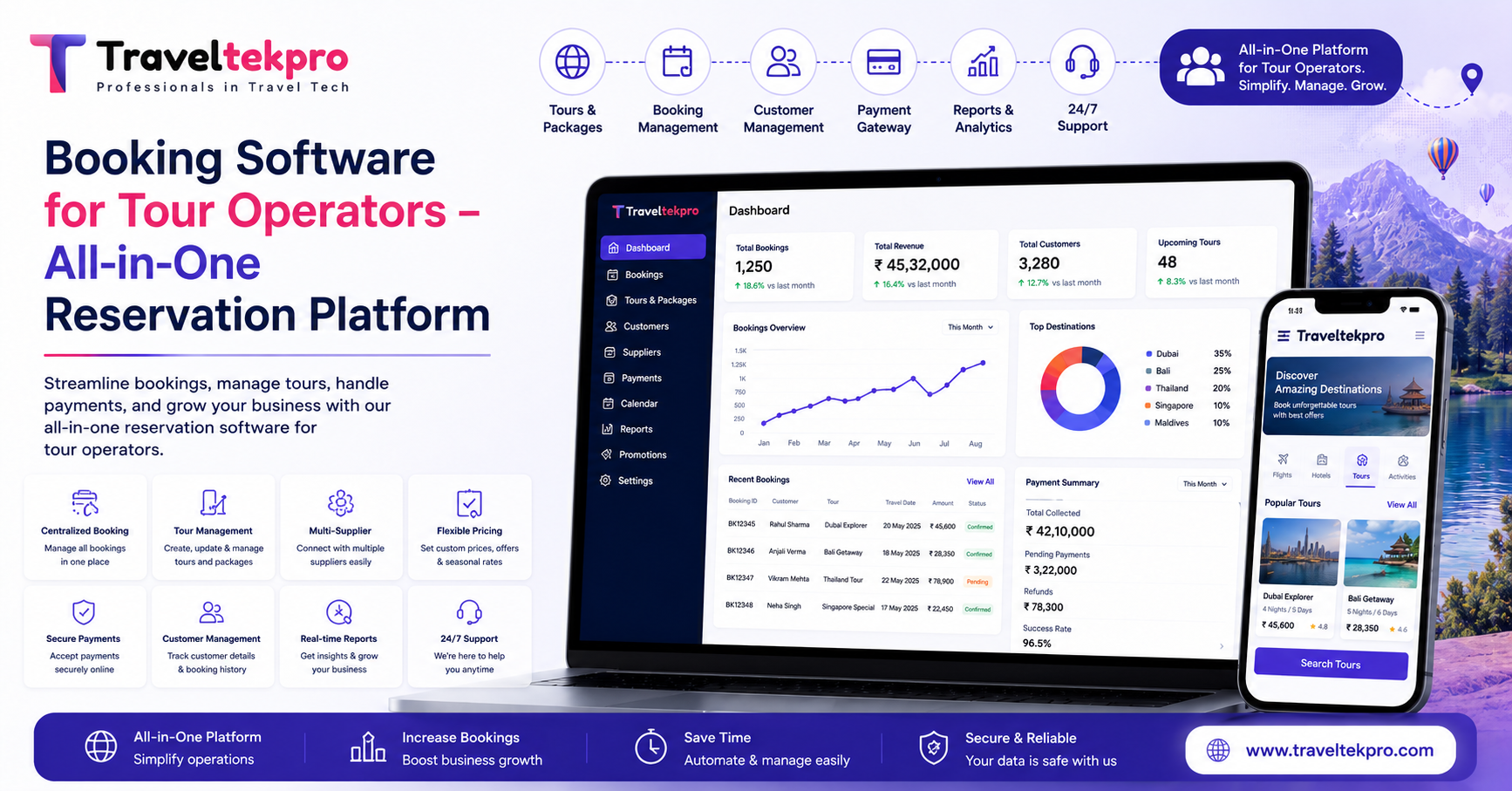
Booking Software for Tour Operators – All-in-One Reservation Platform
Running a tour business sounds really exciting from the outside. You create itineraries, work with suppliers, plan departures and help people experience new places. But behind every smooth trip is a surprising amount of coordination. A single tour booking can involve the departure date, available seats, traveller details and payments besides hotel transfers and arrangements. Now multiply that by dozens or even hundreds of bookings, different departure dates and multiply sales channels. This is exactly where booking software for tour companies can make a big difference. Instead of treating reservations availability, payment and customer information as separate tasks, the software brings them into a more organized workflow.
Why do tour operators outgrow the manual reservation process?
Manual reservation often works surprisingly well when your tool company is really small. You might have a spreadsheet for bookings or shared documents for availability emails for supplier communication. Problems start when business grows. Suddenly there are more departures to even manage more customers asking questions and more suppliers to coordinate. Someone has to keep checking whether a tour still has space. Another person might be updating a payment record while someone else is sending a confirmation. Then your customer calls to change the number of people on a booking. None of these tasks are particularly complex. The difficulty comes from keeping everything accurate and connected. Your growing tour business therefore doesn’t need to handle more bookings. It needs a better way to keep availability reservation payments, and customer operations in sync.
A tour booking is way more than just a simple book now transaction
It’s easy to think of tour booking as a simple process: a traveller chooses a tour, pays and receives a confirmation. In practice there is much more happening behind the scenes. A typical journey might look like this: your traveler selects a tour, then a date checks availability, chooses participants at extras, enters traveller details, pays, receives confirmation, gets the itinerary or voucher and receives Post trip support. Every step can create additional work for the tour operator. For example you need to know whether there is enough capacity for the selected date. If the customer adds a transfer or activity that information needs to change dates, increase the number of travellers or ask about included service. This is the only reason why tour operator software should support the reservations life cycle rather than just initial transactions.
What all in one reservation platform actually brings together?
The all in one can sound like marketing language so it’s more useful to look at what it means from an operator’s perspective.
1. Tour and departure management
Tour operators often sell the same experience across different dates and departure schedules. Your system should make it easier to manage those dates and relevant inclusions. Instead of checking several files to determine how many spaces remain on a particular departure your team should have a clearview of availability. Depending on the business this might also involve managing several different tour types and group sizes.
2. Reservation management
Every booking contains information that must remain accurate. That can include traveler names, contact details, number of participants and booking status. Centralizing all this information makes it easier for your team to see what has been booked and what needs attached. It also creates a useful booking history when your customers return or request changes later.
3. Payment management
Payment is another important part of the reservation that should not exist separately from the booking. A useful system can connect transaction information with the relevant reservation making it easy for your team to understand whether a booking has been paid or is awaiting payments or follow up.
4. Customer communication
Customers naturally want reassurance after booking. They want to know that the reservation went through what happens next and where to find the travel documents. A connected reservation workflow can support confirmations vouchers reminders and other booking related communication without requiring your staff to manually recreate the document information every time.
Where booking software for tour companies can save the most operational effort?
The biggest benefit is not simply that someone can click a button faster. It’s the amount of repetitive work that can be reduced.
-
Before booking
Before your customer even books your staff has to spend time answering availability questions, checking dates and preparing basic information. A digital booking experience can allow your customers to find much of the information themselves.
-
During booking
The systems can bring together participant information and selected services within the same workflow. That produces the need to copy information between different systems.
-
After booking
Once the booking is made confirmation and documentation become important. A structured workflow makes it easier for your staff to find reservations and provide the customer with the information they need.
-
Before departure
This is where organization becomes important. As an operator you need passenger list final booking information and supplier coordination. Having reservation information centrally available gives you a clearer picture of the upcoming departure.
-
After the trip
Relationships do not always end when your tour does. Customer feedback, repeat bookings and reporting can all benefit from having historical booking information available.
The reservation system should know more than who paid
payment is only one piece of tour reservation. You also need to know what the payment relates to and what happens next. For example, who is travelling? Which departure are they joining? How many spaces are available? What services are included? This is why booking software for tour operators should be viewed like an operational system rather than just simply a way to collect bookings. The more information the business can connect around each reservation the easier it becomes for different teams to work from the same information.
One platform different booking channels
Today as a tour operator you might receive bookings from several directions. A customer might book directly through your company website or a travel agent might send a reservation or a sales team might also create bookings manually. The challenge is what happens when all these bookings end up in different places. A central reservation platform or booking software for tour companies can provide a common operational layer across all the channels. The customer might see one experience, your agent another and an internal employer 3rd one. But the underlying booking information can still be managed with the same broader system. This becomes especially important as you expand your distribution network.
Test the tour operator software using your most difficult tour not your simplest one
One of the easiest mistakes is to test booking software for tour operators with a perfect booking. The vendor shows you a customer selecting one tour while choosing one date entering the details and completing payment. Everything works. But your real operation might be much easier. So you need to test the system using the tour that creates the most operational work. Ask what happens when a 2 reaches maximum capacity. What if someone has to cancel? Can bookings arrive through both B2B & B2C channels? And before departure can your team quickly produce the passenger information it needs?
B2B and B2C Bookings Create Different Operational Requirements
| B2C Booking | B2B Booking |
| Individual traveller | Travel agent or partner |
| Retail pricing | Partner pricing or markup |
| Self-service booking | May involve agent-assisted booking |
| Direct customer payment | May involve credit or settlement terms |
| Direct customer communication | Partner and customer communication |
Where all in one tour operator software is heading?
Reservation technology is becoming increasingly connected. Real time inventory API based supplier connectivity and automated customer communication are already changing how travel businesses manage bookings. The next stage is likely to bring smarter tools into the same workflow. AI assisted itinerary recommendations could help you discover relevant experiences and demand insights might help operators understand which departures or products are attracting interest. Automated workflows can reduce repetitive administrative tasks while personalized communication can make the customer journey feel more relevant.
The cost of the wrong reservation platform is not just the subscription
When comparing software it’s tempting to just focus on the monthly fees or initial implementation cost. This is really understandable but it doesn’t tell the whole story. Imagine a platform that looks affordable but requires your employees to manually update everything. The software might have a low price but the business is still paying for the difference through staff time and operational effort. Other hidden costs can include booking errors and duplicate data. The better question is not simply how much does the software cost? Ask what will this platform cost you?
So you need to know that the real value of booking software for tour operators is not that it puts a tour online and adds a book now button. It’s what happens behind the button. A good reservation workflow can connect inventory availability booking payments and suppliers so that the team has a clearer picture of what’s happening. Ultimately the goal is not to make your business feel more like a software company. It is to make your software quietly handle the complexity in the background so your team can spend more time doing what a tool business is actually built around. Get the best booking software for tour operators today from Traveltekpro.
Read More: How to Choose the Right Tour Operator Software for Your Business
FAQ'S
Related Blogs
Easebuzz Payment Gateway Integration and Charges Guide
Easebuzz Payment Gateway Integration and Charges Guide your customer spends several minutes comparing flights, checking hotel options or building holiday packages. They might finally find exactly what they want, enter their details and reach the…
Sep 1, 2026Read More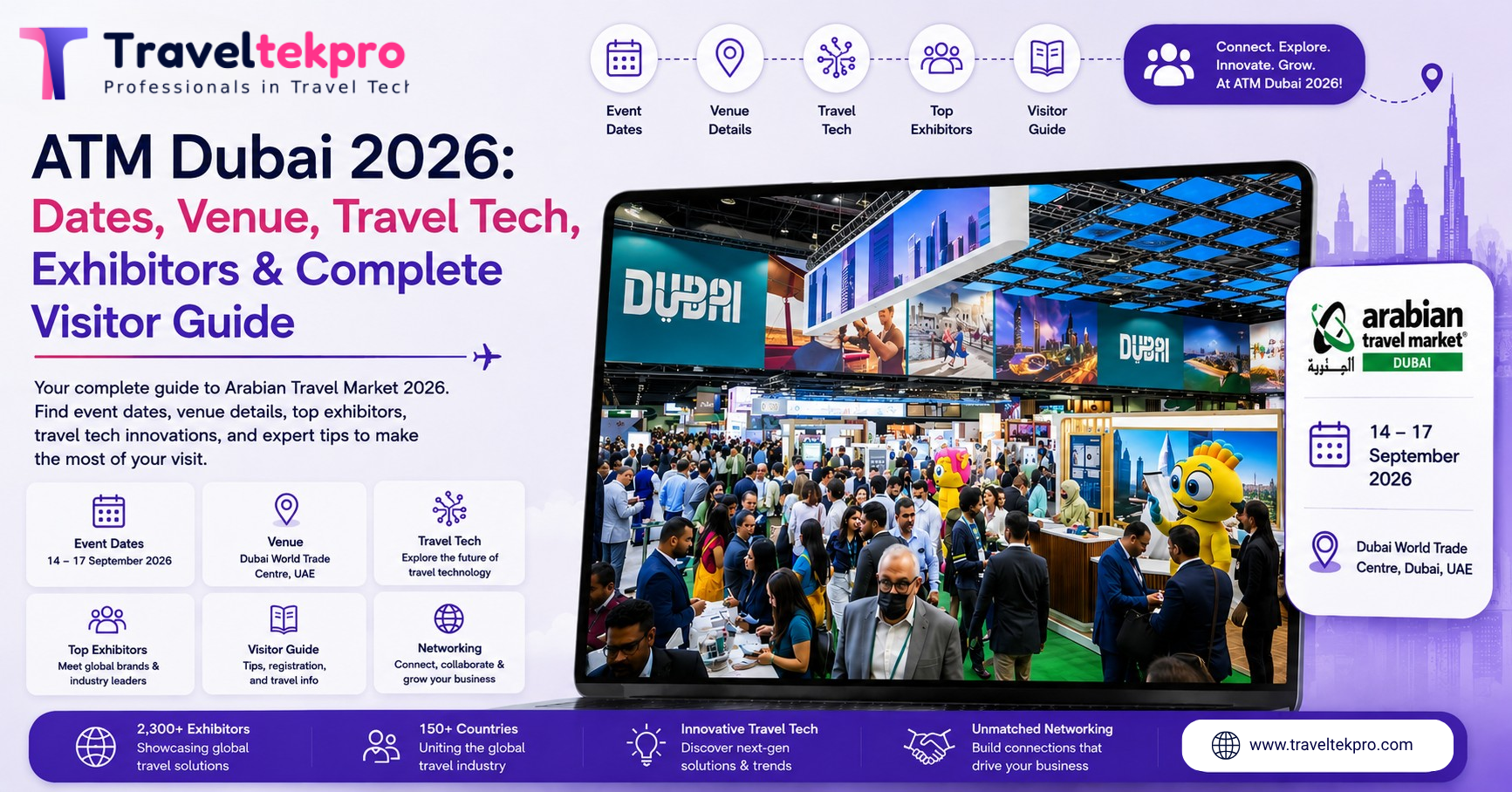
ATM Dubai 2026: Dates, Venue, Travel Tech, Exhibitors & Complete Visitor Guide
ATM Dubai 2026: Dates, Venue, Travel Tech, Exhibitors & Complete Visitor Guide Arabian Travel Market (ATM) Dubai 2026 is set to bring the global travel and tourism industry together at Dubai World Trade Centre from…
Aug 24, 2026Read More
Get in touch
Email Us
sales@traveltekprogroup.com“We opted for Traveltekpro to construct and implement our Flight booking system, and I am thoroughly pleased with the outcomes. Their team displays remarkable efficiency, expertise, and utmost professionalism throughout the project.”

Arun Neli
Chief Operating Officer
“I had a fantastic experience with Traveltekpro! Their custom booking system designed for our platform is not only sleek and easy to use,but it has also received excellent feedback rom our customers. Kudos to the Traveltekpro team for their outstanding work!”

Benjamin Smith
Product Manager
“Traveltekpro has been a delight to collaborate with on two distinct occasions, showcasing professionalism and expertise. Their team demonstrates a commitment to surpassing expectations and adheringto deadlines.”

Kevin Brown
CTO
“We partnered with Traveltekpro for our travel booking platform, and the experience was excellent. The team understood our requirements quickly, delivered on time, and provided great support throughout the project. Highly recommended.”

Manish Singh
Director of IT
“Great experience working with Traveltekpro. They were responsive, knowledgeable, and always ready to suggest better solutions. The final product exceeded our expectations, and the after-launch support has been excellent.”

Shubham Rawat
Founder & CEO