
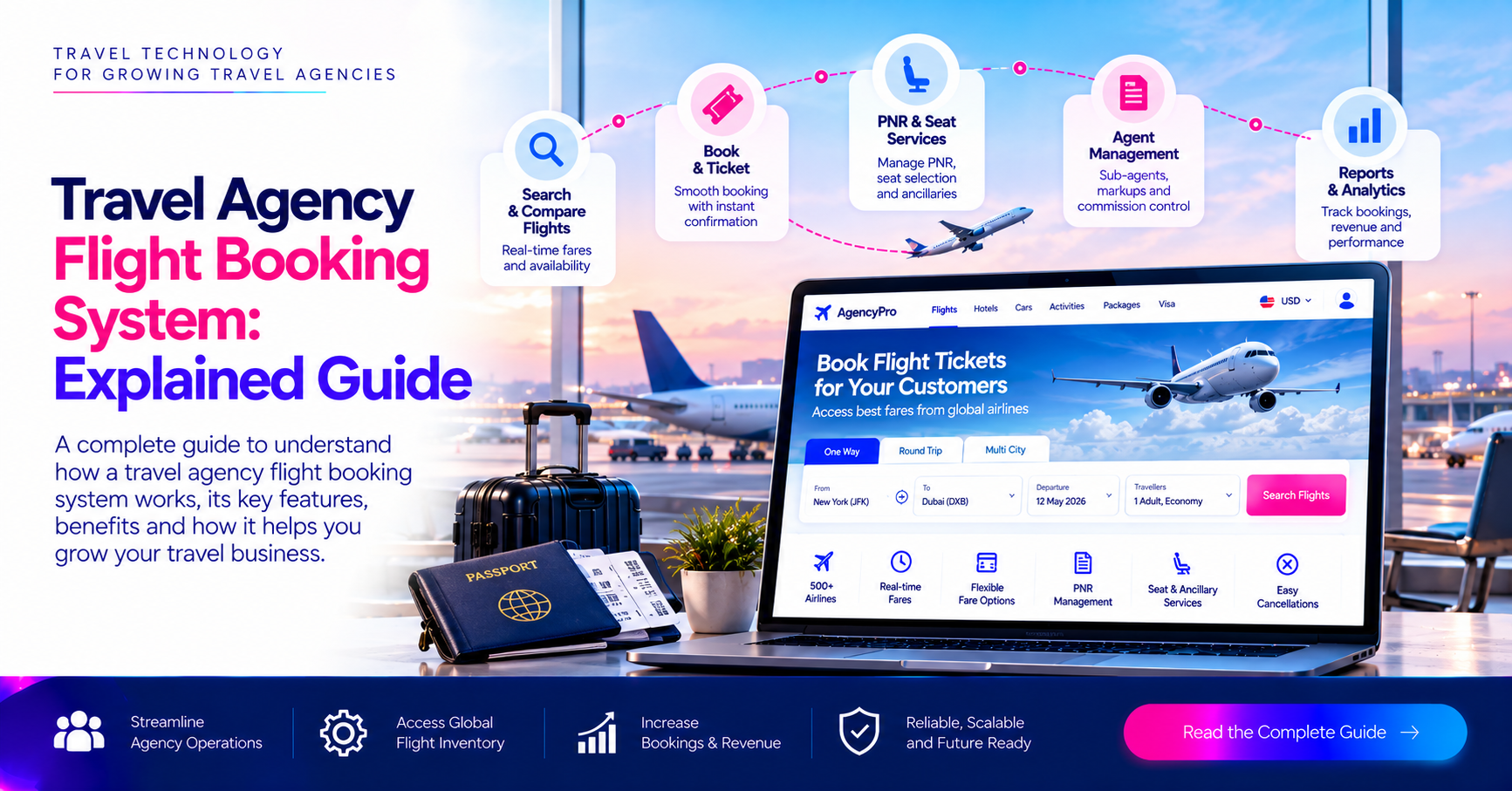
Travel Agency Flight Booking System: Explained Guide
A customer wants to fly from Dubai to London next month. They have a preferred departure date, a budget and a few requirements like checked baggage and a convenient connection. As a travel agent you need to search for flights, compare airlines and fares and check the rules. But finding the right flight is only the beginning. Before the customer can travel you also need to recheck the fare and complete the reservation and ensure the ticket has been issued. If the fare changes or the supplier response is delayed the booking process becomes more complicated. That is exactly where the travel agency flight booking system comes in the picture and it helps connect these activities through a structured workflow. Depending on the integrations and capabilities it can give you access to flight inventory and assist with ticketing and post booking for travel agencies online travel agencies and consolidators choosing the right system means looking beyond the flight search screen. The software must support the way your business sources fares and sells tickets.
What happens between a flight search and a confirmed ticket?
A flight search displays available options based on the information entered by the user. But the results do not guarantee that select fare will remain available until the booking is completed. Airline fares and seat availability can change. Different fare types might have different baggage allowances and change fees. Some reservations also require ticket issuance as a separate step after the booking has been recorded. A connected flight booking workflow helps you manage these stages without relying on disconnected tools. It can bring flight search fare details and passenger information into a common interface. For example if you are handling Dubai to London booking you can compare flight timings and prices, review the conditions attached to each fare and select the option that suits your passenger. Before proceeding you might need to revalidate the fare and availability. Once the reservation is created you need to check whether the ticket has been issued successfully. The distinction is very important.
How does a travel agency’s flight booking software work?
A typical flight booking process involves several connected steps. The exact workflow varies by airline and distribution channel.
1. Flight search and availability
The process starts when you enter the origin, destination, travel dates, passenger count, and preferred cabin class. For a return trip the system also needs the return date. Depending on the requirements, you need to specify a preferred airline, number of stops, or departure time. The system retrieves flight options from the connected inventory sources. The results might include airline schedules and arrival times besides available fare options. Search quality matters because agents need to find relevant flights without spending too much time reviewing unsuitable results. A useful interface should let you filter options by the customer’s preferences and clearly compare itineraries.
2. Fare comparison and rule checking
The cheapest flight is not always the best choice for the passengers. One fare might include checked baggage and another might charge extra. A travel agent airline booking system should help you review the element and conditions before they proceed. Depending on the content available this might include baggage allowance refund eligibility and change restrictions and other conditions attached to selected fare. You should compare the total cost and conditions, not just the headline fare. This helps you recommend an option that meets the customer needs and reduces the risk of misunderstanding later.
3. Fare revalidation and passenger details
Before completing a reservation your system needs to check the latest fare and availability. This is known as fare revalidation. It has to identify whether the selected option is still available at the expected price. If the fare has increased you should be able to review the revised amount before proceeding. If the flight is no longer available the system needs to communicate the problem clearly so that you can choose another option. Passenger details must also be entered accurately. Names should match the relevant travel documents and other required information must be collected according to the airline and applicable rules. An incorrect passenger name can create complications and corrections must be restricted or require additional charges.
4. Reservation and ticket issuance
Once the flight and passenger details are ready you need to submit the reservation request. Depending on the booking channel the system might create a pnr on another booking reference. But creating a reservation and issuing an Electronic ticket is not necessarily the same step. You need to verify the reservation status and ticket number where applicable. If the reservation exists but ticket issuance is pending or has failed the booking should not be treated as fully ticketed.
5. Payment and reservation
Payment can take place at different stages depending on your business model and booking arrangement. A retail agency might collect payment from the passenger while a B2B agency might work through an agreed credit arrangement. The system should help your staff understand the payment status and connect transaction records with the relevant preservation.
6. Changes cancellations and refunds
Flight booking continues after the ticket is issued. Your customers may need to change travel dates or cancel a trip. The available options depend on the ticket fare rules, airline policies and ticket status. A useful system should help you retrieve the booking, review the details and track the relevant request. Where supported this might include ticket reissues cancellation records and refund requests.
Where does flight inventory come from?
A travel agency flight booking system needs access to airline content to display fares and supports preservations.
-
Global distribution system
Global distribution system connects travel sellers with participating airlines and other travel content. Depending on the provider accent configuration or gds can support flight shopping and pair information. If you rely on established distribution arrangements GDS connectivity can be an important part of the booking setup. It can provide access to participating airlines through a familiar travel distribution environment.
-
Airline direct connections and NDC
Airlines might also provide content through direct integrations. New Distribution Capability (NDC) is an Industry data exchange standard developed by the International Air Transport Association to support the distribution of airline offers and orders. Depending on the airline and integration NDC connections might provide access to particular fare options and bundled services.
-
Consolidators and flight aggregators
Consolidators and aggregators can give you access to a flight through their own supply relationships and commercial arrangements. Depending on the provider they might support fare access ticketing services or connections to multiple inventory resources. This model can be useful for agencies that do not have the same direct access or ticketing arrangements. Before choosing a supplier, compare the actual airlines and payment terms.
What Should Travel Agency Flight Booking Software Include?
| Evaluation criteria | What travel agencies should compare |
| Flight inventory | Available airlines, GDS connections, NDC content and consolidator integrations |
| Flight search | Search speed, routes, connecting flights and cabin classes |
| Fare comparison | Baggage allowance, refund conditions, change fees and total fare |
| Reservation management | PNR creation, booking references and reservation status |
| Ticket issuance | Ticketing process, ticket numbers, issuance status and deadlines |
| Pricing controls | Markups, commissions, service fees and agent-specific pricing |
| Payment management | Payment status, supplier costs, refunds and transaction records |
| Post-booking support | Ticket changes, cancellations, reissues and refund tracking |
| B2B capabilities | Agent accounts, access permissions, credit controls and booking visibility |
| Integrations | Payment gateways, CRM, accounting systems and supplier APIs |
| Reporting | Booking volumes, sales, agent activity and financial performance |
| Total cost | Setup fees, integration charges, transaction costs and ongoing support |
How to choose the right travel agency flight booking system?
you need to start by defining your model. A retail agency OTA might sell all flights but they can also have different requirements for inventory or pricing. Next you also need to check the airline content available with the proposed system. Confirm the relevant gds and consolidator connections and make sure that the available fares and routes suit your customers. Ticketing arrangements deserve particular attention to understand who issues tickets, which permissions are required and how the platform handles bookings that remain unticketed. Then you need to test the complete workflow from flight search and fare revalidation to payment and ticket issuance. Do not limit the demonstration to a successful booking. Review the integrations you need including payment gateways and accounting systems. Ask for a clear breakdown of implementation costs and supplier fees. Finally you need to discuss Technical Support and scalability. The provider should explain how issues like failed bookings and supplier outage volumes will be handled.
How Traveltekpro Fits into a flight booking delivery setup?
Traveltekpro Offers travel agent airline booking system For travel businesses. If you are evaluating the company, the first step is to establish which airline content and ticketing arrangements are available for your proposed project. You should also confirm whether the solution Connect to airline API and consolidators are relevant to the business. Before proceeding, request a demonstration of the required functions and confirm the scope of integrations and ongoing support. The best fit will depend on the airline content sales channel and the agency’s operational controls needs rather than the number of features mentioned in the product description.
Read More: How an Online Flight Reservation System Streamlines Your Travel Planning
FAQ'S
Related Blogs
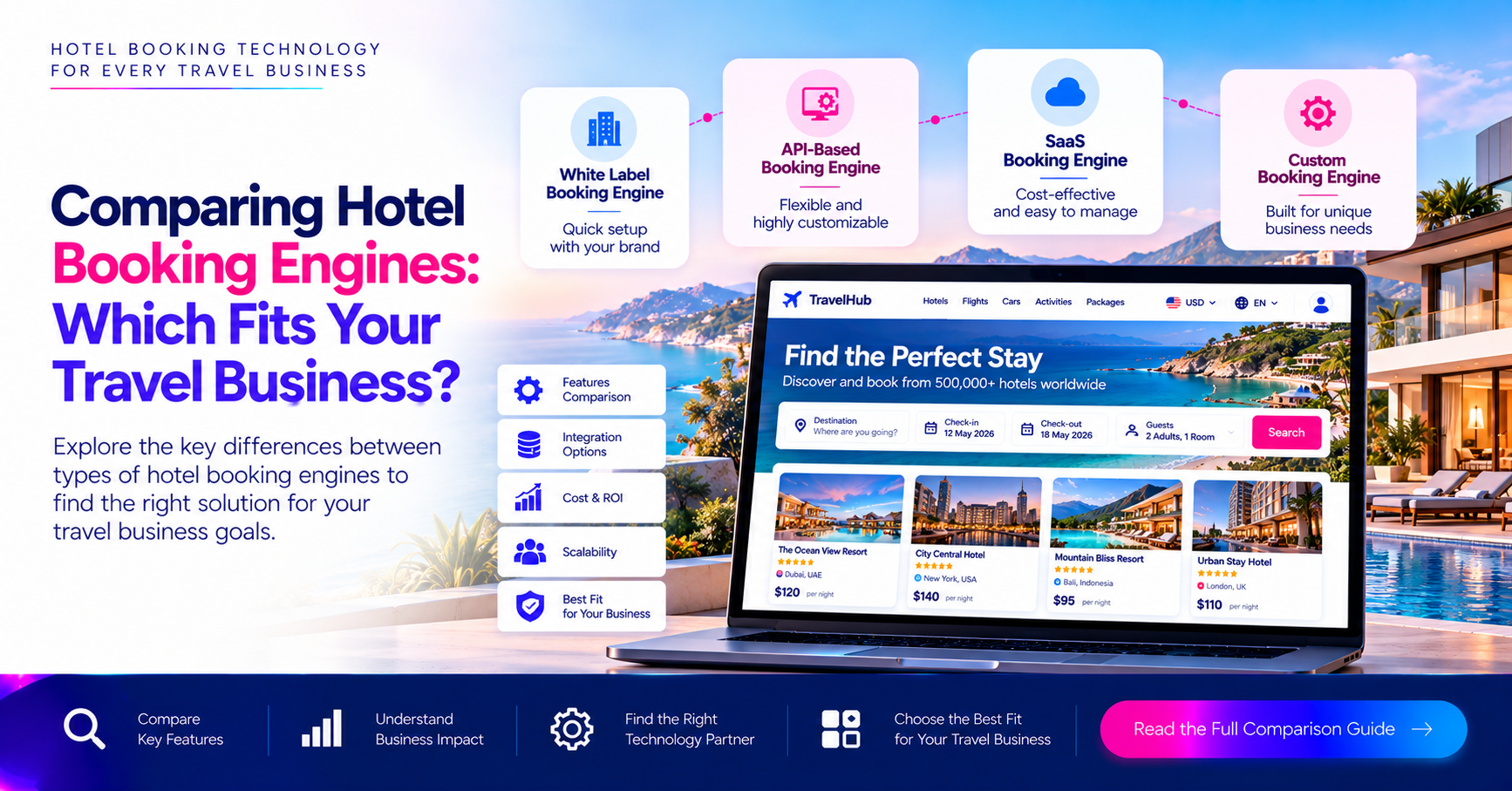
Comparing Hotel Booking Engines: Which Fits Your Travel Agency Best?
Comparing Hotel Booking Engines: Which Fits Your Travel Agency Best? Choosing a Hotel Booking Engine is way more than just finding a system that displays room rates and lets your customers make a reservation. For…
Oct 20, 2026Read More
Get in touch
Email Us
sales@traveltekprogroup.com“We opted for Traveltekpro to construct and implement our Flight booking system, and I am thoroughly pleased with the outcomes. Their team displays remarkable efficiency, expertise, and utmost professionalism throughout the project.”

Arun Neli
Chief Operating Officer
“I had a fantastic experience with Traveltekpro! Their custom booking system designed for our platform is not only sleek and easy to use,but it has also received excellent feedback rom our customers. Kudos to the Traveltekpro team for their outstanding work!”

Benjamin Smith
Product Manager
“Traveltekpro has been a delight to collaborate with on two distinct occasions, showcasing professionalism and expertise. Their team demonstrates a commitment to surpassing expectations and adheringto deadlines.”

Kevin Brown
CTO
“We partnered with Traveltekpro for our travel booking platform, and the experience was excellent. The team understood our requirements quickly, delivered on time, and provided great support throughout the project. Highly recommended.”

Manish Singh
Director of IT
“Great experience working with Traveltekpro. They were responsive, knowledgeable, and always ready to suggest better solutions. The final product exceeded our expectations, and the after-launch support has been excellent.”

Shubham Rawat
Founder & CEO