
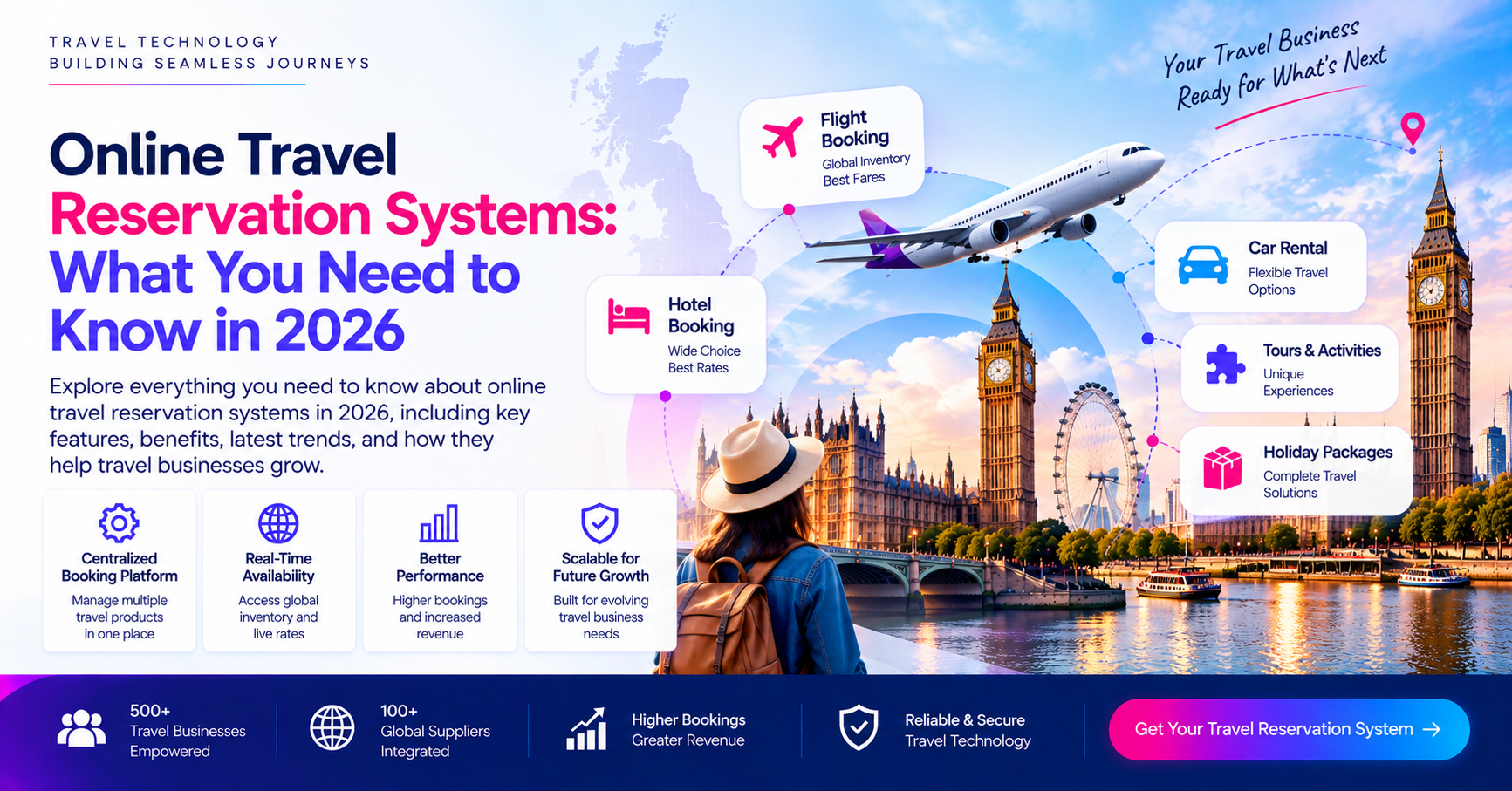
Online Travel Reservation Systems: What You Need to Know in 2026
A customer starts by seeking a flight to Dubai. A few minutes later they have added a hotel, selected a rental car and are ready to pay. From the customer side the process looks really simple. Behind the screen however several systems have to work together to make that look possible. Your platform needs to find available inventory return policies, apply the right markup or commission, collect traveller details and create the reservation, and send confirmation. If something goes wrong like a price change or a failed booking your system also needs to handle that without leaving the customer or travel agent confused. This is exactly where travel reservation systems have become much more than just online travel booking pages. They sit between customers, travel suppliers, payment providers, agents and internal operations. If you are a travel agency or a tour operator choosing an online travel reservation system is therefore less about finding a platform and more about finding one that fits the way your business actually sells and manages travel.
An online travel reservation system Is no longer just a place to take bookings
Think about what happens when someone books a hotel through a travel website. Your customer enters a destination and dates the system needs to find rooms that are available and display the booking conditions. When your customer selects a room the system needs to check availability and the price again before creating the reservation. It then collects guests information, processes payment and sends the booking request to the supplier and waits for confirmation. The same basic principles applied to flights, car rentals, activities and transfers although each product has its own rules. A modern travel booking system therefore brings several parts of the booking process together. There is the customer facing interface supplier connectivity reservation management and payment confirmation.
What do travel reservation systems actually connect to?
One reservation can involve several technology layers. Understanding these layers makes it easier for you to evaluate online travel reservation systems because you know what is happening behind the booking screen.
1. Customer layer
This is exactly where the traveller or travel agent searches and books. It could be a customer website, mobile experience or an agent facing booking platform. The interface needs to collect the right information without making the booking process unnecessarily complicated.
2. Inventory layer
The actual travel content might come from different sources. A travel company might connect to airline content, hotel suppliers or car rental companies. Your reservation system does not necessarily own this inventory. It works like a platform that brings inventory to one platform.
3. Connectivity layer
This is exactly where gds connections and APIs and direct supply and integrations come in the picture so instead of these connections allow your booking platform to request availability pricing rules and booking information from external systems.
4. Transaction layer
Once your customer selects an option the system has to handle pricing payment reservation creation and confirmation. This is exactly where small technical gaps can create major operational problems. A successful payment does not necessarily mean the provider has confirmed the booking.
5. Operational layer
The booking continues after confirmation. Your customers might want to cancel or change their reservation. Agents might need to modify a booking or check its status. Finance teams might need refund information while managers need sales and booking reports.
What has changed in the travel booking system by 2026?
The basic idea of online booking has not changed but the expectations around the technology have. You might now sell several products through several channels while working with multiple suppliers and different pricing models. Customers and agents also expect faster search and quick information. As a result modern travel reservation systems increasingly need to support multiple inventory sources, real time availability and mobile first booking experiences. Customized approaches and offers are also becoming more relevant as travel businesses collect more information about customer behavior and working patterns. But the bigger shift is how companies evaluate these systems.
Travel reservation system versus travel booking system: are they same?
The terms travel reservation system and travel booking system are often interchangeably used but vendors might use them to describe slightly different parts of the technology. A travel reservation system generally refers to technology responsible for creating and managing reservations. A travel booking system can be used more broadly to describe the customer facing booking process and the technology behind it. An online travel reservation system emphasises that the reservation process is available digitally to customers or agents. There is no universal rule that says one term must include a particular set of features. This is very important when comparing software providers. A platform might be called a booking engine or travel booking platform while offering similar capabilities. Instead of focusing too much on the name, look at the actual workflow. Can it research the inventory you need? Can it create reservations?
Follow one booking from search to confirmation
The easiest way to understand the travel booking system is to follow an actual booking.
-
Search
The customer enters destination check in and checkout dates and the number of guests. The booking platform turns the information into a request that can be sent to the relevant inventory sources.
-
Availability
The system requests current room availability and pricing from connected suppliers. Depending on the set of this could involve a hotel API or aggregator.
-
Results
The platform receives available properties room rates inclusions and booking conditions. The information is then presented to the customer in a format that makes comparison easier.
-
Recheck
Some supplier workflows require the system to check the price or availability again before booking. This helps prevent situations where a room disappears or its price changes between the search and booking stages.
-
Traveller details
The customer provides the required guest information. For flights this program to passenger information for hotels it can include guest details and special guests.
-
Payment
The payment process is completed according to your business payment setup. At this point your system should maintain a clear record of the payment status.
-
Reservation
The booking request is sent to the supplier. The supplier processes the request and either confirms the reservation or returns an error.
-
Confirmation
Once confirmed the supplier reference is stored in the booking system. The customer receives the confirmation while the travel business has a booking record that can be used for future servicing.
What Should a Modern Travel Booking System Handle?
| Area | What the system should support |
| Search | Fast availability and relevant results |
| Inventory | APIs, GDSs, suppliers or aggregators |
| Pricing | Markups, commissions and currency handling |
| Booking | Traveller details and reservation creation |
| Payment | Secure payment processing |
| Confirmation | Supplier and customer booking references |
| Post-booking | Cancellation, modification and refund workflows |
| Distribution | B2B, B2C and agent channels |
| Reporting | Sales, bookings, revenue and operational data |
| Integration | CRM, accounting, payment and other business systems |
The hardest part is not search- it is what happens after the booking
A booking platform can look impressive during a product demonstration because search and booking are very easy to show. The other question often appears later. What happens when a customer wants to cancel? What happens when an airline changes a schedule? What happens when a hotel changes availability? These situations are part of normal travel operations. A good reservation workflow distinguishes between payment status and booking status. It also needs to keep supply references and refund information available to the people who need them. So post booking servicing is therefore not an operational extra, it’s a major part of the reservation operation.
Common mistakes when choosing travel reservation system
One common mistake is choosing based only on the demo. A demo normally shows with the smoothest possible booking. It might not show what happens when payment succeeds but the supplier rejects the booking. Another mistake is comparing providers only by supplier numbers. More inventory does not automatically mean better inventory. What matters is whether the content is relevant and correctly priced. Cancellation and refund processes are another area that is often overlooked. These might seem less important when selecting software but they can become some of the most time consuming operational tasks after launch.
Where Traveltekpro fits into the reservation technology stack?
Traveltekpro can be positioned around the wider reservation workflow rather than treating the booking engine as an isolated website. Its technology offering can support areas like travel reservation technology, online booking system flight and hotel booking and travel agency booking software besides supplier integrations. For a travel business the value of this approach is in connecting the reservation process with the systems already used by the company.
So you must know that a good online travel reservation system is not simply the software customers use to click a button. It is in connecting inventory pricing payment reservation suppliers agents and post booking operations. In 2026 the strongest way to evaluate travel booking systems is to look at the entire journey. Search is only the beginning. What matters just as much is what happens when the price changes, payment succeeds and the supplier rejects the booking.
Read More: Where to Find the Best Travel Agency Reservation Systems?
FAQ'S
Related Blogs
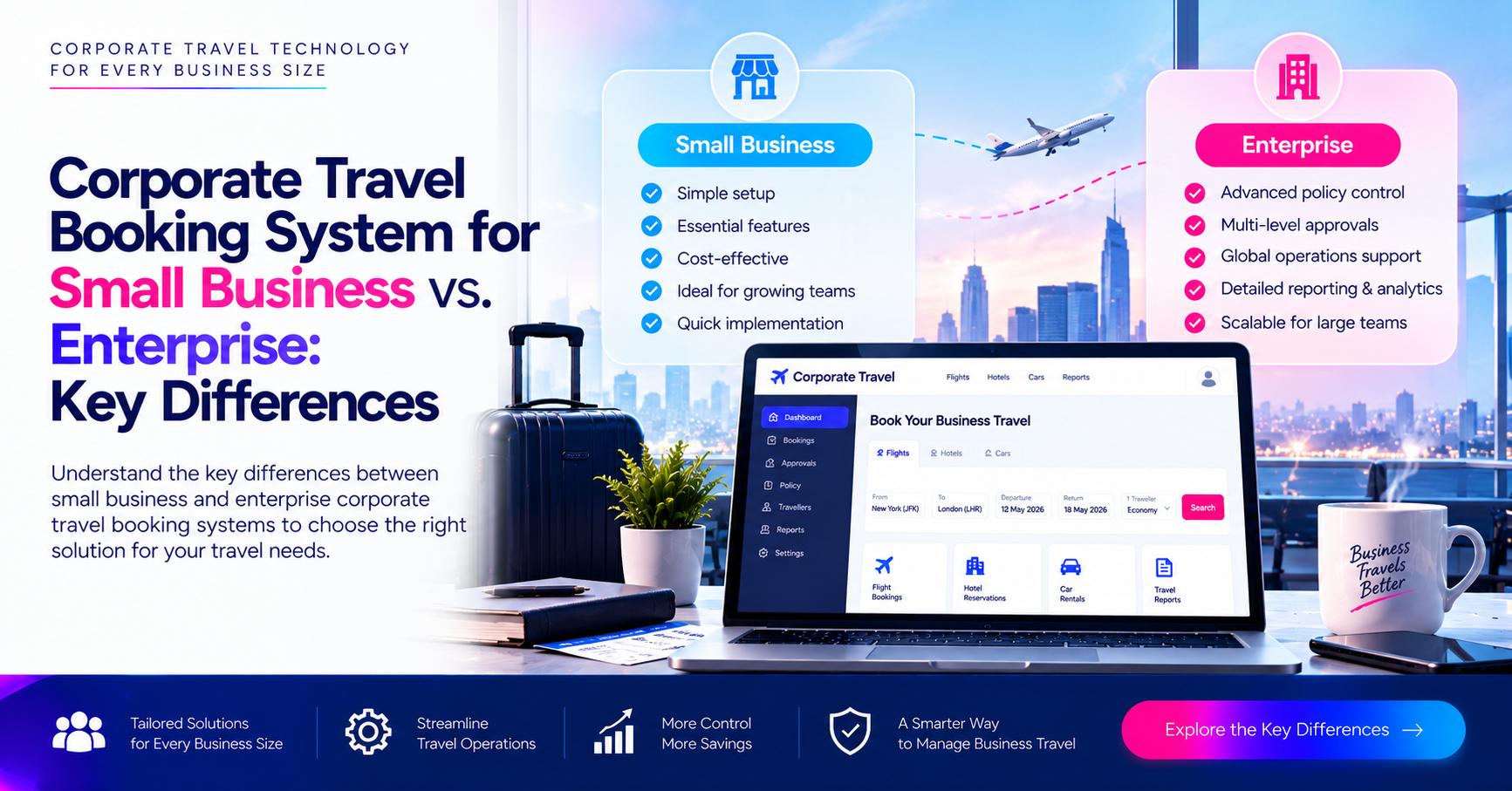
Corporate Travel Booking System for Small Business vs. Enterprise: Key Differences
Corporate Travel Booking System for Small Business vs. Enterprise: Key Differences Choosing a corporate travel booking system becomes more complicated as your company grows. A business with 15 employees travelling occasionally might need a simple…
Oct 15, 2026Read More
Get in touch
Email Us
sales@traveltekprogroup.com“We opted for Traveltekpro to construct and implement our Flight booking system, and I am thoroughly pleased with the outcomes. Their team displays remarkable efficiency, expertise, and utmost professionalism throughout the project.”

Arun Neli
Chief Operating Officer
“I had a fantastic experience with Traveltekpro! Their custom booking system designed for our platform is not only sleek and easy to use,but it has also received excellent feedback rom our customers. Kudos to the Traveltekpro team for their outstanding work!”

Benjamin Smith
Product Manager
“Traveltekpro has been a delight to collaborate with on two distinct occasions, showcasing professionalism and expertise. Their team demonstrates a commitment to surpassing expectations and adheringto deadlines.”

Kevin Brown
CTO
“We partnered with Traveltekpro for our travel booking platform, and the experience was excellent. The team understood our requirements quickly, delivered on time, and provided great support throughout the project. Highly recommended.”

Manish Singh
Director of IT
“Great experience working with Traveltekpro. They were responsive, knowledgeable, and always ready to suggest better solutions. The final product exceeded our expectations, and the after-launch support has been excellent.”

Shubham Rawat
Founder & CEO