
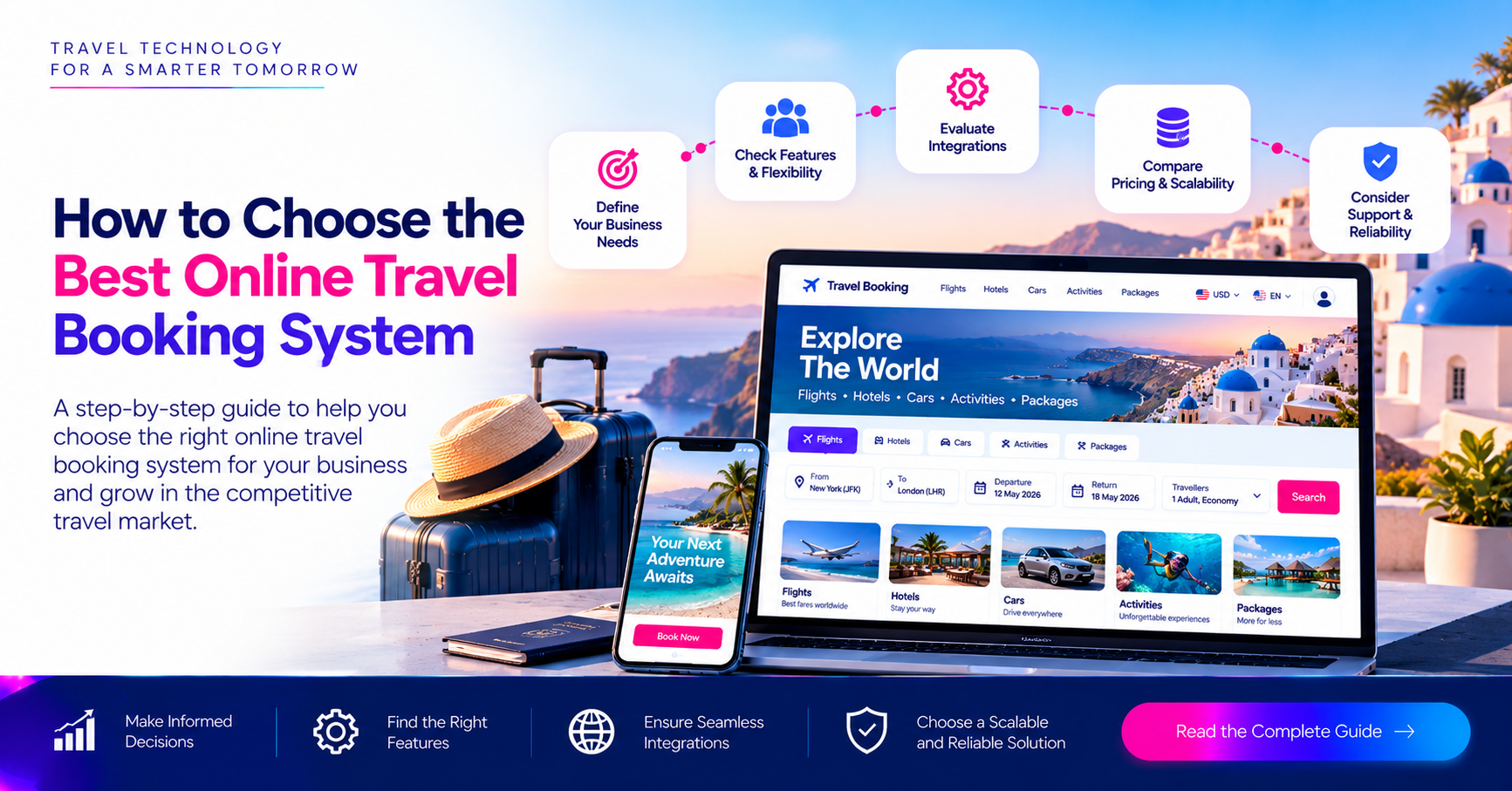
How to Choose the Best Online Travel Booking System
Choosing an Online travel booking system Is a business decision that affects much more than how customers search for flights or hotels. It affects how you access travel inventory, manage prices, handle cancellations, and even coordinate work across your team. If you are a travel agency that sells flights and hotels a customer selects the flights and proceeds to payment. But the fare has changed since the search and the supplier does not confirm the reservation immediately. The team now needs to check the booking status, resolve the payment issue and explain the situation to the customer. If the booking platform cannot handle these situations properly even simple reservations can turn into hours of manual work. That’s the only reason why choosing the right travel agency online booking system. You need to understand how the platform connects travel inventory pricing bookings and post booking operations.
Start with what your travel business needs to sell
Before comparing software providers decide which travel products you want to offer and who will use the platform.
1. Identify your travel products
If you are a flight focused agency you need to search fares, compare flight options, complete reservations and handle ticketing where applicable. While a hotel focused business has different priorities including room availability rate plans and supplier connectivity. Tour operators might need to create packages that combine accommodation transfers and other services. Meanwhile OTA selling multiple travel products might require several inventory sources connected through a common booking experience. These differences matter because software design around one type of booking might not automatically support another. Before requesting demonstrations you need to write the products you sell the customer or agents work with and the tasks your team performs after reservation is created.
2. Match the system to your sales channel
Think about where bookings will originate. Will customers book directly through your website? Will travel agents use a separate portal? Or will you operate several of these channels together? Each creates a different requirement for user access and pricing. Defining these requirements first makes it easy for you to avoid paying for capabilities you do not need or discover later that the system lacks an essential part of your workflow.
Understand the differences between a booking system and a booking engine
The terms Online Travel Booking Engine An online travel booking engine are often used interchangeably but they do not always describe the same scope of technology. Understanding the difference helps you identify whether a provider is offering a customer facing booking interface or a more complete system for managing travel transactions.
-
What does an online travel booking engine do?
An online travel booking engine is the part of the platform that allows your customers or travel agents to search for travel products, compare available options and complete a reservation. The quality of experience matters. If your customers cannot understand the available options or find the total prices or complete checkout easily they might just leave before booking.
-
What a complete online travel booking system should handle?
The wider Online travel booking system includes technology and workflows supporting the booking engine. Depending on your business And platform these might include supplier connectivity availability checks booking confirmations and reporting and agent management. For example a customer who books a hotel room through your website the booking interface helps them select the room but the wider system also communicates with relevant suppliers and records the reservation. For your travel agency this distinction is important because a good search experience does not guarantee that reservation will be processed and serviced correctly.
-
When a booking website is not enough
A travel website might display hotels, flights or packages without managing the complete booking process. Employees still need to check supplier confirmations manually follow up on cancellations or reconciled payments using separate tools. Can be manageable if booking volumes are low. As your business grows however disconnected workflows can increase the time spent on administration and make it harder to track the status of individual reservations.
Check where the system gets it travel inventory
Inventory connectivity is one of the most important factors when choosing a travel agency online booking system.
1. Understand direct suppliers and travel apis
You can obtain inventory through several sources and the right combination depends on what you sell. Big supplier connections allow you to work with specific airlines or hotels. These connections might be useful when you have commercial agreements with particular suppliers or need access to your booking services. Global distribution system provides travel content through established distribution networks. They are especially relevant to many travel agency workforce although the available content and functions depend on the connection and commercial arrangements.
2. Test inventory quality not just supplier count
A provider might advertise numerous supplier connections but the number alone does not tell you whether the platform suits your business. Test searches using destinations, dates and travel products that matter to your customers. Check whether the results are relevant, whether the prices are accurate and whether the selected offers can be booked under the conditions displayed.
Follow a booking from search to confirmation
One of the most practical ways to evaluate an Online Travel Booking Engine is to follow a realistic reservation through every stage.
-
Search and validate the selected offer
Start by searching for a flight or hotel using the dates and conditions your customers commonly request. Compare available options and select one. Before completing the reservation check whether the system validates the selected offer again. This matters because travel inventory can change between the initial search and the final booking. If a flight fare changes the customer should receive the updated price before proceeding.
-
Complete the reservation and track confirmation
Next you need to follow the booking through payment and supplier confirmation. These are related but unique events. A payment can be initiated without the supplier confirming the reservation immediately. The system should make the status clear so that neither the customer nor your team assumes the booking is confirmed when it is still pending. Booking references or guest details should be handled as per product and supplier requirements.
-
Check what happens after the booking
The workflow continues after confirmation. Your customers need to change travel dates, cancel a reservation or ask about a refund. Your team needs to find a booking quickly and understand the current status.
Evaluate pricing rules payments and commercial controls
Your booking platform must support the way your business prices travel products and collects money. This is especially important if you serve both retail customers and travel agents.
1. Make sure the pricing structure fits your business
A travel business might earn revenue through commissions, markups , service fees or negotiated commercial arrangements. The system should support the pricing model relevant to the business and display the selling price correctly.
2. Review payment and refund workflows
Payment gateway compatibility supported currencies and transaction tracking are very important when customers book through your Online travel booking system. Ask what happens when a payment fails, remains pending or succeeds on an immediate supplier confirmation. The system should provide a clear way to identify the transaction and establish the booking status.
Compare integration automation and reporting requirements
A travel agency online booking system rarely operates in isolation. It needs to exchange information with suppliers and depending on your business might also need to connect with payment services and internal financial systems.
-
Integrations that support daily operations
Start by identifying the systems your business already uses. This might include gds connections payment gateways and accounting software. The goal of integration is not just connecting apps. It should follow relevant information to move between them without creating extra manual work. Ask providers which integrations are available whether they are included in the quoted scope and whether additional development is important.
-
Automation that reduces manual follow up
Think about the tasks your staff performs repeatedly after booking is created. They might spend time sending confirmation messages, following up on pending reservations, or communicating cancellation information to customers. An effective system can automate appropriate parts of workflows based on capabilities and integrations. This can reduce repetitive administration and also help staff focus on exceptions that require attention.
-
Reporting that helps you make better decisions
Reporting needs might vary by business size and model. A small travel agency might just need sales summaries and booking records while a larger platform might require reports on supplier performance and booking volumes. Before selecting any system identify the reports your team needs for every decision .
Test Online Travel Booking Engine before making the final decision
A sales representation can demonstrate what a platform is designed to do but it might not reveal how it behaves when a reservation encounters a problem. Ask the provider to demonstrate scenarios based on the products you sell and the workflows your team handles.
1. Test realistic booking problems
You can start with a flight fare that changes up to the customer selects it. Check whether the updated price is displayed clearly and whether the customer can make an informed decision before proceeding. Next test a hotel booking where payment has been initiated but the supplier does not confirm the reservation immediately. Your platform should distinguish between payment status and booking confirmation so that the staff know what needs attention. Then you can test cancellation or modification. Check whether the system displays the applicable conditions and makes relevant refund information.
2. Review implementation and support before shipping
Software features are only part of the decision. You must also understand how the platform will be implemented and supported. Ask about the expected implementation timeline and supplier onboarding besides staff training and technical documentation. Clarify how the system issues are reported where support arrangements are available and whether service commitments are documented.
Compare Vendors by Business Fit, Not Feature Count
| Evaluation area | Questions to ask | What a suitable system should demonstrate |
| Business fit | Does it support our products, customers and sales channels? | Workflows that match the business model |
| Inventory | Can we access the suppliers and destinations we need? | Relevant results, accurate rates and suitable booking functions |
| Booking workflow | Can reservations be completed and serviced reliably? | Clear booking statuses and manageable post-booking processes |
| Commercial controls | Can we manage commissions, markups and selling prices? | Pricing rules that match the business’s commercial arrangements |
| Integrations | Does it connect with our existing systems? | Verified connectivity and a clear integration scope |
| Total cost | What are the initial and ongoing expenses? | Transparent pricing for implementation, transactions, maintenance and support |
| Scalability | Can the system accommodate expected growth? | A practical path to additional users, products and booking volumes |
| Support | What happens when something goes wrong? | Clear support arrangements and escalation procedures |
The right platform should support your business today while leaving room for realistic growth. That does not mean purchasing the most complicated system available. It all means that you have to understand which capabilities you need now and which might become important as your products’ users and booking volumes increase. For businesses evaluating travel booking technology Traveltekpro might be worth considering in the context of their specific booking and integration requirements.
Read More: What Is Custom Travel Software Development?
FAQ'S
Related Blogs
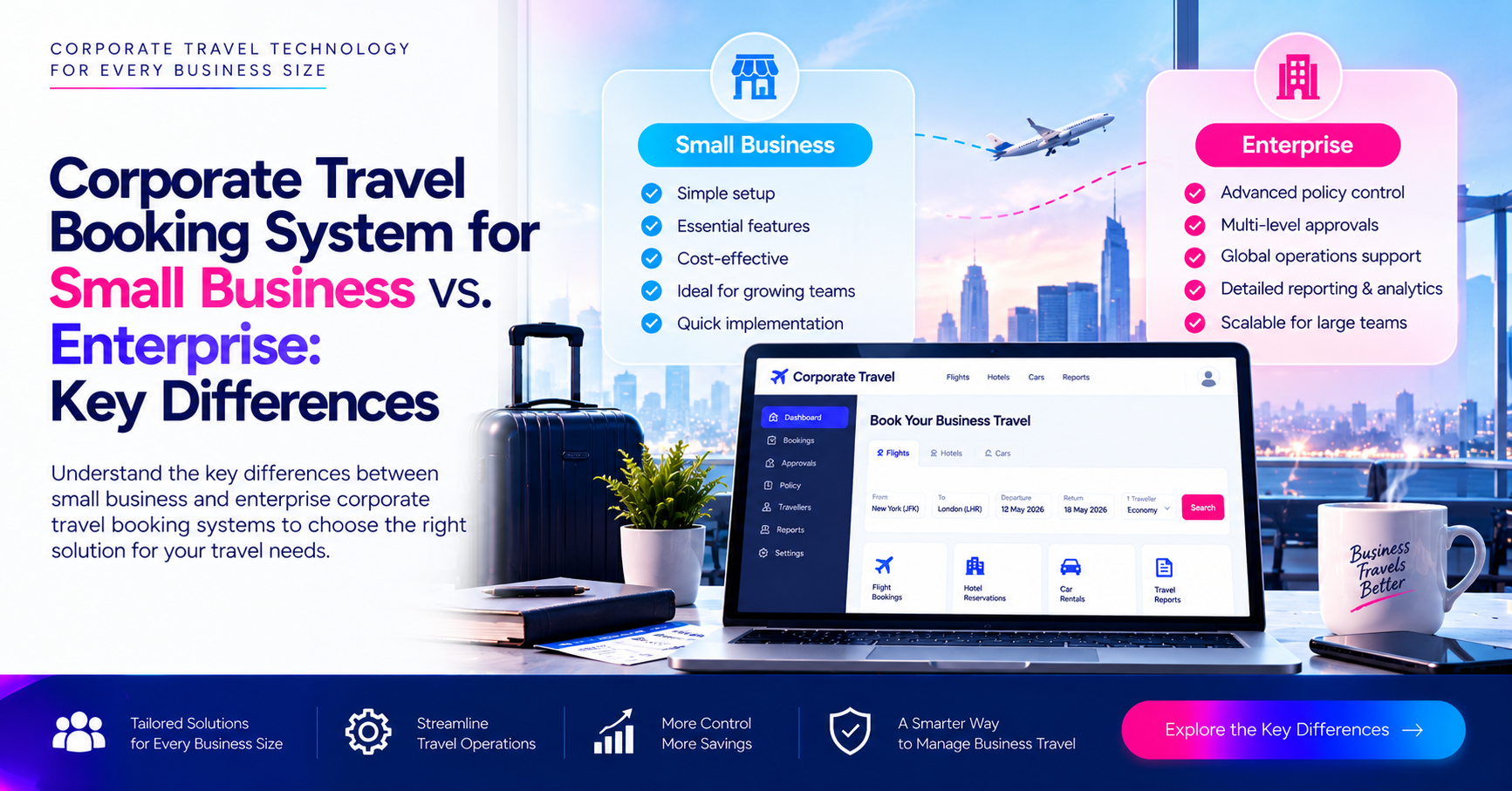
Corporate Travel Booking System for Small Business vs. Enterprise: Key Differences
Corporate Travel Booking System for Small Business vs. Enterprise: Key Differences Choosing a corporate travel booking system becomes more complicated as your company grows. A business with 15 employees travelling occasionally might need a simple…
Oct 15, 2026Read More
Get in touch
Email Us
sales@traveltekprogroup.com“We opted for Traveltekpro to construct and implement our Flight booking system, and I am thoroughly pleased with the outcomes. Their team displays remarkable efficiency, expertise, and utmost professionalism throughout the project.”

Arun Neli
Chief Operating Officer
“I had a fantastic experience with Traveltekpro! Their custom booking system designed for our platform is not only sleek and easy to use,but it has also received excellent feedback rom our customers. Kudos to the Traveltekpro team for their outstanding work!”

Benjamin Smith
Product Manager
“Traveltekpro has been a delight to collaborate with on two distinct occasions, showcasing professionalism and expertise. Their team demonstrates a commitment to surpassing expectations and adheringto deadlines.”

Kevin Brown
CTO
“We partnered with Traveltekpro for our travel booking platform, and the experience was excellent. The team understood our requirements quickly, delivered on time, and provided great support throughout the project. Highly recommended.”

Manish Singh
Director of IT
“Great experience working with Traveltekpro. They were responsive, knowledgeable, and always ready to suggest better solutions. The final product exceeded our expectations, and the after-launch support has been excellent.”

Shubham Rawat
Founder & CEO