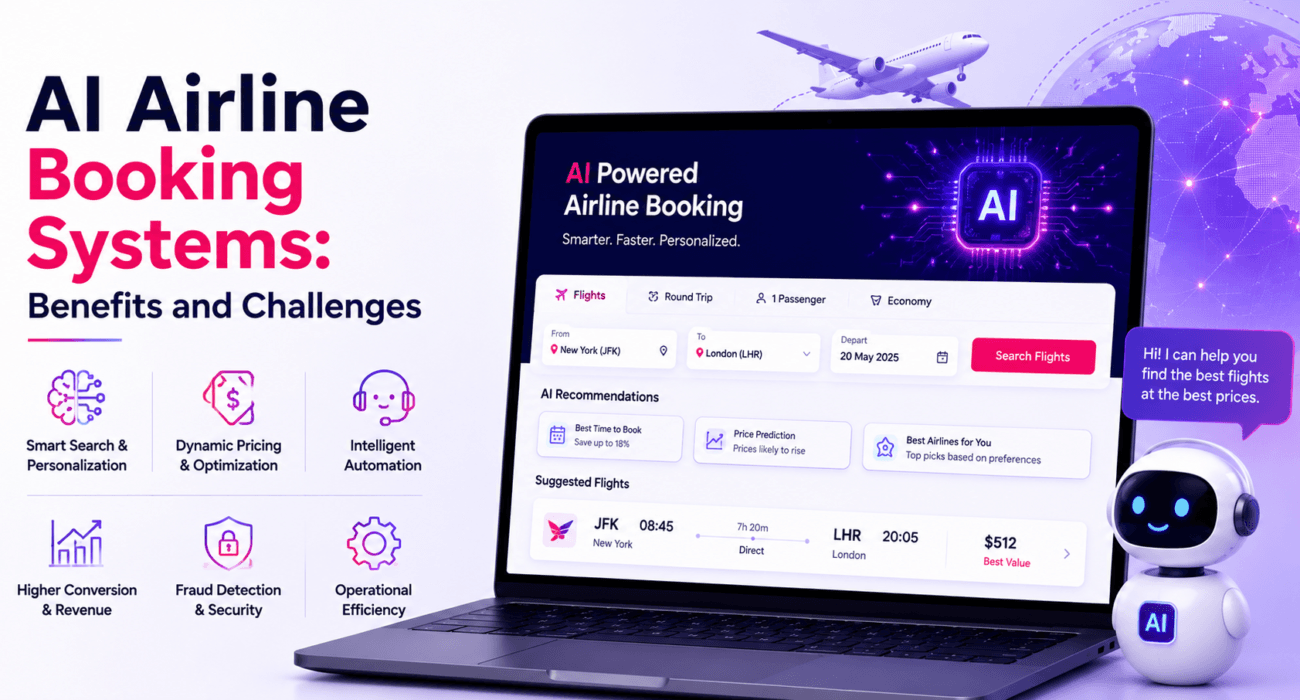
Integrating AI into Airline Booking Systems: Benefits and Challenges
Think about the last time you booked your flight you might have opened a travel website, entered your destination, compared a few fares and selected a seat or completed or booked within minutes. It feels simple from the customer’s perspective but behind that smooth experience is the system processing thousands of pieces of information in real time. Today travelers expect way more than just a list of available flights; they want accurate fare personalized recommendations, instant booking confirmations and flexible payment options. They also expect booking platforms to remember their preferences and suggest better routes. Meeting all these expectations is becoming really difficult with traditional booking technology alone. This is exactly where the AI airline booking system truly makes a difference. Whether you are in airline looking to modernize your reservation platform or a business using airline booking software for travel agents understanding how AI works has become very important
What is an airline booking software for travel agents?
An airline booking system is an intelligent version of a traditional airline booking system that uses technologies like machine learning, predictive analytics and natural language processing. A typical booking system performs a simple task. It searches flights, processes reservations and issues tickets. No doubt this is reliable but it basically depends on pre-defined rules and manual user input. AI changes completely. Instead of simply responding to a search request an AI powered system studies your customer behavior and constantly learns from it. It recognizes travel patterns, remembers preferences and predicts customer needs and recommends flights that are most likely to match individual travellers.
How AI works in airline booking systems?
Behind every television booking platform is a combination of technologies working together to process a large amount of travel data within a few seconds.
1. Data collection
Everything begins with data. The system collects information like previous bookings destinations and preferred airlines besides travel seasons and payment methods. It doesn’t collect data simply to store it, it uses the information to understand traveler behavior and improve future recommendations.
2. Machine learning
Machine learning allows your system to become smarter with time. Every completed booking, cancelled reservation or customer interaction teaches the platform something. As more data becomes valuable AI constantly improves its recommendations making future search more accurate and relevant.
3. Predictive analytics
One of the biggest strengths is creating future outcomes. By studying historical booking patterns and seasonal travel demand holidays airline pricing strategies and market trends AI can forecast ticket demand and estimate future airfare changes. This helps you optimize pricing while giving your travelers useful insights about the best time to book
4. Automation
Many routine booking tasks no longer require manual intervention. AI can automatically send booking confirmations, issue tickets and manage cancellations while notifying passengers about flight changes.
Why is AI becoming essential in the travel industry?
The travel industry has been quick to adopt technology but artificial intelligence is creating a much bigger shift as compared to previous innovations. It’s not about helping businesses work faster but it’s also about changing the way airlines and travel agencies interact with customers.
Changing customer expectations
The way people book flights has changed completely over the last decade. Your customers are no longer satisfied with simply finding a ticket; they want an experience that feels effortless from start to end.
Demand for instant bookings
Speed matters when someone searches for a flight; they expect results within a few seconds. They do not want delays while a system loads information from multiple sources on manual process requests. An AI airline booking system searches large volumes of airline data almost instantly. It filters results intelligently and also presents the most relevant options first helping you complete bookings much more quickly.
Customized travel experiences
Every traveler is different. A family planning a summer vacation has a different priority from a busy executive who just flies every week. Traditional booking systems treat both the customers exactly the same. AI doesn’t. It learns from previous bookings and seeks choices. Instead of forcing your customers to sort through thousands of flight options, AI helps narrow down the choices that are most likely to suit their needs.
24/7 customer support
Travel doesn’t stop after office hours. Your customers often book flights late at night or during weekends. Waiting several hours for a response is not practical. AI powered virtual assistants solve the problem instantly by providing round the clock support. Modern chat bots can answer common questions like flight availability ticket cancellations and refund status. If the issue is more complicated the chatbot can transfer the conversation to a human support agent along with complete chat history.
Key features of AI airline booking software for travel agents
The real strength of an airline booking system lies in its intelligent features. Instead of simply processing reservations it actively helps you find better travel options while helping your business operate more effectively.
1. Intelligent flight search
Traditional search engines display every available flight that matches your customer’s filter. AI goes much further. It studies customer preference before displaying results. Instead of showing hundreds of options available it highlights the flights that are most relevant based on the previous travel history and preferred airlines.
2. Smarter search results
AI understands the intent behind the search. If a traveler regularly books direct flights the system automatically prioritizes non-stop routes. If another traveler usually chooses the lowest fare regardless of travel time these options appear faster.
3. Customize recommendation
Recommendation engines have become common in online shopping and AI brings the same concept of travel. The system can recommend preferred airlines and similar travel routes besides extra luggage and travel insurance.
Benefits of integrating AI into airline booking system
Faster booking experience
Time is one of the most valuable resources for travelers. AI reduces the number of steps you need to complete a booking by delivering intelligent search results and relevant recommendations in non time. Instead of comparing hundreds of flight combinations your customers can receive a carefully selected list of options that best match the preferences.
Better customer experience
Great customer experience builds long term loyalty. AI helps you create booking journeys that feel simple and customized. Every traveler receives recommendations based on their own travel history instead of generic search results. When your customers consistently receive relevant recommendations and excellent service they are more likely to book again.
Improved operational efficiency
AI is like having an extra team member who never gets tired. It automates repetitive tasks like sending booking confirmations, processing refunds and also updating reservations.
Increase revenue opportunities
AI doesn’t just improve customer service it also helps you grow revenue in smarter ways. By understanding customer preferences it can recommend premium seats and baggage updates and other services exactly at the same time. Because these suggestions are completely customized rather than random, you are more likely to accept them, increasing the average value of your booking.
Reduced operational costs
Running an airline booking platform involves many tasks from confirming reservations to processing refunds and answering common customer questions. AI automates much of this work reducing the need for manual intervention. This does not mean replacing employees instead allows staff to focus on higher value activities.
AI Airline Booking System vs Traditional Airline Booking System
| Feature | AI Airline Booking System | Traditional Airline Booking System |
| Flight Search | Intelligent and personalized | Manual search filters |
| Booking Speed | Faster through automation | Standard processing |
| Customer Support | AI chatbot available 24/7 | Human support only |
| Pricing | Dynamic and predictive | Static or manually updated |
| Recommendations | Personalized suggestions | Generic results |
| Automation | High | Limited |
| Operational Efficiency | Excellent | Moderate |
| Customer Experience | Highly personalized | Standard |
As more businesses adopt AI it’s natural for you to compare it with typical booking platforms. Businesses that manage high booking volumes online travel agencies or corporate travel companies benefit the most from AI adoption because automation helps them serve customers more effectively.
Challenges of implementing AI in AI airline booking system
1. Higher initial investment
Developing or integrating AI requires a considerable upfront investment. You will need to upgrade your existing infrastructure and purchase cloud services to integrate AI tools with booking platforms. If you are a small travel agency the cost might change significantly but many businesses view AI as a long term investment.
2. Data privacy and security
AI relies heavily on customer data to deliver customized recommendations and intelligent automation. This makes data security a top priority. Travel businesses must ensure that your customer information is stored securely and handled responsibly.
3. Integration with reservation systems
Many airlines still use reservation systems that were built years ago. No doubt these platforms remain reliable, connecting modern AI technology with older systems can be challenging. As a business you often need custom integrations API development or gradual migration strategies to ensure everything works together.
Real world applications of AI in airline booking
Many airlines and travel companies are already using AI in practical ways. Customized booking experiences recommend flights based on your customer preferences. AI-powered chatbots answer your customer questions around the clock. During flight delays or cancellation automatically identifies affected passengers and suggests alternative flights. AI also supports intelligent upselling by recommending baggage upgrades and lounge access. Behind the scenes fraud detection systems monitor suspicious booking activity and protect your business from payment fraud.
Best practices for successfully integrating AI airline booking software for travel agents
Implementing AI successfully requires careful planning rather than just adding new technology. You need to start by defining clear business objectives. You must understand whether your priority is improving customer experience or increasing booking conversation. Next you must also introduce high impact features like AI chatbots, intelligent flight search or automated booking management. These features often deliver quick improvements while helping your teams become comfortable with AI. You must choose technology that can scale with your business ensuring it supports future growth and also increasing booking volumes. Maintain accurate high quality customer data because AI platforms perform best when it learns from reliable information. Finally remember that AI should continue evolving. Monitor performance regularly and collect customer data while refining your AI models with time to maximize long term benefits.
Future trends in AI airline booking system
AI is developing rapidly and the future of airline booking looks even more exciting. First of all, generative AI will create complete travel plans based on simple customer requests. Hyper personalized experiences will recommend flights and hotels. Predictive travel assistance will remind your customers about visa requirements and airport traffic besides weather conditions. AI powered revenue management will continue helping airlines optimize pricing while responding instantly to market demand. At the same time you must know sustainability will become a larger focus with AI recommending environmentally friendly routes and lower emission travel options.
How to choose the right AI airline booking software for travel agents?
Choosing the right platform starts with understanding your own business requirements. Looking for software that offers intelligent search predictive pricing and personalized recommendation that align with your business objectives. Just ensure that the solution integrates smoothly with GDS platforms and airline APIs to provide real time inventory and accurate pricing. Ease of use is also important. Our simple interface reduces training time and improves staff productivity. Finally you need to choose a vendor that offers reliable Technical Support and regular software updates.
So you must know that artificial intelligence is no longer a futuristic concept, it has become a practical tool that is transforming the way airlines and travel agencies manage reservations. An airline booking system goes way beyond then simply processing bookings. It helps you understand your customer behaviour and automate routine tasks. While adopting AI requires careful planning and investment besides ongoing optimization the long term benefits are difficult to ignore. For companies using airline booking software, travel agents integrating AI is not about replacing experienced travel professionals.
Read More: AI Booking Engines: A Game Changer for Travel and Hospitality
FAQ’S
1. How does AI improve airline booking systems?
AI improves airline booking systems by analyzing traveler behavior, automating flight searches, predicting airfare trends, personalizing recommendations, and streamlining reservations. It helps airlines and travel agencies deliver faster booking experiences, reduce manual work, improve customer satisfaction, and increase booking conversions through intelligent automation.
2. What are the benefits of AI airline booking software for travel agents?
AI airline booking software helps travel agents automate repetitive tasks such as flight search, fare comparison, ticket issuance, customer support, itinerary management, and booking updates. It also provides personalized flight recommendations, dynamic pricing insights, and faster response times, allowing agents to serve more customers efficiently.
3. Can AI predict flight ticket prices accurately?
AI can predict airfare trends by analyzing historical fares, seasonal demand, booking patterns, airline pricing strategies, and market conditions. While no prediction is guaranteed, AI-powered pricing models help travelers identify favorable booking windows and enable travel businesses to optimize pricing strategies more effectively.
4. How does AI personalize flight booking experiences?
AI personalizes flight booking by learning traveler preferences such as preferred airlines, cabin class, travel dates, destinations, seating choices, and budget. Based on this information, the system recommends the most relevant flights, ancillary services, and travel options, creating a faster and more customized booking journey.
5. Is AI replacing travel agents in airline booking?
No. AI is designed to support travel agents rather than replace them. It automates time-consuming tasks like fare searches, booking updates, and customer inquiries, allowing travel professionals to focus on complex itineraries, personalized travel planning, and customer relationships that require human expertise.
6. What features should an AI airline booking system include?
A modern AI airline booking system should include intelligent flight search, real-time fare updates, predictive pricing, AI-powered chat support, automated ticketing, personalized recommendations, secure payment processing, GDS and NDC integration, multilingual support, fraud detection, and analytics dashboards to improve booking performance and customer experience
Let's Start Your Project
Let us help you achieve your goals, by creating the best solution for you!