

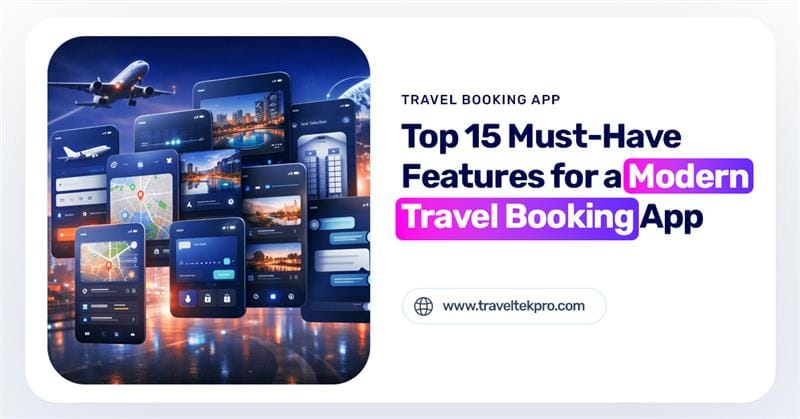
Top 15 Must-Have Features for a Modern Travel Booking App
The travel industry has crossed the stage of simply enabling online bookings.
In 2026, travelers expect a booking app to understand them, guide them, and optimize their choices, not just list flights and hotels. They expect a seamless journey from search to checkout, built on personalization, transparency, and automation.
A modern travel app is no longer a digital catalog. It’s a smart commerce engine that predicts traveler needs, eliminates friction, and maximizes value for both the user and the business.
What Users Expect in 2026
Today’s travelers want:
- Live availability across global suppliers
- Personalized suggestions instead of endless scrolling
- Instant confirmation without manual follow-ups
- Transparent pricing with no surprises
- A secure, unified payment ecosystem
And if an app doesn’t offer it, users abandon it in seconds making these features not optional, but foundational.
Top 15 Features Every Modern Travel Booking App Needs
1. Real-Time Global Inventory
Travelers distrust apps that show prices that can’t be booked.
2026-ready apps connect directly with GDSs, bedbanks, wholesalers, channel managers and consolidators to ensure that the price shown is the price booked with no failures, no retries.
2. Multi-Module Travel Commerce
From flights and hotels to holiday packages, cars, transfers and activities, the full travel ecosystem should be bookable inside one app. Users don’t want five apps, they want one reliable travel companion.
3. AI-Driven Personal Search
Search results shouldn’t be generic. AI now learns from:
- Traveler type
- Budget patterns
- Travel season preferences
- Past trips and bookmarked cities
and converts the search process into a high-intent, high-conversion experience.
4. Smart Filters and Sorting
The more time a user spends finding the right option, the lower the chances of a booking. Smart sorting reduces decision fatigue and increases confidence in choices.
5. Multi-Language and Multi-Currency Support
Localization now plays a direct role in revenue.
Users book more when they can browse in a currency and language they trust.
6. Dynamic Pricing and Live Alerts
Travelers love discovering a good deal and apps that notify at the right time guarantee repeat engagement and higher booking conversion.
7. One-Click Checkout
A fast and secure payment flow with UPI, cards, wallets, BNPL and travel credits dramatically reduces drop-offs.
8. Automated Post-Booking Workflow
Vouchers, invoices and supplier confirmations should arrive instantly without manual support intervention.
9. Smart Upselling
Add-ons like airport transfers, insurance, activities and seat selection should appear only when relevant enhancing value, not interrupting the journey.
10. Loyalty & Gamified Rewards
Gamified rewards and points keep users returning for their next booking not price comparison.
11. In-App Support (AI + Live Chat)
Fast answers to baggage rules, refund timelines and fare conditions build trust and reduce support load.
12. Cancellation & Refund Automation
A clear, frictionless refund process converts even a canceled booking into a positive retention experience.
13. Fraud-Proof Payment System
With AI-based device fingerprinting and transaction validation, users feel safer making high-value bookings.
14. Offline Access for Itinerary
Tickets, invoices and maps must be accessible even without the internet essential during international travel.
15. B2B Travel Agent Dashboard
If servicing corporates or sub-agents, the app should allow them to book on behalf of their clients and track commissions.
Table: Why These Features Matter in 2026
| 2026 Expectation | Critical Feature | Business Impact |
| Personalization | AI search + smart sorting | Higher conversion & engagement |
| Transparency | Live pricing + instant confirmation | Fewer refund cases |
| Security | Fraud-proof payments | Higher trust & larger transactions |
How AI and Automation Transform Travel App Performance
AI has become the revenue engine of modern OTAs.
- AI improves conversions by predicting user intent and displaying optimal options first.
- AI reduces support costs with automated chat assistance and ticket handling.
- AI increases revenue by recommending the right add-on at the right moment, not randomly.
- AI protects profit by flagging suspicious payments and auto-blocking risky attempts.
Automation keeps the flow uninterrupted — search → booking → vouchers → CRM sync → travel credits without manual dependency.
Travel apps that leverage both AI and automation outperform traditional systems dramatically in profit, efficiency and customer loyalty.
Why Traveltekpro Is the Ideal Technology Partner
Traveltekpro combines global travel API expertise with AI-powered app development to deliver scalable, future-ready booking platforms.
- Deep travel domain specialization across flights, hotels, packages, transfers and activities
- Certified API expertise for Amadeus, Sabre, Travelport, Expedia, Booking.com, Hotelbeds and more
- Tailored builds for startups, mid-scale OTAs and enterprises
- Smooth integration and migration without downtime
- 24×7 global support for travel businesses
How Traveltekpro Maximizes App Profitability
Traveltekpro prioritizes ROI-driven development, not just feature deployment.
- UX-optimized booking flow reduces drop-offs
- Smart upsell increases revenue per booking
- API efficiency lowers infrastructure costs
- Loyalty + CRM extend customer lifetime value
In short, Traveltekpro builds apps that perform like high-conversion travel commerce engines not just booking tools.
The Future of Travel Apps Beyond 2026
Travel apps are shifting from “search and book” to predictive travel commerce.
Soon, apps will:
- Recommend trips before users search
- Build dynamic holiday packages in real time based on behavior
- Offer modular plug-and-play travel infrastructure through micro-APIs
Businesses that update their technology today will lead the industry tomorrow.
Conclusion
A travel booking app in 2026 must feel personal, automated, global and intelligent. The apps that succeed are those that eliminate effort for the traveler and maximize opportunity for the business.
If your goal is to build an app that drives bookings, loyalty and profitability, Traveltekpro is equipped with the technology, experience and ecosystem to make it happen.
Read More: AI Travel App Development: Cost, Features & Real-World Use Cases
FAQ'S
Related Blogs
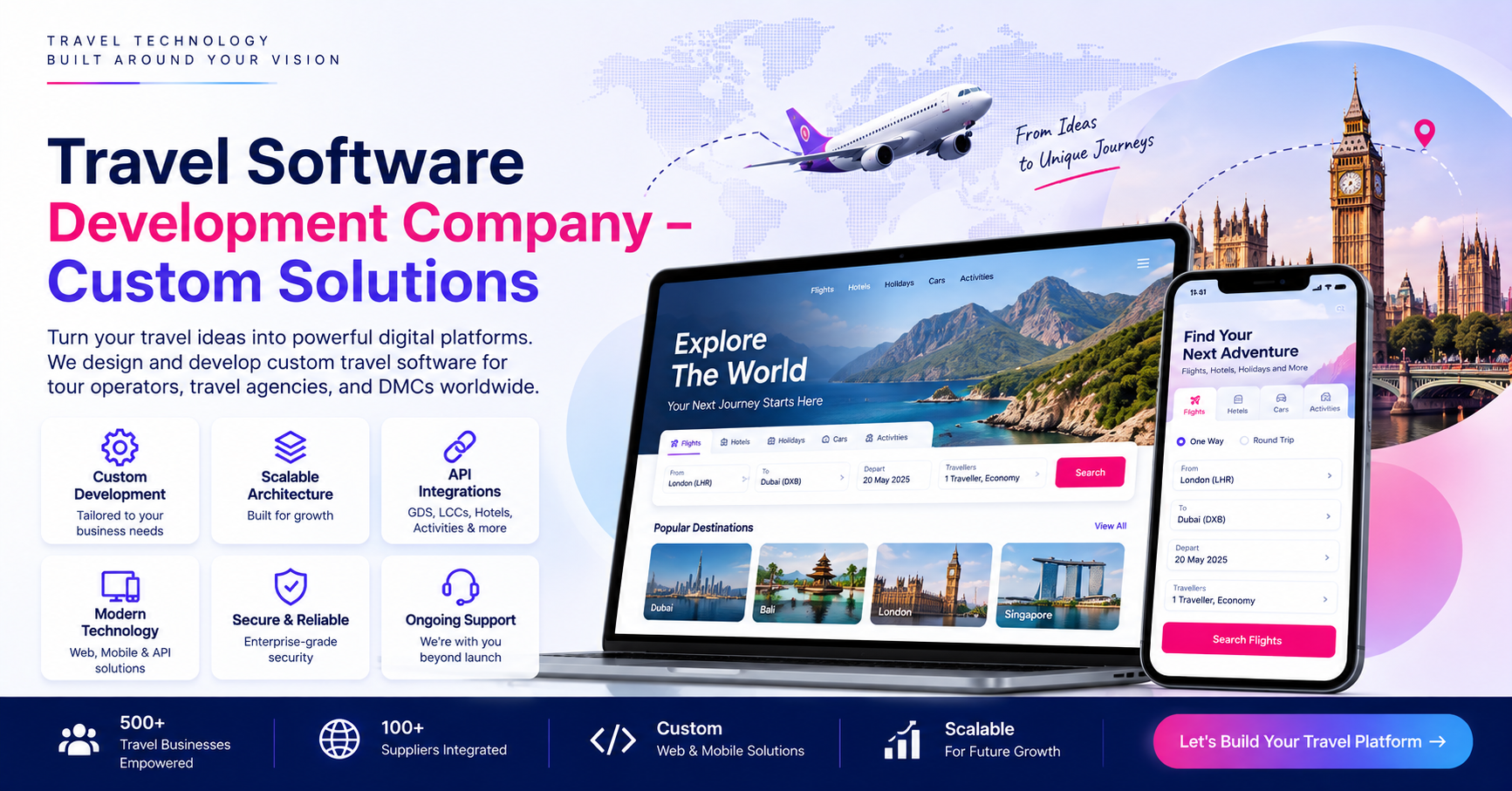
Travel Software Development Company – Custom Solutions | TravelTech Innovations
Travel Software Development Company – Custom Solutions | TravelTech Innovations The travel business rarely relies on just one thing to manage. A simple booking can involve a customer agent or government supplier APIs and pricing…
Sep 10, 2026Read More
Get in touch
Email Us
sales@traveltekprogroup.com“We opted for Traveltekpro to construct and implement our Flight booking system, and I am thoroughly pleased with the outcomes. Their team displays remarkable efficiency, expertise, and utmost professionalism throughout the project.”

Arun Neli
Chief Operating Officer
“I had a fantastic experience with Traveltekpro! Their custom booking system designed for our platform is not only sleek and easy to use,but it has also received excellent feedback rom our customers. Kudos to the Traveltekpro team for their outstanding work!”

Benjamin Smith
Product Manager
“Traveltekpro has been a delight to collaborate with on two distinct occasions, showcasing professionalism and expertise. Their team demonstrates a commitment to surpassing expectations and adheringto deadlines.”

Kevin Brown
CTO
“We partnered with Traveltekpro for our travel booking platform, and the experience was excellent. The team understood our requirements quickly, delivered on time, and provided great support throughout the project. Highly recommended.”

Manish Singh
Director of IT
“Great experience working with Traveltekpro. They were responsive, knowledgeable, and always ready to suggest better solutions. The final product exceeded our expectations, and the after-launch support has been excellent.”

Shubham Rawat
Founder & CEO