

Flydubai API Integration: Best Practices for Success
In today’s travel industry speed and accuracy are everything. You can see customers expecting instant flight results and smooth looking flows besides immediate confirmations. Travel portals that cannot deliver this experience lose customers within a few seconds. This is exactly where Flydubai API Integration plays a very important role. Flydubai has built a strong presence across the Middle East, Europe , Asia and Africa. If you’re a travel agency or an OTA or a travel technology company connecting directly with Flydubai systems through APIs means better control of faster booking and processes.
Why does Flydubai Flight API Integration matter today?
The travel industry has completely shifted from manual ticketing to automated digital distribution. Earlier bookings were handled through emails and phone calls. Today APIs allow direct access to airline inventory in real time. When you integrate Flydubai API in your platform you receive live tickets schedules and availability besides accessing real time pricing and creating bookings instantly. You can also manage cancellations and refunds digitally and this reduces manual errors, it eliminates dependency on offline processes and improves customer trust.
If you are an OTA or a travel portal integration means faster search results and better conversion rates. If you’re an agency offering flight plus hotel bundles API integration ensures pricing accuracy at checkpoint. No customer wants to see different fare pricing after clicking pay now real time APIs ensure that there is no such problem in the future. What separates an average travel platform from your professional 1? Real time reliable airline data delivered without any delay.
Understanding Flydubai API
Before you start with Flydubai API Integration you need to understand the basics. Flydubai provides flight schedules availability and pricing booking creation, booking retrieval and ancillary services like baggage and meals. For reference Flydubai is an airline based in Dubai and operates as Flydubai. Its route network connects to play with major global cities making it valuable for regional and international travel platforms.
Airline APIs usually support restful API and soap API rest API commonly uses JSON format which is lightweight and so easier for modern web platforms. You must confirm authentication methods, security protocol and request and responsive format. Your system must have the XML passers depending on the chosen protocol. Also ensure that your back end handles authentication token refresh if oauth is used.
Prerequisites for successful Flydubai Flight API Integration
Many integrations fail not because of the API itself but because of the missing preparation before integration begins. You need to ensure that your server supports HTTPS with valid SSL certificates and the back end can also handle XML parsing without any issue. There should be a timeout setting perfectly configured and rate limiting policies must be understood. Airline APIs can sometimes respond slower during peak covers and your system must handle delayed responses without crashing or freezing the user interface. Technical readiness is not just enough; you also need a signed reseller or distribution agreement with Flydubai.
Furthermore a clear understanding of Commission structure is a must besides settlement process clarity. You can use GDS systems while others prefer direct airline API. Direct integration often provides you better control and potentially better pricing flexibility but it requires stronger technicality handling. Security is very important when handling flight bookings and payments. You must ensure secure storage of customer data and compliance with local protection laws. You should never log full card details or passport numbers data breaches and travel platforms are common.
API mapping
Integration should not be random; you need structured mapping between airline and points and your internal modules. For example search API maps to your flight search module and booking API maps to your reservation engine stop you can use consistent naming conventions in your code.
Always build reusable service layers so that future airline integrations follow similar architecture. Airline APIs can return many types of errors like invalid route or seat unavailable. You must distinguish between client errors and server errors. Just implement retry logic only for safe operations like availability and check not for booking creation without validation.
Optimization
Performance directly impacts conversion rates. Catching strategy is a must like you can catch static route data airport lists and flight schedules. Airlines often limit APIs calls per minute. If your portals receive heavy traffic it is important for you to implement request throttling and queue non critical calls. Sometimes it is efficient to send parallel availability requests for multiple dates but sending too many simultaneous calls might hit the rate limits.
Your testing must include positive cases like valid one way search round trip search booking creations and negative search cases like invalid PNR or expired fair attempt. Do not ignore edge cases. If your system uses CI or CD pipelines include automated regression testing. Every deployment should verify search functionality and booking creations.
UI consideration
API integration is analysis about back end success user experience defines customer satisfaction. You need to provide intelligent filters like multicity search data flexibility, fair class selection and airline preference. Make sure that all the filters apply correctly to the API request. Show base fare taxes and baggage inclusion as customers just leave the bookings in between when hidden fees appear at checkout. After booking, send the itinerary instantly and provide E ticket confirmation. The managed booking feature should connect directly to your cancellation and modification endpoints.
Common mistakes to avoid
Even experienced teams can make avoidable mistakes like hardcoding fair rules and ignoring time zone differences. Not handling currency conversions properly is another mistake that you can make with wealth. Airline APIs change with time so you must always monitor version updates and update integration accordingly.
Handling PNR and ticketing
When integrating Flydubai API, handling PNR and ticketing correctly is one of the most critical operational areas. A smooth search experience means nothing if bookings are not stored properly. Our passenger team record is the core booking records stored in the airline system. It contains the passenger details, flight segments and fare information. Flydubai, like most airlines, generates a unique PNR code after successful booking creation. This PNR must be stored securely in your system and mapped to your internal booking ID. A single segment PNR includes just one flight leg that is for example Mumbai to Dubai or multi segment PNR might include Mumbai Dubai and Europe. Your system must handle both properly in multiple segment bookings; each segment must have different fair rules and baggage allowance can also vary.
Furthermore, reissue happens when your customer changes travel dates or reschedules change. Reissue logic must fetch original PNR reprise new itinerary and calculate the fare difference and issue updated ticket. Your integration should never assume the issue and be simple. It involves multiple API variations to avoid fair mismatch errors. Creating a PNR is only the first step; you must also synchronize it with your internal systems like CRM and OMS. Support teams need quick access to booking reference and ticket status besides refund eligibility. Store structured metadata like ticket issue date and payment mode. This helps customer support resolve issues faster without repeatedly querying with the airline API. After PNR creation you can send instant booking confirmation and send ticket copy via email.
Error handling and monitoring alerts
Airline API integration requires continuous monitoring. Even a small downtime can directly impact your revenue. You can build a real time dashboard that tracks API response status average response time and success versus failure rates. The operations team should not depend only on the developer logs. It’s very important for you to set alerts when the error rate exceeds 3 to 5% or response time crosses the threshold. Instant notifications via e-mail or SMS helps your teams act quickly. If you are distributing to sub agents, share uptime reports provide transparency and track partner level performance.
Ancillary services integration
Ancillaries significantly increase the revenue per booking. Proper integration directly boosts margins. You must offer real time baggage options during booking. Your system should fetch package options dynamically, slow wait times clearly and associate baggage rules per segment. You should never assume that baggage inclusion is based on the fare type alone always validated through Flydubai API Integration.
Live seat maps improve customer confidence and conversion rates. Your integration must fetch real time seat availability display blocks versus paid seats clearly. For example, a standard seat is included or low cost and extra legroom seats are available at a premium price. The integration should capture diet preferences and show available meal types per flight. Special service requests like wheelchair assistance might also be supported properly full stub ancillary pricing must be validated again before final payment.
-
Version control and updates
Airline APIs evolve regularly. You can track API change logs by monitoring new endpoints, depreciated endpoints and authentication changes. Subscribe to the official communication channels from the airline before you complete Flydubai Flight API Integration. If the end point is being retired, implement fall back logic, gradually migrate to a new endpoint and also test before switching fully. Your middleware should also isolate specific logic. This ensures that all the updates will not break the entire booking engine.
Security best practices
Security is not optional in your airline integration. Token and key rotation is very important. You can rotate the APIs periodically and use short lived tokens wherever possible. Just avoid hardcoding credentials and implement secure environment variables. Sensitive data must be encrypted at rest and masked in logs. You can use secure key vault systems for credential storage. It’s vital for you to maintain the logs that track which system triggered API calls, which developer modified configurations and which IP addresses are accessed credentials. Audit trails make it easy for you to protect your business from getting disputes or investigations.
-
Monitoring logging and analytics
Advanced monitoring tools help you prevent silent failures. You can consider using tools like datadog as it provides centralized logging and visualization. You can track booking success ratio search to scale conversion rate and error categorization. Analytics help you identify revenue leaks quickly.
Future proofing your integration
Airline technology continues to evolve. Modern airline distribution increasingly follows NDC principles and your system should be ready for dynamic bundled fares besides customized pricing. Flexible architecture ensures easier adaptation. AI can also help suggest baggage upgrades, offer premium seats based on the traveler profile and recommend flexible fares during uncertain travel time. Smart upselling can help you increase your average booking value. Future integrations might support gate change alerts via mobile apps and boarding reminders. Push notifications improve travel experience greatly.
-
Business value
Technical excellence translates directly into your business growth. A well executed Flydubai API Integration delivers high conversion rates, fewer support tickets and better customer satisfaction. Even a small 2% increase in your booking conversion can greatly boost revenue especially for high volume OTAs. For example if your portal processes 50,000 searches per month and converts 5% or 2% increase in conversion can generate hundreds of additional bookings monthly.
Integration is not optional it’s strategic
In today’s competitive travel ecosystem reliable data builds loyal customers and faster systems improve your margins. Flydubai API integration is not just a technical project, it’s a strategic investment in performance and customer trust. If you are building or upgrading your travel platform then it’s time for you to choose the best experts from Traveltekpro. The experts provide ready to use API connectors powerful middleware and enterprise grade support to ensure that our integration is stable, scalable and secure. From real time availability and booking APIs to execution handling monitoring dashboards and advanced analytics the experts manage the complex technical layer so that your developers can just focus on innovation and growth. Partner with the best experts today and deliver a flight booking experience that your customers can trust.
Read More: Top 5 Airline Booking APIs You Should Consider for Integration
FAQ'S
Related Blogs

How an Online Flight Reservation System Streamlines Your Travel Planning
How an Online Flight Reservation System Streamlines Your Travel Planning Booking a flight might look very simple from the outside. A traveller searches for a destination, compares a few options and makes the payment. But…
Aug 21, 2026Read More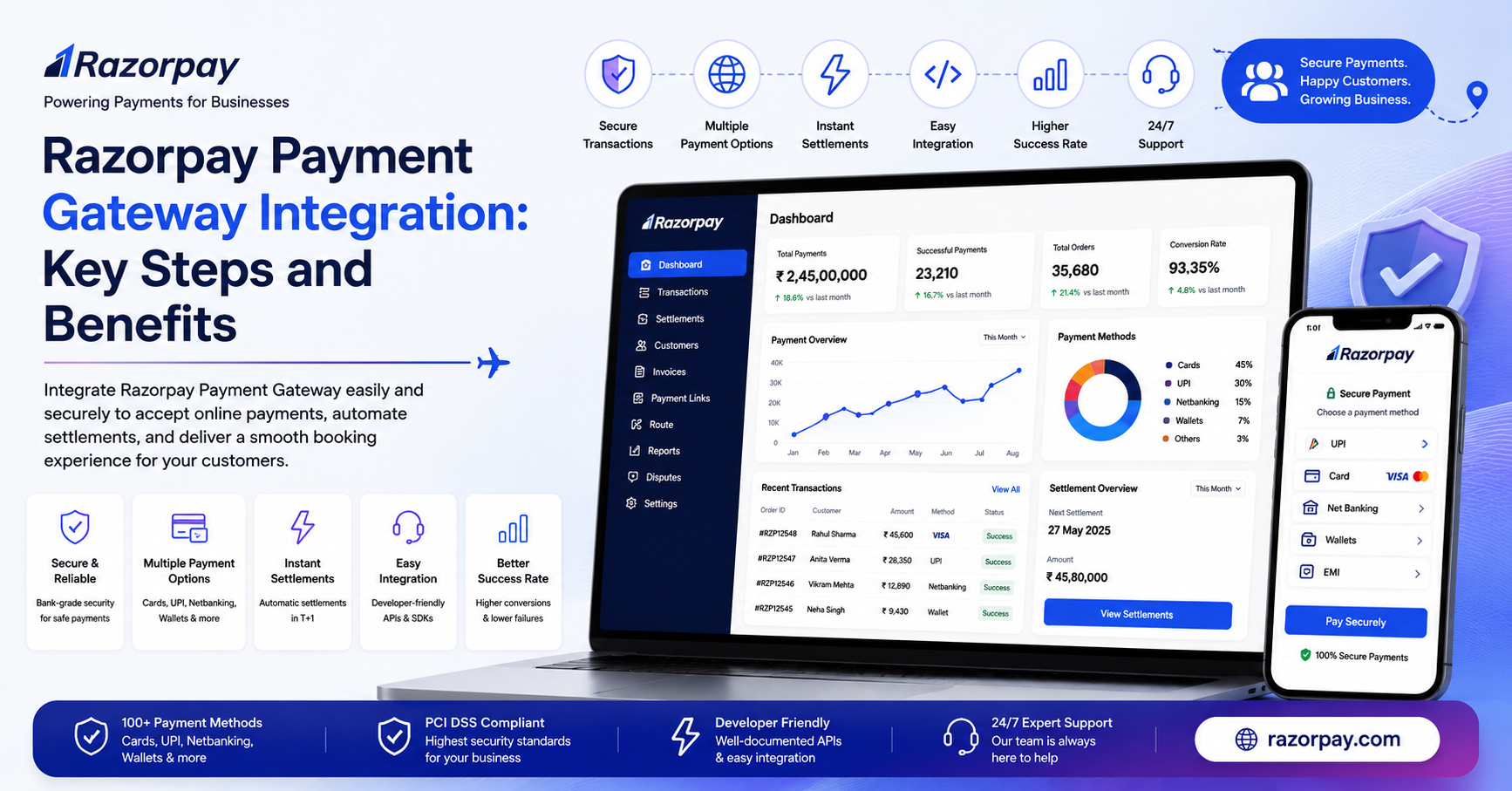
Understanding Razorpay Payment Gateway Integration: Key Steps and Benefits
Understanding Razorpay Payment Gateway Integration: Key Steps and Benefits A customer can spend 10 minutes comparing flights, checking hotel rooms or building a holiday package and still walk away at the final step. Not because…
Aug 20, 2026Read More
Get in touch
Email Us
sales@traveltekprogroup.com“We opted for Traveltekpro to construct and implement our Flight booking system, and I am thoroughly pleased with the outcomes. Their team displays remarkable efficiency, expertise, and utmost professionalism throughout the project.”

Arun Neli
Chief Operating Officer
“I had a fantastic experience with Traveltekpro! Their custom booking system designed for our platform is not only sleek and easy to use,but it has also received excellent feedback rom our customers. Kudos to the Traveltekpro team for their outstanding work!”

Benjamin Smith
Product Manager
“Traveltekpro has been a delight to collaborate with on two distinct occasions, showcasing professionalism and expertise. Their team demonstrates a commitment to surpassing expectations and adheringto deadlines.”

Kevin Brown
CTO
“We partnered with Traveltekpro for our travel booking platform, and the experience was excellent. The team understood our requirements quickly, delivered on time, and provided great support throughout the project. Highly recommended.”

Manish Singh
Director of IT
“Great experience working with Traveltekpro. They were responsive, knowledgeable, and always ready to suggest better solutions. The final product exceeded our expectations, and the after-launch support has been excellent.”

Shubham Rawat
Founder & CEO