What Is an Online Tour Reservation System? | Traveltekpro
Over the last decade travelers have started spending more money and experiences like city walking tours, food tastings, adventure activities and workshops and local credit excursions. Travel is no longer just about flights and hotels. People today do not just want to visit a destination anymore they want to experience it. The shift has created what many call the experience economy. Tours and activities have become one of the fastest growing segments in travel. But while demand increased rapidly many tour operators were still managing bookings manually through phone calls and WhatsApp managers. That gap created friction.
Just think about a traveler landing in a new city and wanting to book a sunset cruise for the same evening. They do not want to wait for someone to respond to an inquiry message; they just expect availability confirmation and secure online payment, just like booking a flight. That expectation has pushed the industry towards the Online Tour Reservation System. The move from offline to online booking is not just about convenience it directly impacts purchasing decisions and when your traveller sees real time availability, transparent pricing and instant confirmation they are far more likely to book immediately. If they have to wait for confirmation many will just move to another provider.
What is online tour booking software?
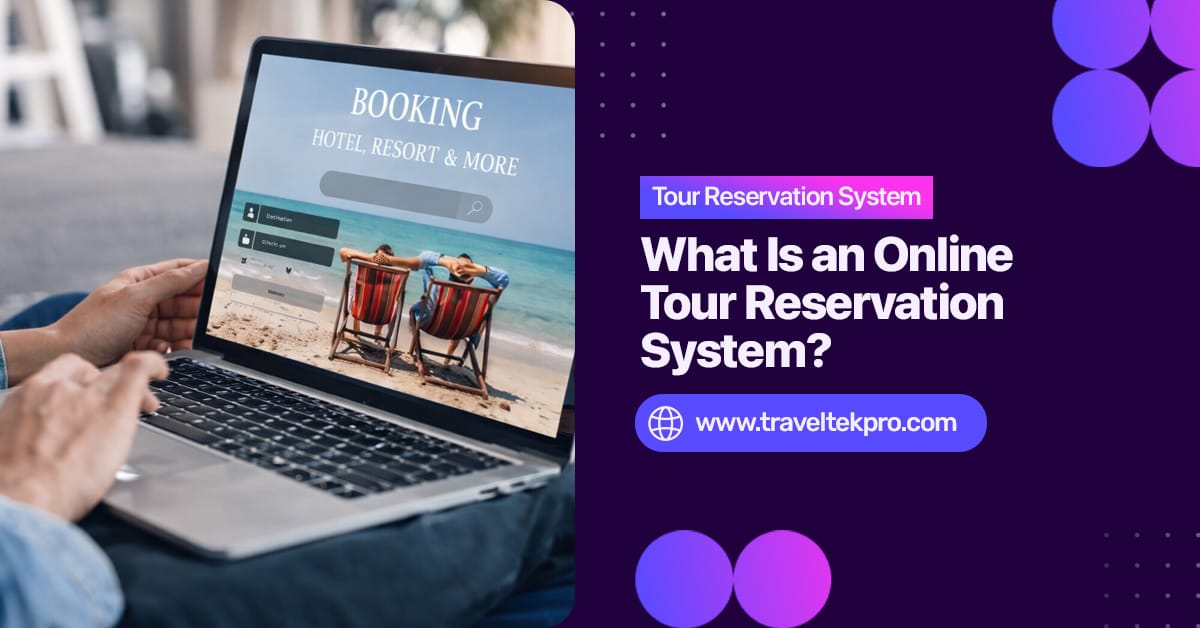
An online reservation system is a software platform that allows you to search and book activities and tours online. Many people confuse a tour website with a reservation system but you need to know that a tour website might just simply display packages and allow you to submit inquiry forms the operator then manually confirms availability and sends the payment details. A full reservation system goes much deeper. It connects inventory pricing rules schedules and payment gateways into one automated system.
When your customer selects a date and time the system instantly checks availability. If the seats are available it allows immediate booking and payment confirmation. The main purpose of the reservation system is simple: it removes manual dependency and also processes secure payments instantly in real time. The systems are used by tour operators, destination management companies and sightseeing operators. Whether it’s a small local guide offering walking tours or a large adventure company running multiple day excursions the technology framework works on the same principles.
Main components of online booking system for tours and activities
1. Booking engine
This is what customers interact with; it displays your available dates, time slots, price and inclusions. It also handles customer details and booking confirmation. The design must be simple and clear because many travelers book from mobile devices while already on the move.
2. Real time inventory management module
Tours often have limited seats. A cooking class might just allow ten participants while a boat tour might allow 25. A desert safari might operate with fixed vehicle capacity. The inventory module tracks seat availability in real time. When one seat is booked it immediately updates availability for everyone else viewing the same tool.
3. Supplier or vendor management
Some tour companies work with multiple guides or third party vendors. For example a DMC might sell snorkeling tours operated by different local parties. The system needs to track which vendor is assigned for which booking, manage commissions and monitor performance.
4. Payment gateway integration
Online payment integration allows your customers to pay instantly using credit cards or debit cards. This reduces dependency or bank transfers for manual invoicing.
How does the Online Tour Reservation System actually work?
Tour inventory management is slightly more complex than hotel or flight bookings because tours often operate in fixed time slots. A single tour might run three times per day morning, afternoon and evening. Each time slot might have a different capacity. The system must manage availability separately for each schedule. For example if a 10 AM walking tour has a maximum of 15 participants and 12 seats are already booked only three seats should appear as available. Once all these are sold the system must automatically close bookings for that time slot.
Preventing double bookings is very important. If 2 customers try to book the last available seat simultaneously the system must perform a final availability check before confirming the payment. Seasonal demand as another layer of complexity. During holidays or festivals demand might just spike. Your system should handle increased traffic while keeping inventory accurate.
Pricing management and dynamic adjustments
Seasonal pricing models allow you to increase rates during the peak season and offer discounts during low time. The system automatically applies the correct rate based on the selected travel date. Group pricing logic is also common.
For example a tour might cost $50 per person for an individual trip but offer discounted pricing for groups of four or five. The system calculates the correct total automatically when the number of participants changes. Early bird discounts encourage advanced bookings and last minute discounts help fill unsold slots. Both can be configured within the pricing range.
Integration with payment gateways and security systems
Security is especially important in online tour booking software. It is because transactions are often international. Tourists from different countries book. For example a traveler in the UK might book a tour in Thailand. The system should allow them to view prices in their preferred currency while internally managing security currency conversion. Online transactions are even vulnerable to or attempts reservation systems include fraud detection tours that monitor unusual booking behavior and mismatched card information.
All sensitive information, especially payment details, must be encrypted during transmissions. Suspicious transactions might trigger additional verification steps before approval. Customers might not understand the technical details but seeing a secure payment page increases confidence. Tour cancellations are common because of weather changes or personal emergencies. A good reservation system automates the cancellation policy. If a booking qualifies for a full or partial refund the system calculates the correct amount and processes it through the payment gateway.
Vendor and supplier management capabilities
As your business grows you rarely operate alone. You might be working with multiple local guides or transportation providers. Managing all of them naturally manually becomes complicated very quickly. Is exactly where vendor and supplier management capabilities inside the online booking system for tours and activities becomes essential. Just think about a DMC selling tours in different cities in each city they might work for different local operators. Some handle walking tours while others handle boat rides. The reservation system allows you to manage all the providers under 1 utilized platform. Each vendor store schedule CBT and pricing structure can be configured separately.
Commission management is also one of the most sensitive parts of tour operations. When bookings are made commissions might need to be distributed between the main operator and the local vendor. The system automatically calculates the Commission percentage based on the predefined agreements. This basically removes confusion and also ensures accurate payouts. It also prevents disputes because everything is recorded transparently in the system.
Some platforms allow vendors to log in and manage their own inventory. For example a local guide can update our availability or block certain dates if they are unavailable. But access must be controlled carefully. Vendors should only see and manage their own tours, not their entire system. Role-based access ensures that each vendor has limited permissions based on their responsibilities.
B2C, B2B and marketplace tour reservation models
Not all 2 reservation systems operate in the same way. Different business models require different structures. In direct to consumer booking platform model you can sell directly to the end customer. The website is designed to attract travelers and showcase experiences. The platform focuses heavily on the user experience, mobile responsiveness and clear pricing. The goal is to convert your website visitors into paying customers.
In B2B agent based portals bookings are made by travel agents instead of end customers. Agents log in through your portal where they access the negotiated rates and Commission structures. B2B systems often include agent wallets and credit limits.
Some businesses also operate hybrid models. They sell directly to the consumers while also supporting agent networks. The system must be flexible enough to display public pricing for customers and separate agent pricing for B2B users. The structure allows you to maximize your market reach without creating separate systems.
Read More: How Can B2B and B2C Travel Portals Boost Your Travel Business Revenue?
Mobile optimization and user experience in tour bookings
Today you can see a lot of customers booking their tours online using smartphones. Sometimes they’re already at the destination when booking, which makes mobile optimization extremely important.
A mobile first approach means designing the booking experience basically for small screens. Buttons must be large enough to tap easily and text must be readable. If the website loads slowly or looks cluttered your customers will leave immediately. Speed matters a lot. If availability Checks take too long the travelers might just assume the system is broken. Modern reservation systems are optimized to load quickly even when retrieving the real time data. Complicated checkout forms can discourage bookings. The tour reservation system aims to reduce unnecessary steps. Instead of asking for too much information up front they just focus on essential details. Clear pricing breakdowns and transplant cancellation policies helps you build trust during checkout.
Operational benefits for tour operators
Implementing an Online Tour Reservation System it’s completely beneficial for tour operators. Manual booking management involves a lot of phone calls, emails and updating spreadsheets. Automation eliminates most of the repetitive tasks. Your staff can just focus on customer service marketing and partnership. Every booking is automatically recorded and also categorized. You can see daily, weekly or monthly bookings trends without piling manual reports. Managing multiple tours across different dates and time slots can become truly chaotic. A reservation system can stabilize everything operators like you can view availability calendars and blog dates and adjust capacity instantly. Instead of guessing which tours perform the best you can just rely on real data. This makes it easy for you to analyze which experience generates the highest revenue, which time slots are most popular and which promotions work.
Business growth advantages of online tour booking software
Unlike physical offices online platforms never close. You can just book tours at any time regardless of your time zone. An online presence allows you to attract international customers. With multi currency support and secure payment systems global bookings become seamless. This expands the customer base beyond local markets. Clear communication instant vouchers and easy cancellations create positive experiences. Your happy customers leave better reviews which drives further bookings. As your business grows the system can even support additional tours, vendors and destinations without major restructuring.
Common challenges when implementing online booking system for tours and activities
Despite the advantages, implementation comes with challenges. Data synchronization might occur when integrating external vendors. If availability updates are delayed inventory errors can happen. Handling peak season traffic requires strong hosting infrastructure. If your system slows down during high demand Revenue can be lost. Payment gateway failures might occur due to bank restrictions or technical downtime. Having backup payment options reduces the risk of. Inventory mismanagement can lead to overbooking if not configured properly. Clear capacity settings and automated seat allocation are very important. Lack of real time analytics limits the strategic planning, without reporting tools you might even struggle to identify growth opportunities
Empowering tour operators with Traveltekpro
If you are a tour operator looking to digitize operations, choosing the right technology partner is very important. Traveltekpro specializes in building custom online 2 reservation systems tailored to individual business needs. Instead of offering generic templates the experts develop solutions designed around your workflow and vendor network. The cloud based architecture ensures scalability. Whether you manage 50 bookings per month or 5000 the systems adapt with performance issues, payment and vendor integrations are also handled seamlessly. You can connect multiple payment gateways and supplier modules with a unified network. An advanced tour reservation system empowers you to manage inventory accurately and process payments securely.
Read More: AI Travel Booking Software: A Revolutionary Tool for Travelers
FAQ’S
1. What is an online tour reservation system?
An online tour reservation system is a digital platform that lets travelers check real-time availability, select time slots, pay securely, and receive instant confirmation for tours and activities without manual intervention from operators.
2. How does an online tour booking system work?
An online tour booking system manages tour schedules, seat capacity, pricing rules, and payments in real time by automatically updating availability for each date and time slot and confirming bookings instantly after payment.
3. Why do tour operators need online reservation software?
Tour operators need online reservation software to reduce manual bookings, prevent overbooking, accept instant payments, increase conversion rates, and sell tours 24/7 to global travelers without delays.
4. Can online tour reservation systems prevent double bookings?
Yes, online tour reservation systems prevent double bookings by syncing real-time inventory, locking seats during checkout, and performing final availability checks before confirming payments.
5. Does tour booking software support dynamic pricing and discounts?
Modern tour booking software supports dynamic pricing, seasonal rates, group discounts, early-bird offers, and last-minute deals that automatically adjust based on travel dates and participant count.
6. Is an online tour reservation system suitable for B2B and B2C sales?
Yes, an online tour reservation system can support B2C direct bookings, B2B agent portals, and hybrid marketplace models with separate pricing, commissions, agent logins, and role-based access.
Let's Start Your Project
Let us help you achieve your goals, by creating the best solution for you!