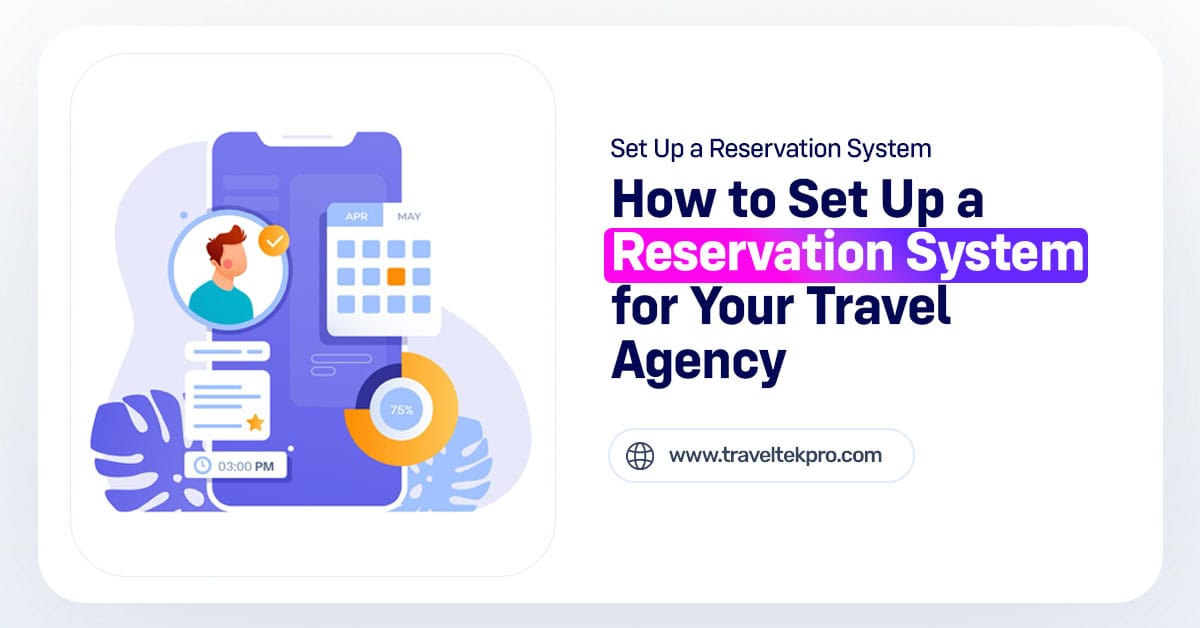
How to Set Up a Reservation System for Your Travel Agency
In today’s highly competitive travel industry, success is no longer driven only by supplier relationships or destination knowledge. It is driven by technology, speed, and the ability to deliver a seamless customer experience. At the center of this transformation lies the travel reservation system the digital backbone that enables travel agencies to search, price, book, confirm, and manage travel services efficiently.
A modern reservation system empowers travel agencies to operate faster, reduce manual work, avoid booking errors, and scale operations without increasing overhead. Whether you run a small local agency or a multi-country OTA, having the right travel booking system is no longer optional it is essential.
The Shift from Manual Bookings to Digital Reservation Platforms
Traditionally, travel agencies relied heavily on manual processes such as phone calls, emails, spreadsheets, and offline confirmations. Agents would contact airlines or hotels individually, wait for availability, manually calculate prices, and issue confirmations. While this approach worked in the past, it is no longer sustainable in today’s fast-paced digital environment.
Modern digital reservation platforms have replaced these manual workflows by:
- Automating availability searches across airlines, hotels, tours, and transfers
- Instantly confirming reservations without human intervention
- Reducing human errors caused by manual data entry
- Improving operational efficiency by allowing agents to handle more bookings in less time
As customer demand for instant responses increased, agencies that failed to digitize began losing business to online platforms that could deliver faster results.
How Traveler Expectations Have Changed in the Last Few Years
Traveler behavior has evolved significantly due to mobile technology, online platforms, and increased transparency in pricing. Today’s customers expect:
- Real-time availability, not delayed confirmations
- Instant price comparisons across multiple travel options
- Self-service booking tools available 24/7
- Immediate confirmations and digital vouchers
- Easy modifications and cancellations
Travelers also expect agencies to provide the same level of convenience as large OTAs, while still offering personalized service. A robust travel reservation system allows agencies to meet these expectations without increasing operational costs.
What Is a Travel Reservation System?
A travel reservation system is a software platform that enables travel agencies to manage reservations for flights, hotels, tours, transfers, car rentals, and other travel services from a single interface. It connects suppliers, agents, and customers in real time, ensuring accurate availability, pricing, and confirmations.
1. Core Purpose of a Travel Reservation System
The primary purpose of a travel reservation system is to centralize and automate all booking-related activities. It helps agencies to:
- Search live inventory from multiple suppliers
- Display accurate pricing and availability
- Create and manage reservations efficiently
- Store customer and booking records securely
- Automate confirmations, cancellations, and changes
- Generate reports for business insights
By automating these processes, agencies can focus more on sales, customer service, and growth rather than administrative tasks.
2. Difference Between Reservation, Booking, and Inventory Management
Although often used interchangeably, these terms represent different functions within a travel booking system:
- Reservation
A reservation temporarily holds a travel service (seat, room, tour slot) for a customer before final confirmation or payment. - Booking
A booking is a confirmed reservation where payment is completed and services are guaranteed. - Inventory Management
Inventory management controls the availability, pricing, and allocation of travel products from suppliers or contracted inventory.
A complete travel reservation system integrates all three functions seamlessly to avoid overbooking and pricing inconsistencies.
Why Every Travel Agency Needs a Travel Booking System Today
Without a modern travel booking system, agencies struggle to compete, scale, and meet customer expectations. Technology has become a critical differentiator in the travel business.
1. Speed, Accuracy, and Real-Time Availability
Speed is crucial in travel sales. A delay of even a few minutes can cause a customer to book elsewhere. A travel reservation system ensures:
- Instant access to real-time inventory
- Accurate pricing without manual calculation
- Immediate booking confirmation
This level of speed and accuracy builds customer trust and improves conversion rates.
2. Managing Multi-Supplier Inventory Efficiently
Most agencies work with multiple suppliers, including:
- Airlines and GDS providers
- Hotel wholesalers
- Local DMCs and tour operators
- Transfer and activity providers
A centralized reservation system allows agencies to:
- Combine multiple suppliers into one platform
- Compare prices and availability instantly
- Avoid duplicate listings
- Prioritize preferred suppliers based on margins
This simplifies operations and maximizes profitability.
Competing with Online Travel Platforms
Large OTAs dominate the market because of their technology. However, travel agencies can compete effectively by leveraging a modern travel reservation system that offers:
- Personalized service
- Custom packages
- Niche travel expertise
- Competitive pricing through smart markups
Technology levels the playing field and allows agencies to retain control over customer relationships.
Key Components of a Travel Agency Reservation System
A powerful travel reservation system consists of several essential components working together.
1. Search & Availability Engine
The search engine is the heart of the system. It enables users to:
- Search flights, hotels, tours, and transfers in real time
- Apply filters such as price, duration, location, or amenities
- Compare multiple options quickly
A fast and intelligent search engine directly impacts user satisfaction and booking conversions.
2. Pricing, Markups, and Commission Logic
Pricing flexibility is essential for agency profitability. A good system allows agencies to:
- Set dynamic markups by supplier, route, or agent
- Apply commissions for B2B partners
- Offer promotional discounts
- Manage corporate pricing rules
This ensures full control over revenue generation.
3. Booking Flow & Confirmation Management
An optimized booking flow ensures a smooth customer journey by:
- Collecting traveler details securely
- Validating availability before confirmation
- Processing payments efficiently
- Issuing instant confirmations and vouchers
Automation in this stage reduces booking failures and customer frustration.
3. Customer Data & Reservation Records
Customer and booking data are valuable business assets. A reservation system stores:
- Passenger details
- Booking history
- Payment records
- Preferences and loyalty information
This data supports customer service, marketing, and repeat sales strategies.
Types of Travel Reservation Systems in the Current Market
Different agencies require different system models depending on their business structure.
1. B2C Reservation Systems for Direct Customers
B2C systems are designed for travelers booking directly online. They focus on:
- User-friendly interfaces
- Fast search and checkout
- Mobile optimization
- Online payments and instant confirmations
These systems are ideal for OTAs and consumer-facing agencies.
2. B2B Reservation Systems for Agents & Sub-Agents
B2B systems cater to travel agents, resellers, and partners. Key features include:
- Agent-specific pricing and markups
- Credit limit management
- Role-based access
- Reporting and commission tracking
They are commonly used by wholesalers and consolidators.
3. Hybrid B2B2C Travel Agency Reservation Systems
Hybrid systems combine both B2B and B2C models into a single platform. They allow agencies to:
- Sell directly to customers
- Onboard sub-agents and partners
- Manage multiple sales channels from one system
This model offers maximum flexibility and scalability for growing travel businesses.
Conclusions
Setting up a reservation system for your travel agency is no longer just about automation it is about future-proofing your business. A well-designed travel reservation system enables faster operations, better customer experiences, higher revenue, and scalable growth.
Whether you serve leisure travelers, corporate clients, agents, or niche markets, the right travel booking system empowers your agency to compete confidently in the digital travel ecosystem. Investing in the right technology today ensures long-term success in an increasingly technology-driven travel industry.
Read More: Travel Portal Development Services & Cost: A Complete Guide
FAQ’S
1. What is a travel reservation system?
A travel reservation system is a centralized software platform that allows travel agencies to search real-time inventory, calculate prices, create reservations, confirm bookings, manage customer data, and automate changes or cancellations across flights, hotels, tours, and other travel services.
2. Why does a travel agency need a reservation system today?
A travel agency needs a reservation system to deliver instant availability, accurate pricing, and fast confirmations, reduce manual errors, handle multiple suppliers efficiently, and compete with online travel platforms while scaling operations without increasing staff workload.
3. How does a travel reservation system work?
A travel reservation system connects to airlines, hotels, and other suppliers via APIs or GDSs, fetches live availability and prices, applies agency markups or commissions, processes bookings and payments, and generates instant confirmations while updating inventory in real time.
4. What is the difference between reservation and booking?
A reservation temporarily holds a travel service without final confirmation, while a booking is a confirmed reservation where payment is completed and the service is guaranteed, with inventory automatically deducted from availability.
5. What type of reservation system is best for travel agencies?
The best reservation system depends on the business model: B2C systems suit direct online bookings, B2B systems support agents and sub-agents with pricing controls, and hybrid B2B2C systems offer the most flexibility by managing multiple sales channels from one platform.
6. How does a reservation system help travel agencies grow?
A reservation system helps travel agencies grow by increasing booking speed, improving accuracy, enabling personalized pricing, managing multiple suppliers, enhancing customer experience, and allowing agencies to handle higher booking volumes efficiently without operational bottlenecks.
Let's Start Your Project
Let us help you achieve your goals, by creating the best solution for you!