What Is a Hotel Channel Manager and How Does It Work?
Running a hotel used to be really simple: guests walked in, made phone calls or booked through a local travel agent. Availability was written on a board as a reception desk and prizing rarely changed more than once a season. The world has completely changed today. Today you can see hotels selling rooms across dozens of digital platforms at the same time. A single room can be visible on booking.com Airbnb Google hotels and the hotel’s own websites. It is at once price fluctuating daily and sometimes hourly. You can also see that guests expect instant confirmation today of accurate availability and consistent pricing wherever they book. The shift has brought opportunity but it has also created serious operations pressure for hoteliers. Managing all of this manually is no longer realistic for you. This is where the hotel channel manager actually comes into the picture.
The growing complexity of a hotel distribution
Hotel distribution today has moved almost entirely online. Walkins happen but they are no longer the backbone of hotel bookings. You can see guests discovering hotels through OTAs, meta search engines, social ads and other booking platforms. Even loyal guests often compare prices before booking online. This means exposure to a much larger audience for hotel years like you but it also adds on to complexity.
Every booking channel has its own interface, its own rules and its own way of handling availability and pricing updates. Updating just one channel does not automatically update another. Without automation your staff would be forced to log into multiple extra Nets every day just to keep the rates and availability aligned. This process is really slow and also prone to errors. One missed update can lead to overbookings and also rate mismatches. Manual channel management worked when hotels had two or three booking sources. It completely breaks down when there are 10 or 20.
What is a hotelrunner channel manager?
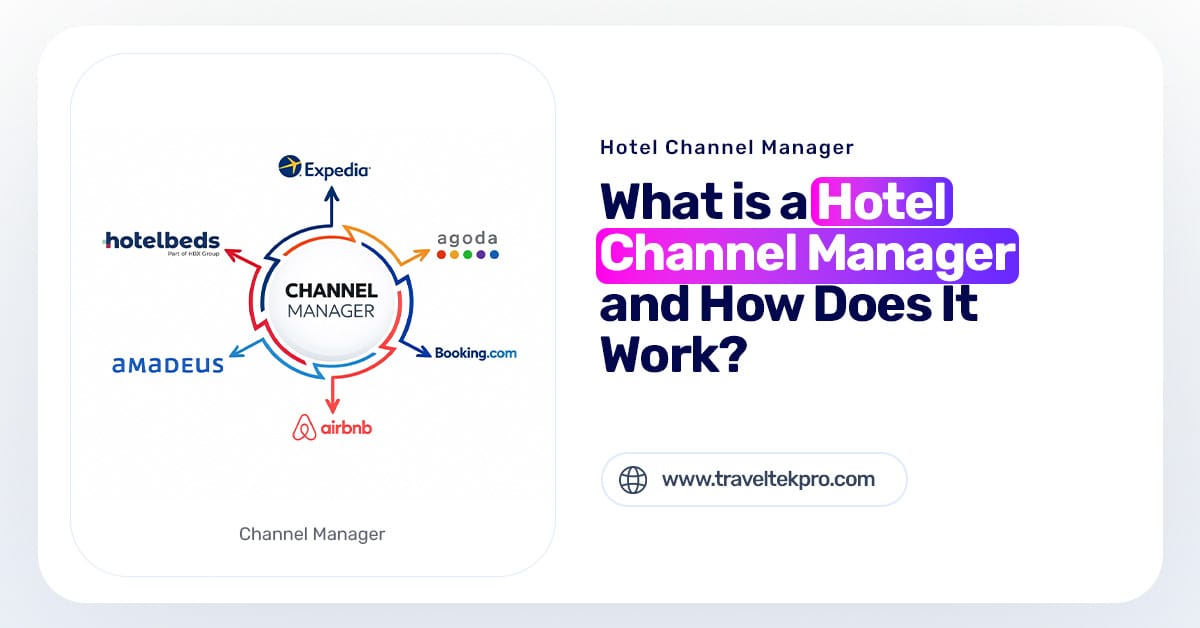
Firstly you need to know that a hotel booking channel manager is a centralized software system that allows your hotel to control room availability and restrictions across all the booking channels from one place. Instead of updating every OTA or booking platform individually you can update everything once inside the channel manager. The system then automatically pushes all the updates to connected channels in real time. In simple terms it works like a control tower for hotel distribution.
You can use a channel manager to avoid double bookings, maintain rate consistency, save time and also improve overall operational accuracy. It is commonly used by independent hotels service departments and resorts besides hotel groups managing multiple locations.
Why do hotels need a hotel channel manager?
The biggest challenge that you might face today is managing multiple booking platforms without losing control. Without a channel manager you often struggle with overbookings when the same room gets sold on 2 platforms at the same time. Rate mismatches are a really common problem where one OTA shows a lower price than the other leading to guest complaints and trust issues.
The problems don’t just affect operations directly impact your guest experience and it also leads to complaints and trust issues. For example if your guests arrive to find that their bookings cannot be honored rarely gives a second chance. Even small hotels are now listed on multiple platforms. You can say automation is no longer a luxury today it is a necessity for any property that wants to operate professionally in a digital world.
How does the HotelRunner channel manager actually work?
At the heart of a channel manager is a central inventory pool. This is actually where all your room’s written restrictions are stored.
When you update availability or pricing inside the channel manager the system immediately sends those updates to every connection booking channel. This is known as a two way synchronization. It means that not only does the Channel manager push data out but it also receives booking data back from the channels. When you book a room on an OTA the booking instantly flows back into the channel manager, the system then reduces the availability and updates on other channels automatically. This is how overbooking is prevented.
Cancellations and modifications also follow the same logic. When your booking is cancelled the room is released back into the inventory and it becomes available everywhere again in real time. This constant syncing happens in the background without the staff intervention.
The core parts of a hotel booking channel manager
a channel manager is made-up of several functional layers that work together. Inventory management controls how many rooms are available for sale and where. Rate management handles pricing and ensures that correct rates are applied across all the channels. The connectivity here is what links your system to the OTA’s and booking engines. Reporting dashboards allow you to see where bookings are coming from and how channels are performing. Automation alerts also identify issues before they become problems like sudden drops and availability or even failed updates. The components turn what was once a manual juggling act into a structured reliable process.
1. Integration with OTAs and booking channels
A hotel channel manager connects directly with major OTAs like booking.com and Expedia. It can easily integrate with meta search platforms and global distribution systems. One of the most important integrations is with your direct hotel engine. This ensures that rooms sold directly on the hotel website follow the same availability and pricing logic as OTAs. Maintaining rate parity across all the channels is very important. Your guests can lose trust when they see different prices for the same room. A channel manager helps enforce consistency while allowing strategic pricing differences they’re needed.
3. Channel manager versus property system
You might confuse channel manager with property management system but they serve different purposes. Our property management system manages internal hotel operations like checking housekeeping and guest profiles. A channel manager focuses on distribution and external sales channels. 1 cannot replace the other. They really work best when you integrate both of them together. When a property management system is connected to a channel manager bookings flow smoothly from online channels into front desk operations availability updates from checkouts the walk-ins can also flow back to the distribution automatically. The integration reduces your manual work and also improves data accuracy across the hotel
Quick comparison
| Function | Channel Manager | PMS |
| Manages OTA availability | Yes | No |
| Controls online pricing | Yes | No |
| Handles check-in/check-out | No | Yes |
| Prevents overbookings | Yes | Partially |
| Front desk operations | No | Yes |
Revenue and occupancy optimization through channel management
A hotel channel manager is not just an operational tool that you use. It plays a very important role in revenue performance. By keeping inventory open across high performing channels you can maximize visibility, promotions can be launched quickly across selected platforms without manual updates. You can also adjust the seasonal prices in minutes instead of hours. Most importantly automation helps you reduce revenue leakages caused by human error, incorrect rates, missed availability updates and delayed responses to market changes all cost money. A well used manager helps you sell the right room at the right price on the right channel.
Hotelrunner channel manager: Platform overview
HotelRunner Is a global hospitality and technology platform that offers an integrated channel manager as a part of the broader ecosystem. Its channel manager supports huge distribution across OTA’s and direct booking channels. It is well designed to work for different property types from independent hotels to growing hotel groups. The strength lies in its unified approach combining distribution and operational tools within one platform. This reduces the need for your multiple disconnected systems and even simplifies daily hotel management. If you want flexibility, scalability and strong distribution coverage you can benefit from the platform undoubtedly.
Types of hotel Channel managers in the market
Channel managers generally fall into a few categories. Cloud based systems are now the standard offering you real time updates and remote access. At the same time legacy systems still exist but often struggle with your speed and integration. Some channel managers stand alone tools while others are part of all-in-one hospitality platforms. Single property solutions just focus on simplicity while multi property systems are also built for hotel groups. Choosing the right type basically depends on the hotel size growth plans and operational complexity.
Managing rates, availability and restrictions effectively
Effective channel management goes way beyond just basic availability. You can use rate plans to control pricing for different guest segments. Restrictions like minimum stay stop sell dates and booking windows help you manage demand during peak and low seasons. A channel manager also allows you to apply all the rules consistently across all the channels. Last minute inventory can be opened or closed quickly and peak season demand can be handled without any chaos.
Preventing overbookings and rate Errors
You must know overbooking usually happens because systems are out of sync. A channel manager prevents this by updating availability everywhere the moment a booking is confirmed. Even when multiple bookings happen at the same time, real time logic ensures complete accuracy. Cancellations and modifications are handled just as quickly freeing inventory and updating rates automatically. Rate errors can be reduced because pricing changes are pushed from 1:00 central source instead of being updated channel by channel.
Operational efficiency and cost savings
One of the best parts about a channel manager is reducing manual workload. Front desk teams spend minimum time managing extra Nets and more time focusing on guests. Revenue teams respond faster than market changes. Fewer mistakes also mean minimum complaints and refunds, with time this efficiency translates into lower staffing pressure and you can be assured of operational stability.
How different types of hotels use channel managers
If you are an independent hotel you can use channel managers to compete with larger brands by maintaining visibility. If you are a budget hostel or a hotel then you can rely on automation to handle high booking volumes. Luxury properties use channel managers to protect rate integrity. Hotel chains and groups benefit from centralized control across locations. The tool adapts to different business models so it has become really universal.
Choosing the right hotel channel manager
Selecting a channel manager is a strategic decision that you should know about. Hotels should look at channel coverage or system reliability and quality of support. Onboarding and training matters a lot especially for teams without strong technical backgrounds. A good channel manager should feel like a support system and not a source of stress.
Challenges and limitations to be aware of
You need to know that no system is perfect. Initial setup can be challenging especially when you are mapping rooms and rate plans. Stable Internet connectivity is essential for real time syncing cost can be a concern for very small properties if not evaluated really well. Getting too many channels without a clear strategy can also dilute our performance. Technology must be paired with smart decision making.
The future of a hotel channel management
Channel management is becoming smarter. Automation is increasing AI driven pricing and demand forecasting are becoming more accessible. Channel managers are integrating more deeply with revenue management. The industry is also moving towards unified hospitality platforms where distribution operations and guest experiences all live together.
So you must know that hotel channel manager is no longer optional technology, it is a foundational tool for modern hospitality. It protects your revenue, improves accuracy and reduces workload. More importantly it also allows you to operate confidently in an increasingly complex digital world.
So if you are planning to implement upgrade or optimize our hotel channel manager or integrate platforms like HotelRunner Traveltekpro is your best bet. The experts work with hotels and hospitality businesses to deliver channel manager integrations and OTAs and meta research connectivity. You can connect with the experts today and build a distribution setup that actually works for your hotel.
Read More: What’s the cost to build travel apps like EaseMyTrip and Booking.com
FAQ’S
1. What is a hotel channel manager?
A hotel channel manager is a centralized software that allows hotels to manage room availability, pricing, and booking rules across multiple online channels like Booking.com, Expedia, Airbnb, Google Hotels, and the hotel’s own website from one single dashboard. It automatically syncs data in real time to prevent overbookings and price inconsistencies.
2. How does a hotel channel manager work?
A hotel channel manager works by maintaining a central inventory pool and syncing it two ways with all connected booking channels. When a room is booked on any OTA, availability is instantly updated across all other platforms, and when a booking is cancelled, the room is released automatically, ensuring real-time accuracy without manual intervention.
3. Why do hotels need a channel manager?
Hotels need a channel manager to avoid overbookings, eliminate rate mismatches, reduce manual workload, and maintain consistent pricing across all online booking platforms. Without a channel manager, managing multiple OTAs manually becomes error-prone and time-consuming, leading to guest dissatisfaction and revenue loss.
4. What is the difference between a channel manager and a PMS?
A channel manager controls external distribution by syncing availability and rates across OTAs and booking platforms, while a Property Management System (PMS) manages internal hotel operations such as check-ins, check-outs, housekeeping, and guest profiles. Both systems serve different purposes and work best when fully integrated.
5. Can a hotel channel manager increase revenue?
Yes, a hotel channel manager helps increase revenue by maximizing room visibility across high-performing channels, enabling quick price adjustments, launching promotions instantly, and preventing revenue loss caused by overbookings or outdated rates. Automation ensures the right room is sold at the right price on the right channel.
6. Is a hotel channel manager suitable for small hotels?
A hotel channel manager is highly suitable for small hotels, boutique properties, and hostels because it reduces operational complexity, saves staff time, and allows smaller properties to compete with larger hotel brands by maintaining professional distribution across multiple booking platforms.
Let's Start Your Project
Let us help you achieve your goals, by creating the best solution for you!